 PlantFun
Plant Needs
Characteristics
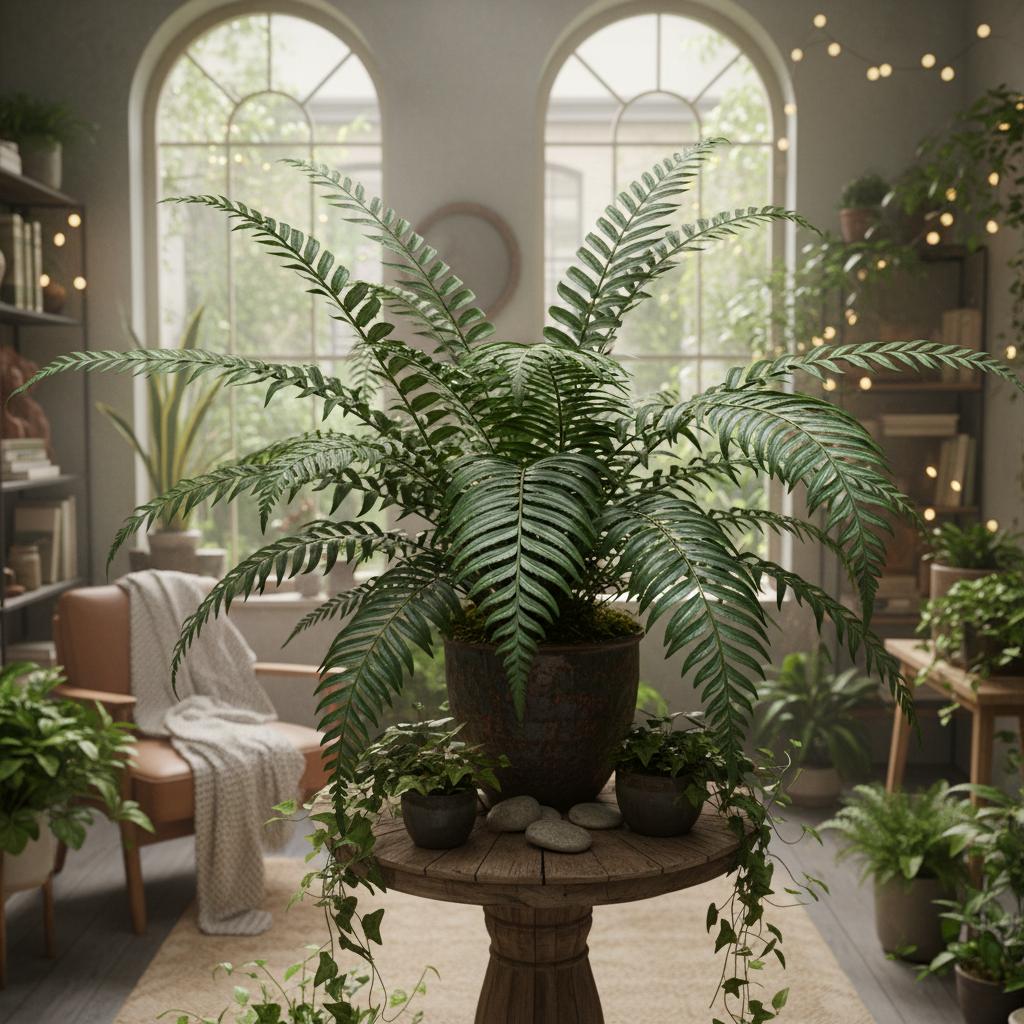
- Leaves: Broad, pinnate fronds resembling bamboo leaves, featuring striking horizontal yellow or pale green variegation across the dark green pinnae;
- Stems: Creeping rhizomes with dark, wiry, and upright stipes (leaf stalks);
- Spores: Sori are borne along the veins on the underside of the fertile fronds, lacking an indusium.
Care Guide
Keep soil evenly moist, watering as soon as the surface feels slightly dry to the touch.
Apply a diluted, balanced liquid fertilizer to support new frond growth.. Ferns are sensitive to heavy salts; always apply fertilizer to damp soil and flush the pot periodically with distilled water.
Banana Peel Tea:Steep chopped banana peels in water for 24-48 hours, strain, and dilute 1:1 with fresh water. Apply to moist soil to avoid root burn. Discard solids in compost to prevent indoor odors.- Remove dead, browned, or damaged fronds at the base using sterilized pruning shears;
- Trim away any completely reverted (solid green) fronds if you wish to maintain the highly variegated 'Intenz' appearance;
- Do not top-prune fern fronds; always cut from the bottom near the soil line.
Toxicity
Warning: this plant may be toxic.
Pets: Non-toxic to cats per general fern safety guidelines (ASPCA lists true ferns as generally safe).
Humans: Generally considered non-toxic to humans, though not intended for consumption.
Garden Uses & Culture
Culture: During the Victorian era, ferns became an obsession in Europe (known as Pteridomania), symbolizing fascination and sincerity. Today, striking cultivars like 'Intenz' continue this legacy in modern Western indoor gardening, prized for their architectural foliage.
Usage: - Excellent as a statement indoor potted plant; - Suitable for shaded conservatories or large terrariums; - Used in shaded understory plantings in frost-free climates.