 PlantFun
Plant Needs
Sunlight
Requires bright, indirect sunlight or morning direct sun; protect from harsh afternoon sun to prevent scorching.
Watering
Water sparingly during active growth in autumn/winter; withhold water almost entirely during summer dormancy.
Temperature
Prefers cool to moderate temperatures; must be protected from frost and extreme summer heat.
Characteristics
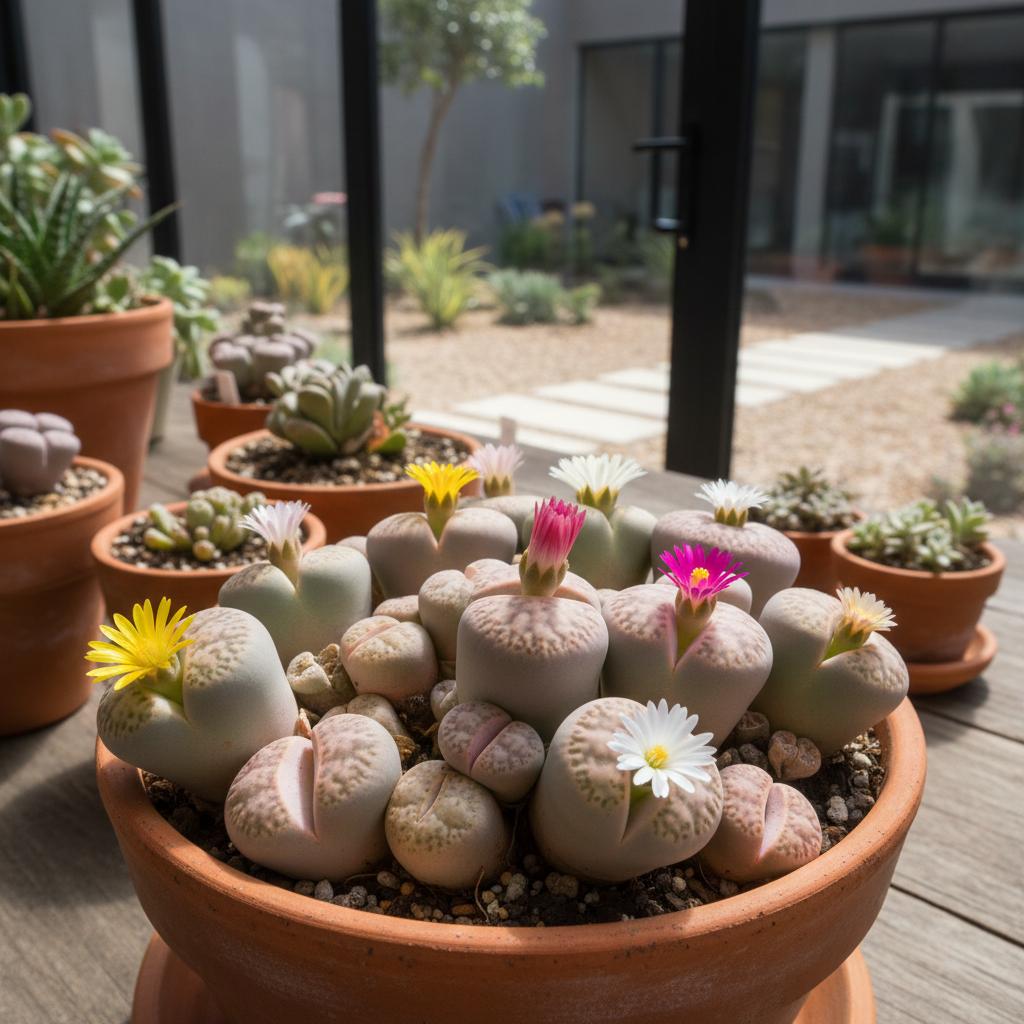
- Leaves: Fused into a fleshy, bilobed or heart-shaped body, pale green to bluish-green, often with a reddish margin along the fissure;
- Flowers: Daisy-like, emerging from the central fissure between the leaves, typically yellow, unscented, opening during the day;
- Roots: Shallow, fine fibrous root system adapted to sparse rainfall and rocky crevices;
- Stem: Virtually stemless, with the fleshy leaf bodies sitting directly at or slightly above the soil line.
Care Guide
Watering
Withhold water almost entirely as the plant enters summer dormancy; mist lightly only if severely shriveled.
Fertilization
Do not fertilize during dormancy.. Requires very little feeding; apply a highly diluted, low-nitrogen fertilizer once at the beginning of the autumn growing season.
Eggshell Powder:Crush washed, thoroughly dried eggshells into a fine powder and sprinkle a tiny pinch onto the soil surface at the start of autumn growth. This provides slow-release calcium to support strong cell walls without risking nutrient burn or rot.Pruning
- Do not prune or remove the dried, papery sheaths in summer; they protect the new plant body developing inside from heat and moisture loss;
- Allow spent flowers to dry and fall off naturally;
- Carefully remove completely detached, dead sheaths in late autumn only if they slide off without resistance.
Toxicity
Warning: this plant may be toxic.
Pets & Humans
Pets: Non-toxic to cats per ASPCA guidelines for the Aizoaceae family.
Humans: Non-toxic to humans; safe to handle.
Garden Uses & Culture
Culture: Highly prized by succulent collectors in Europe and the Americas for their miniature, jewel-like appearance and fascinating life cycle.
Usage: Ornamental container plant, ideal for miniature indoor desert landscapes, sunny windowsills, and specialized greenhouse collections.