 PlantFun
Plant Needs
Characteristics
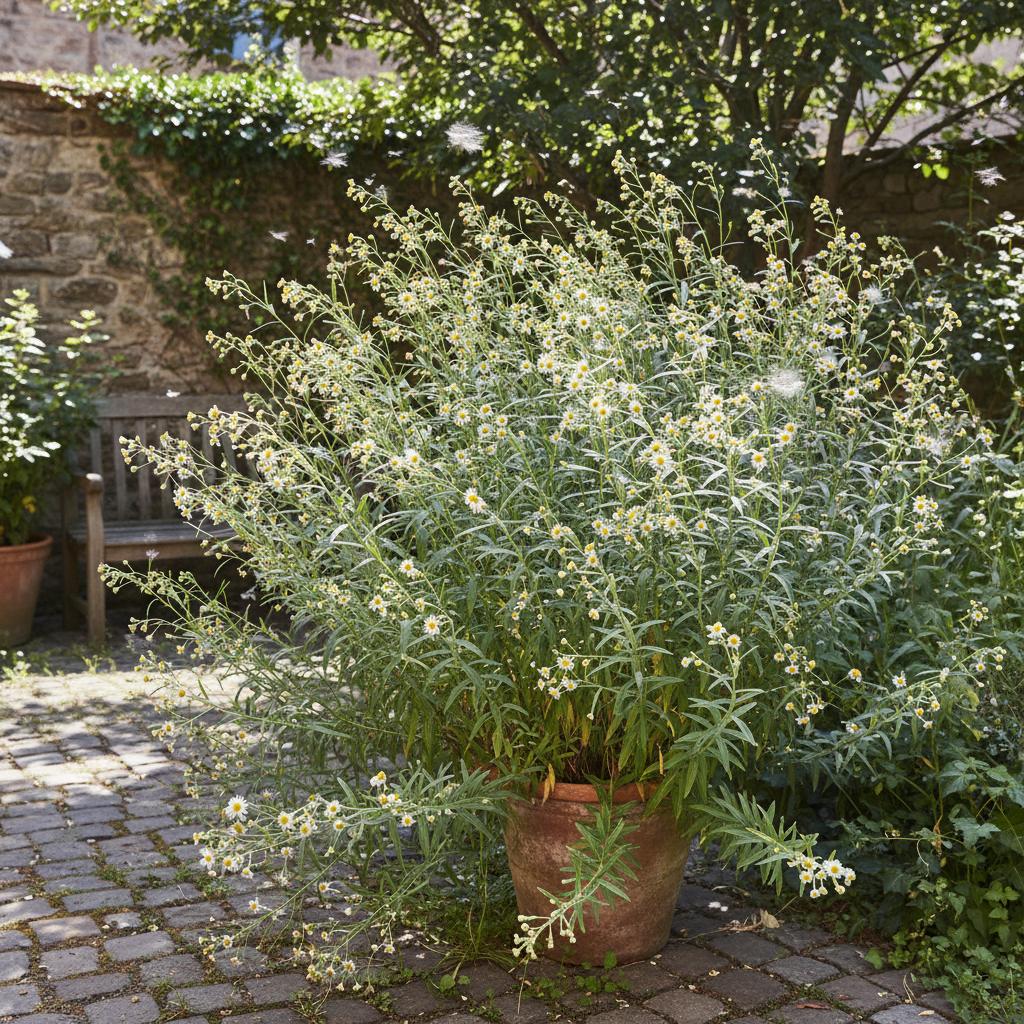
- Leaves: Alternate, linear to lanceolate, 2-10 cm long, margins entire or sparsely toothed, often ciliate along the edges.
- Flowers: Numerous small flower heads arranged in a dense, branched panicle; ray florets are tiny and white or pale pink, while disk florets are yellow.
- Stem: Erect, typically unbranched at the base, covered with stiff hairs.
- Fruit: Small yellowish achenes attached to a pappus of dirty-white bristles, adapted for wind dispersal.
Care Guide
Water only during prolonged dry spells if cultivated; otherwise, natural rainfall is sufficient.
No fertilization required.. This plant thrives in nutrient-poor soils and does not require supplemental feeding.
Compost Tea:If cultivating for traditional uses, steep a handful of finished garden compost or vegetable scraps (like potato peels and carrot tops) in a bucket of water for 24 hours. Strain and use the liquid to water the base. Avoid using raw, uncomposted materials to prevent odor and pests.- Deadheading: Remove flower heads before they go to seed to prevent aggressive spreading, as a single plant can produce hundreds of thousands of wind-blown seeds.
- Weeding: Pull unwanted seedlings early in the spring when the taproot is still small and manageable.
- Clearance: Cut down dead stalks in late autumn to tidy the garden space.
Toxicity
Warning: this plant may be toxic.
Pets: Non-toxic per ASPCA guidelines; no severe adverse reactions expected from incidental nibbling.
Humans: Generally non-toxic, though the sap and essential oils may cause mild contact dermatitis in highly sensitive individuals.
Garden Uses & Culture
Culture: In North American history, indigenous peoples utilized the plant for its astringent properties, boiling it to create treatments for digestive issues and using the dried stalks as friction sticks for starting fires.
Usage: Historically used in herbal medicine as an astringent and diuretic. In modern contexts, it is primarily managed as an agricultural weed, notable for being one of the first plants to develop widespread resistance to glyphosate herbicides.