 PlantFun
Plant Needs
Characteristics
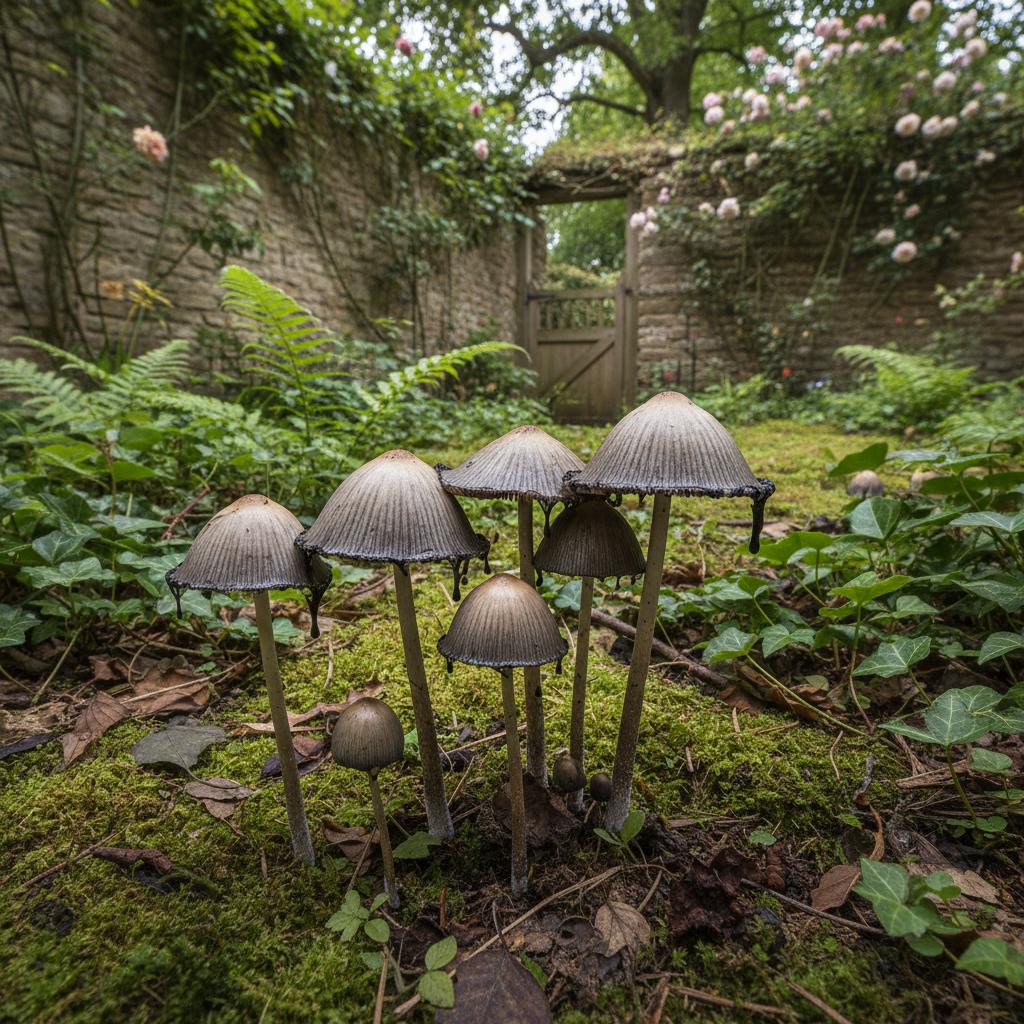
- Cap: Bell-shaped to convex, deeply grooved or pleated, often covered with glistening, mica-like granules when young;
- Gills: Closely spaced, initially white or pale brown, turning black and often liquefying (deliquescing) with age;
- Stem: Slender, fragile, hollow, typically white and lacking a ring;
- Mycelium: Hidden underground or within decaying wood, forming a white, thread-like network.
Care Guide
Maintain constant moisture in the substrate during fruiting seasons
Add fresh hardwood chips or leaf litter. Fungi do not require traditional plant fertilizers; they feed on decaying organic matter.
Organic Substrate Booster:Mix spent coffee grounds with untreated hardwood sawdust or wet cardboard to encourage mycelial growth; avoid treated wood or high-salt materials.- No pruning required; fruiting bodies will naturally deliquesce (melt into ink) and disappear within a few days.
Toxicity
Warning: this plant may be toxic.
Pets: May cause mild gastrointestinal upset if ingested raw.
Humans: Generally non-toxic when cooked, but raw consumption can cause gastrointestinal distress. Note: Do not confuse with related Coprinopsis species which cause severe reactions when consumed with alcohol.
Garden Uses & Culture
Culture: In Western folklore, the sudden, overnight appearance of delicate mushrooms in clusters is often associated with fairy magic and the ephemeral nature of life.
Usage: Ecologically vital as decomposers of dead wood. Some species (like C. micaceus) are foraged for food, though they must be cooked immediately before they dissolve.