 PlantFun
Plant Needs
Characteristics
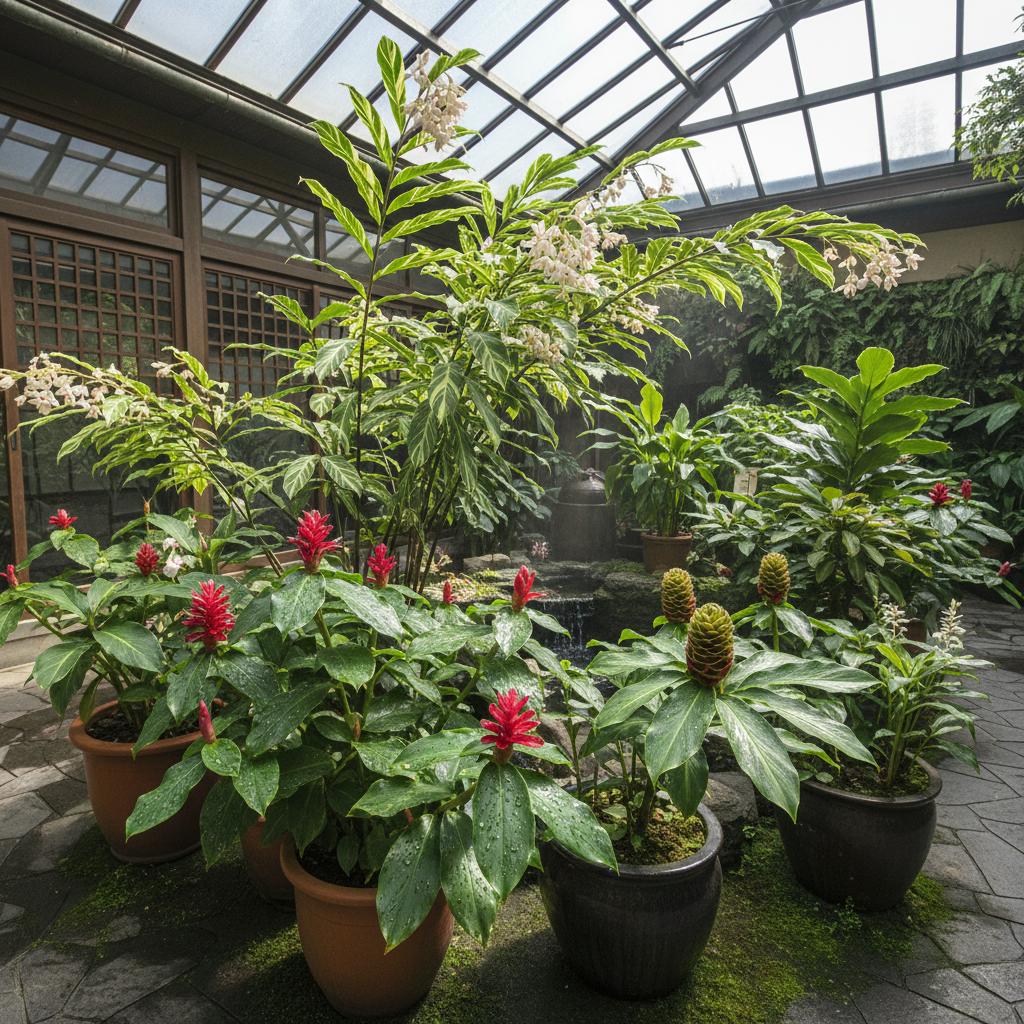
- Leaves: Spirally arranged around the stem, elliptic to lanceolate, dark green and smooth above, softly pubescent beneath;
- Flowers: Large, white with a yellow center, emerging from dark red, cone-like terminal bracts; petals are thin and crinkled, resembling crepe paper;
- Stems: Fleshy, reed-like, and distinctly spiraling, a key morphological trait separating Costaceae from Zingiberaceae;
- Rhizomes: Thick, fleshy, and creeping, lacking the strong aromatic oils typical of true gingers.
Care Guide
Keep soil consistently moist but not waterlogged.
Apply a balanced organic fertilizer to encourage foliage and stem growth.. Feed monthly during the active growing season; halt fertilization in winter.
Banana Peel Tea:Steep chopped banana peels in water for 24-48 hours, strain, and use the liquid to water the plant. This provides a gentle potassium boost to support rhizome health and vibrant blooming. Discard the solid peels in a compost bin to avoid attracting pests.- Remove dead or damaged stems by cutting them all the way down to the soil line;
- Prune away spent flower cones to maintain a tidy appearance and redirect energy to the rhizome;
- Thin out older, crowded stems in early spring to improve air circulation.
Toxicity
Warning: this plant may be toxic.
Pets: Non-toxic per ASPCA guidelines for true gingers and spiral gingers.
Humans: Generally considered non-toxic; rhizomes are sometimes used in traditional practices.
Garden Uses & Culture
Culture: In Western botanical conservatories and tropical landscaping, spiral gingers are highly prized for their architectural, twisting stems, bringing an exotic, structural element to shade gardens.
Usage: - Ornamental landscaping in tropical and subtropical gardens; - Feature plant in large indoor containers or heated greenhouses; - Cut flowers (the red bracts are long-lasting in floral arrangements).