 PlantFun
Plant Needs
Characteristics
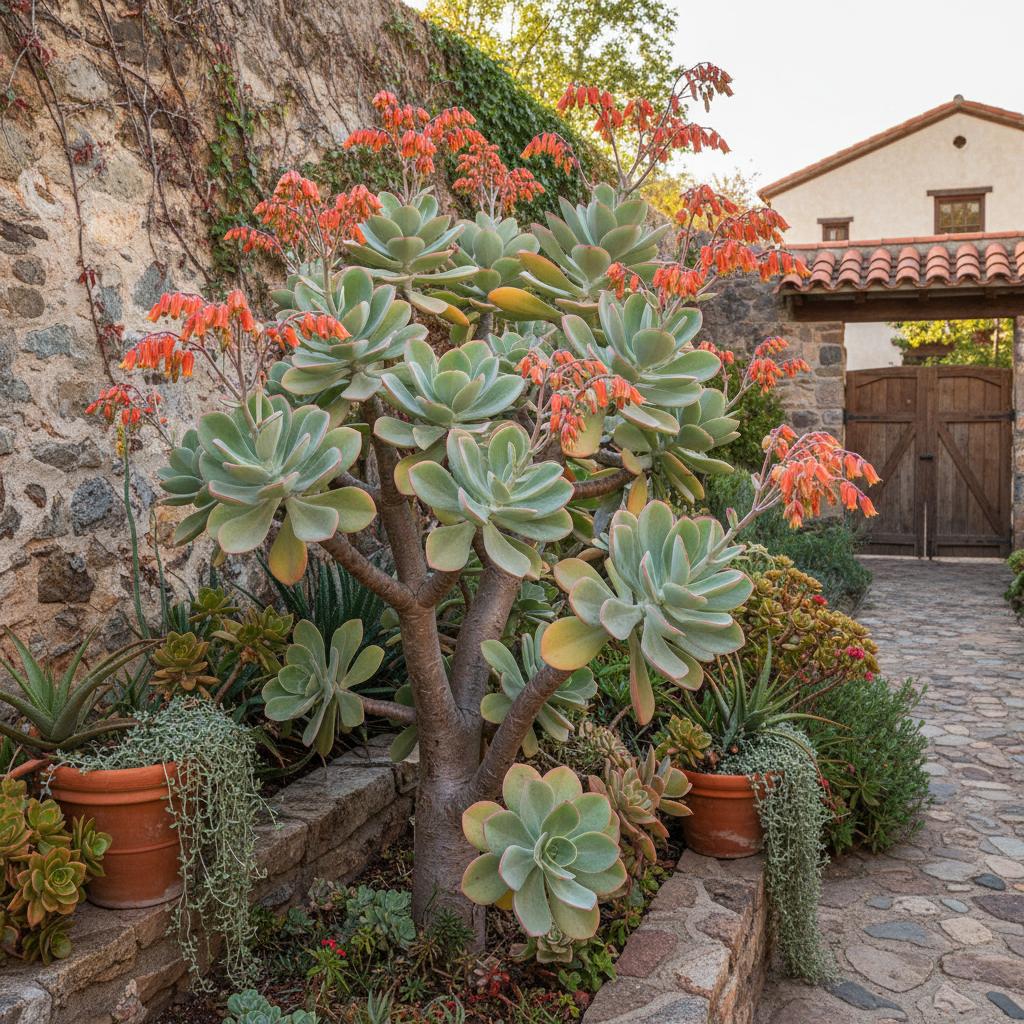
- Leaves: Fleshy, opposite, obovate to round, often covered in a white powdery bloom (farina) with reddish margins;
- Flowers: Pendulous, tubular to bell-shaped, typically orange, red, or yellow, borne on a terminal thyrse;
- Stem: Thick, woody at the base and fleshy towards the tips, branching to form a small shrub.
Care Guide
Water deeply but infrequently, allowing the soil to dry out completely between waterings.
Apply a diluted, low-nitrogen succulent fertilizer once at the start of the growing season.. Avoid over-fertilizing, which can cause weak, leggy growth.
Banana Peel Tea:Soak chopped banana peels in water for 24-48 hours, strain, and use the liquid to water the plant. This provides potassium to support root health and blooming without excess nitrogen. Discard peels in compost to avoid attracting pests.- Remove spent flower stalks at the base to maintain a tidy appearance;
- Prune back leggy stems in early spring to encourage bushier growth;
- Carefully remove any dead or rotting leaves from the base to prevent fungal issues.
Toxicity
Warning: this plant may be toxic.
Pets: Highly toxic per ASPCA; ingestion of cardiac glycosides can be fatal without prompt treatment.
Humans: Contains bufadienolides (cardiac glycosides) which can cause gastrointestinal and cardiac issues if ingested.
Garden Uses & Culture
Culture: Widely cultivated in European and American rock gardens and xeriscapes for its architectural form and drought resilience.
Usage: - **Ornamental**: Popular in container gardens, rockeries, and water-wise landscaping; - **Ecological**: Tubular flowers attract hummingbirds and other pollinators.