 PlantFun
Plant Needs
Characteristics
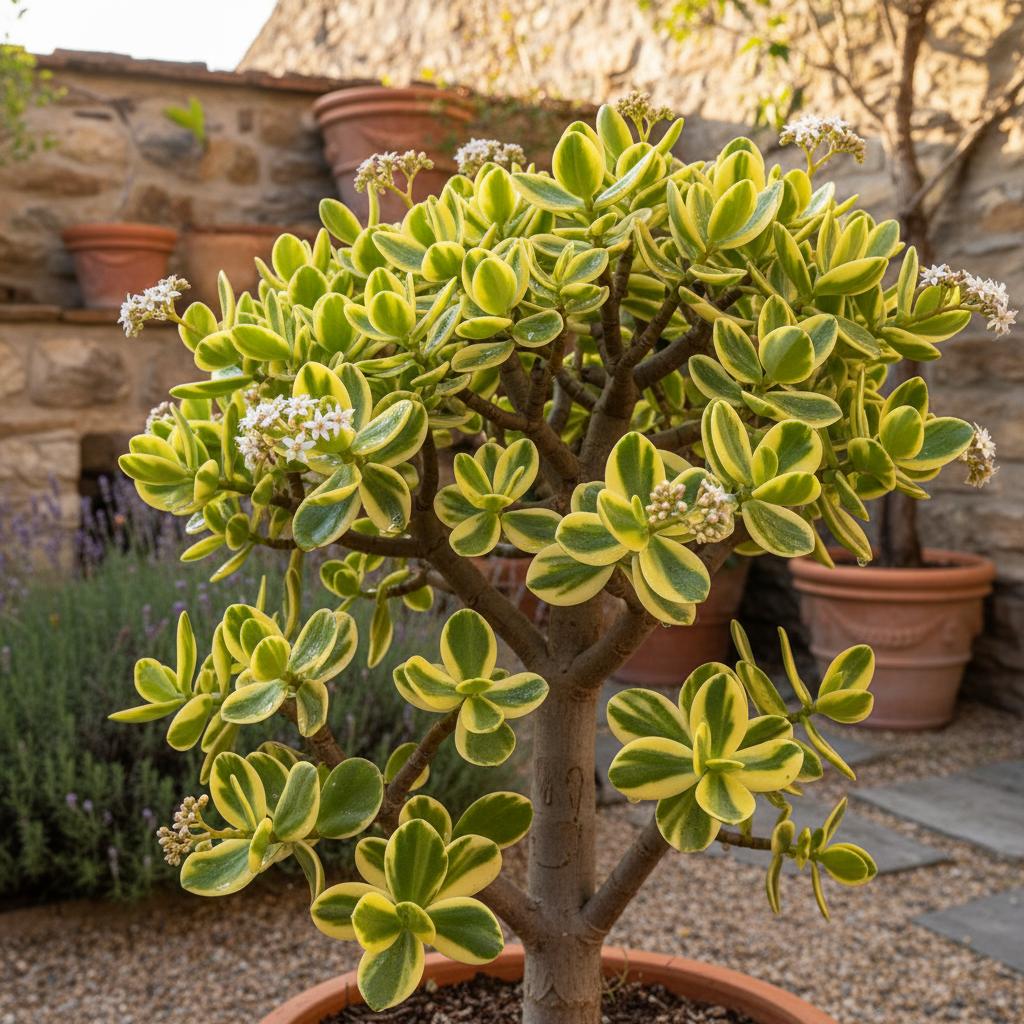
- Leaves: Fleshy, obovate, opposite, glossy green with prominent creamy-yellow to lime-green longitudinal variegation; margins often turn pink or red under environmental stress (sun or cold).
- Stems: Thick, fleshy, and green when young, becoming woody, heavily branched, and brownish-gray with age, featuring distinct leaf scars.
- Flowers: Small, star-shaped, 5-petaled, white to pale pink, borne in dense terminal cymose clusters.
- Roots: Shallow, fibrous root system adapted to quickly absorb surface moisture.
Care Guide
Water thoroughly when the soil is completely dry.
Apply a diluted, balanced liquid fertilizer.. Fertilize sparingly during the active growing season; do not fertilize in winter.
Banana Peel Tea:Steep chopped banana peels in water for 24-48 hours, strain, and use the liquid to water the plant. This provides potassium for strong stems. Discard the solid peels in the compost to avoid attracting fungus gnats indoors.- Prune leggy stems in spring to encourage a bushier, more compact growth habit.
- Remove any fully green (reverted) shoots to maintain the plant's variegated appearance.
- Use clean, sharp shears and allow cuttings to callous for a few days before propagating.
Toxicity
Warning: this plant may be toxic.
Pets: Toxic to cats per ASPCA; ingestion can cause gastrointestinal upset and neurological signs.
Humans: Mildly toxic if ingested in large quantities; sap may cause minor skin irritation in sensitive individuals.
Garden Uses & Culture
Culture: Popularized in Europe and the Americas as a low-maintenance houseplant, it is often associated with prosperity and commonly gifted to new business owners or homeowners as a symbol of good fortune.
Usage: - Grown primarily as an ornamental indoor houseplant. - Popular subject for succulent bonsai due to its thick, woody trunk and ease of pruning. - Used in xeriscaping and rock gardens in frost-free climates.