 PlantFun
Plant Needs
Sunlight
Prefers bright, indirect sunlight to partial sun; intense afternoon sun can scorch the leaves.
Watering
Highly drought-tolerant; requires watering only when the soil is completely dry.
Temperature
Thrives in warm temperatures; not frost-hardy and should be protected from freezing.
Characteristics
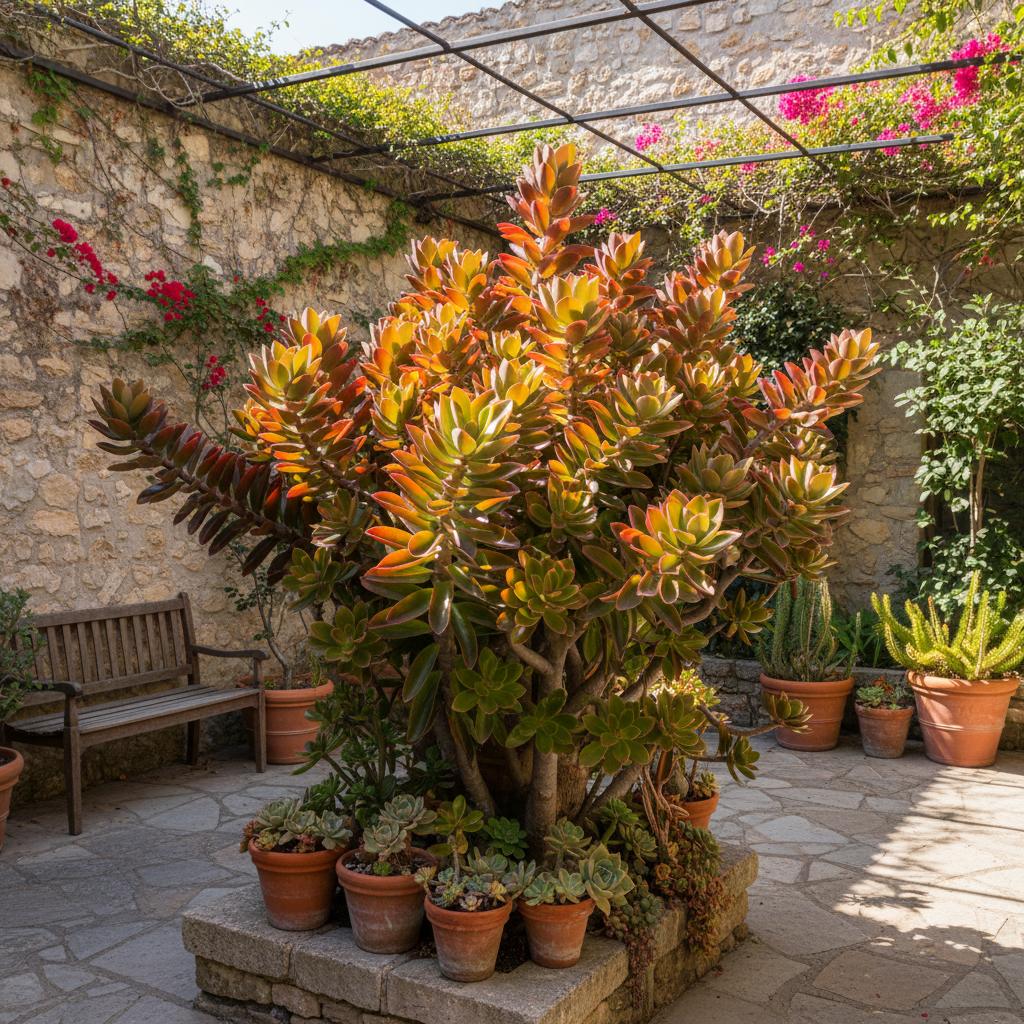
- Leaves: Fleshy, lanceolate to triangular, dark green with prominent reddish-brown spots, covered in fine white papillae (hairs) giving a frosted appearance;
- Flowers: Small, star-shaped, pink to reddish-white, borne in dense terminal clusters (thyrses) on short stalks;
- Stem: Short, branching readily at the base to form dense, low-growing mats or clumps.
Care Guide
Watering
Water thoroughly, allowing excess to drain, then wait until soil is completely dry before watering again.
Fertilization
Apply a diluted succulent fertilizer once at the beginning of the growing season.. Requires very little feeding; over-fertilizing can cause weak, leggy growth.
Banana Peel Tea:Soak chopped banana peels in water for 24-48 hours, strain, and dilute 1:1 with water. Use during the active growing season to support root health and blooming. Avoid leaving peel residue on the soil to prevent gnats.Pruning
- Remove spent flower stalks at the base to keep the plant looking tidy;
- Gently pull away any dried or dead leaves from the bottom of the rosettes to prevent fungal issues;
- Prune back leggy stems if the plant stretches due to low light, which will encourage branching.
Toxicity
Warning: this plant may be toxic.
Pets & Humans
Pets: Mildly toxic to cats per ASPCA guidelines for Crassula species; may cause gastrointestinal upset.
Humans: Generally considered non-toxic to humans, though ingestion is not recommended.
Garden Uses & Culture
Culture: Highly valued in Western succulent collections for its unique texture and miniature, bonsai-like clustering habit.
Usage: Excellent for shallow containers, windowsill gardens, fairy gardens, and rockeries in mild climates.