 PlantFun
Plant Needs
Characteristics
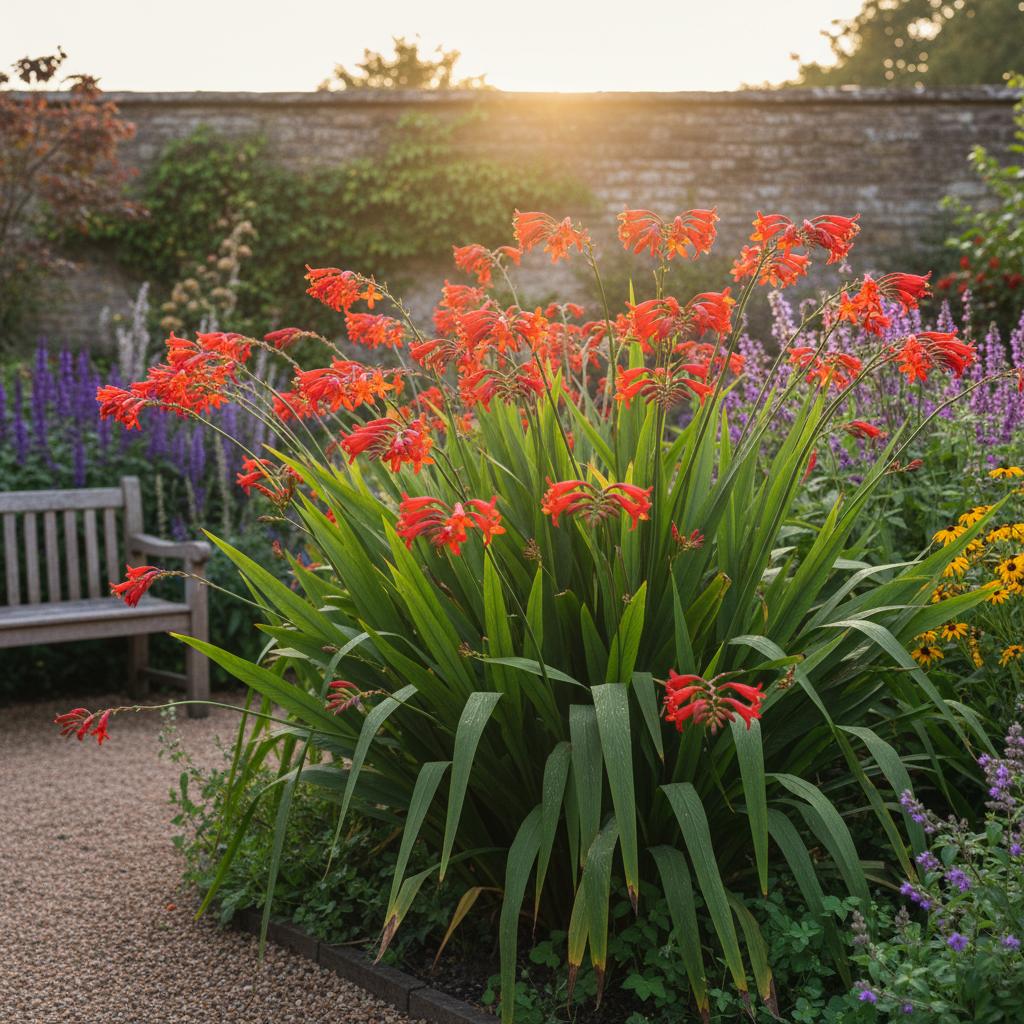
- Leaves: Basal, sword-shaped (ensiform), pleated, mid-green, growing in dense fan-like clumps;
- Flowers: Funnel-shaped, bright orange, red, or yellow, borne in branched, zig-zag, one-sided spikes (panicles) on wiry, arching stems;
- Underground: Produces chains of corms that multiply rapidly beneath the soil surface.
Care Guide
Water deeply once a week, increasing frequency during extreme heat or drought.
Apply a balanced organic fertilizer as new shoots emerge.. Avoid high-nitrogen fertilizers, which promote excessive leafy growth at the expense of flowers.
Banana Peel Tea:Steep chopped banana peels in water for 24-48 hours, strain, and use the liquid to water the base of the plant to encourage prolific blooming. Discard solids in compost to avoid attracting pests.- Cut back dead foliage to the ground in late autumn or early spring before new growth begins;
- Deadhead spent flower spikes to maintain a tidy appearance, though leaving them can provide winter interest;
- Divide congested clumps of corms every 3 to 4 years in early spring to rejuvenate growth and improve flowering.
Toxicity
Warning: this plant may be toxic.
Pets: Non-toxic to cats per general botanical consensus, though corms may cause mild mechanical irritation if chewed.
Humans: Generally considered non-toxic to humans.
Garden Uses & Culture
Culture: Highly popular in Victorian English gardens after being hybridized in France in the 1880s. It is often associated with late summer energy, enthusiasm, and the transition into autumn in Western floral design.
Usage: Excellent as cut flowers, in herbaceous borders, and for attracting hummingbirds, bees, and butterflies to the garden.