 PlantFun
Plant Needs
Sunlight
Requires bright, indirect light; direct sunlight will scorch the variegated leaves and cause colors to fade.
Watering
Keep the soil consistently moist but not waterlogged. Requires high ambient humidity (60% or higher) to prevent crispy leaf edges.
Temperature
Prefers warm tropical temperatures; avoid cold drafts and temperatures below 15°C (59°F).
Characteristics
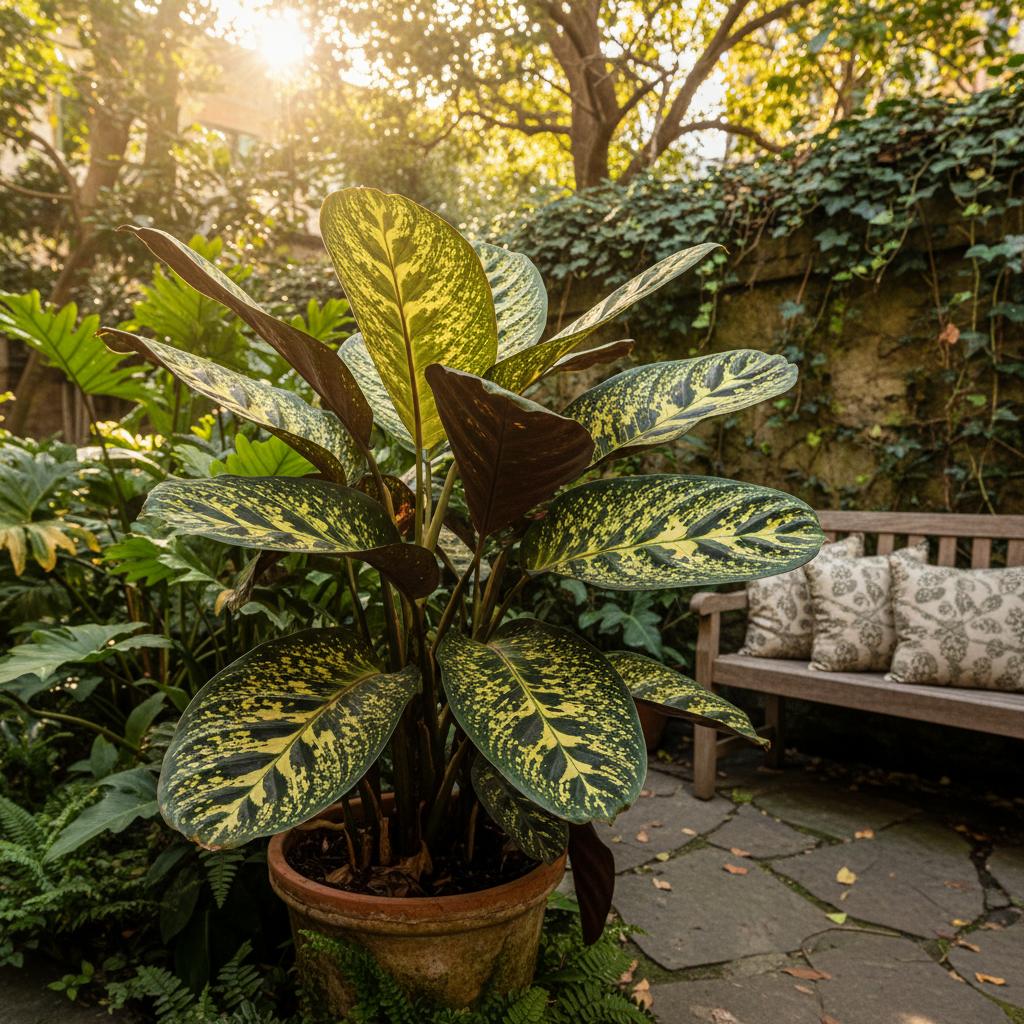
- Leaves: Elliptical to oblong, up to 25 cm long, featuring striking irregular variegation of yellow and pale green sweeping across a dark green background; undersides are pale green.
- Stems: Wiry, bamboo-like branching stems that give the plant a clumping, upright yet spreading habit.
- Flowers: Inconspicuous, small white or yellowish flowers borne in spike-like bracts, though rarely seen in indoor cultivation.
- Roots: Rhizomatous root system adapted to spreading in shallow, rich forest floor soils.
Care Guide
Watering
Water thoroughly when the top inch of soil feels dry, maintaining even moisture.
Fertilization
Apply a diluted, balanced liquid fertilizer to support new foliage growth.. Do not over-fertilize, as salt buildup can cause leaf tip burn.
Aquarium Water:Use dirty water from routine freshwater aquarium changes. It provides a very gentle, natural source of nitrogen that won't burn the sensitive roots. Ensure the aquarium water contains no added salts or chemical medications.Pruning
- Maintenance: Trim away any brown, crispy, or yellowing leaves at the base of the stem using sterilized shears.
- Shaping: Prune overly leggy stems to encourage a bushier, more compact growth habit.
- Cleaning: Wipe leaves regularly with a damp cloth to remove dust and support efficient photosynthesis.
Toxicity
Warning: this plant may be toxic.
Pets & Humans
Pets: Non-toxic to cats (per ASPCA guidelines for the Marantaceae family).
Humans: Non-toxic to humans; safe to handle.
Garden Uses & Culture
Culture: Popularized in Western interior design during the mid-century modern era, it is prized for bringing bold, architectural foliage and a lush, jungle aesthetic into urban homes.
Usage: Primarily used as an indoor ornamental houseplant, or as a shaded understory groundcover in tropical landscape designs.