 PlantFun
Plant Needs
Characteristics
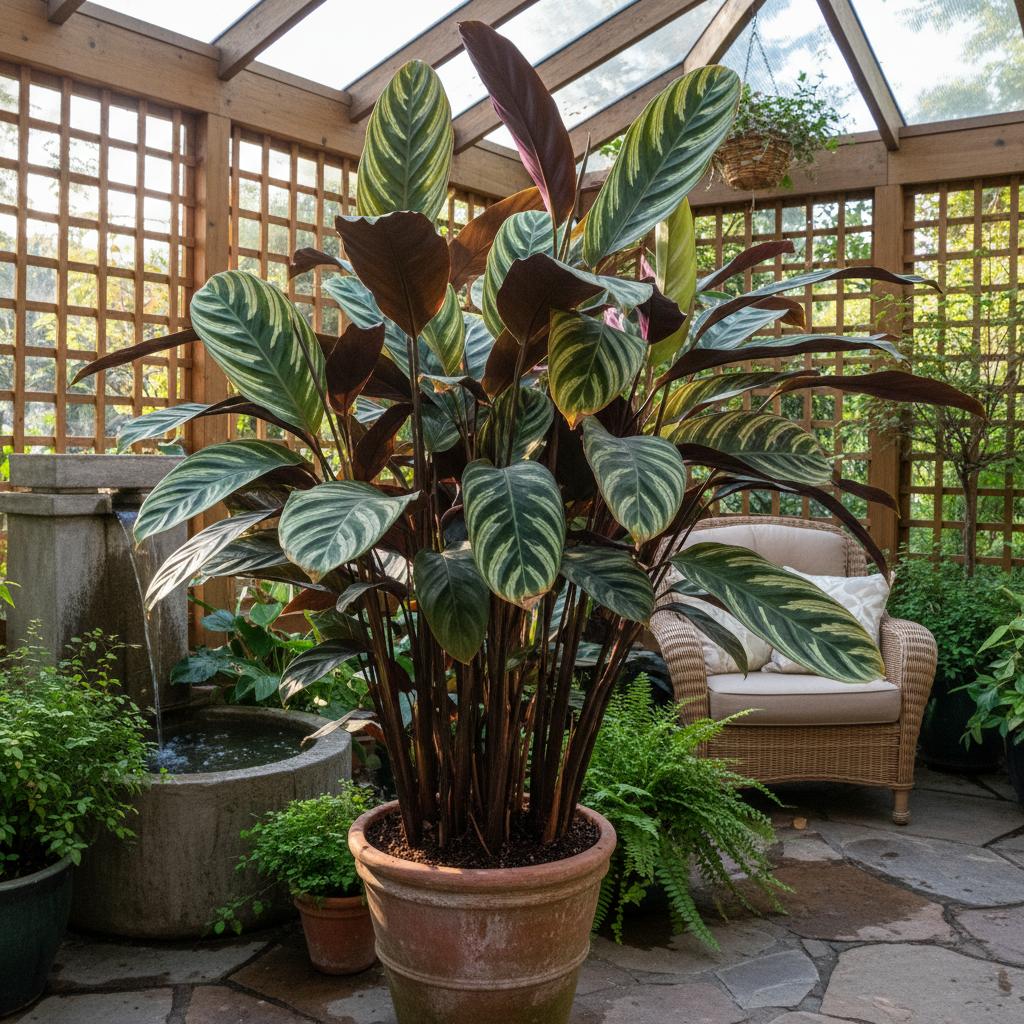
- Leaves: Pale green, broadly oval leaves featuring striking dark green, curving stripes resembling a fishbone, with deep purple undersides;
- Stems: Short, clumping stems that grow densely to form a compact, spreading habit;
- Flowers: Inconspicuous small white flowers borne on spike-like inflorescences, though rarely seen in indoor cultivation;
- Roots: Fibrous root system with small rhizomes used for spreading and nutrient storage.
Care Guide
Water thoroughly when the top inch of soil feels dry, maintaining even moisture.
Apply a diluted, balanced liquid fertilizer.. Feed only during the active growing season; flush the soil occasionally to prevent salt buildup.
Aquarium Water or Banana Peel Tea:Use dirty aquarium water (rich in natural nitrogen) when watering, or steep chopped banana peels in water for 24 hours, strain, and dilute 1:1. Avoid placing raw peels directly on the soil to prevent fungus gnats and odors.- Maintenance: Trim away any brown, yellowing, or damaged leaves at the base of the stem using sterilized shears;
- Aesthetics: Remove crispy leaf edges (often caused by low humidity) by following the natural curve of the leaf;
- Rejuvenation: Divide overcrowded clumps during spring repotting to maintain vigor.
Toxicity
Warning: this plant may be toxic.
Pets: Non-toxic to cats (per ASPCA guidelines for the Marantaceae family).
Humans: Non-toxic to humans; safe to handle and keep in living spaces.
Garden Uses & Culture
Culture: Highly valued in Western contemporary interior design for its striking geometric foliage and dynamic daily movements, often featured in modern minimalist and biophilic home styling.
Usage: - **Ornamental**: Popular indoor potted plant for tabletops and plant stands; - **Terrariums**: Excellent choice for large closed terrariums due to its high humidity requirements; - **Landscaping**: Used as a shaded understory groundcover in frost-free tropical climates.