 PlantFun
Plant Needs
Sunlight
Prefers full sun to partial shade; blooming is most prolific in full sun.
Watering
Requires moderate watering; allow the top inch of soil to dry out between waterings. Drought-tolerant once established.
Temperature
Thrives in heat but is frost-tender. Grown as a perennial in USDA Zones 9-11 and as an annual elsewhere.
Characteristics
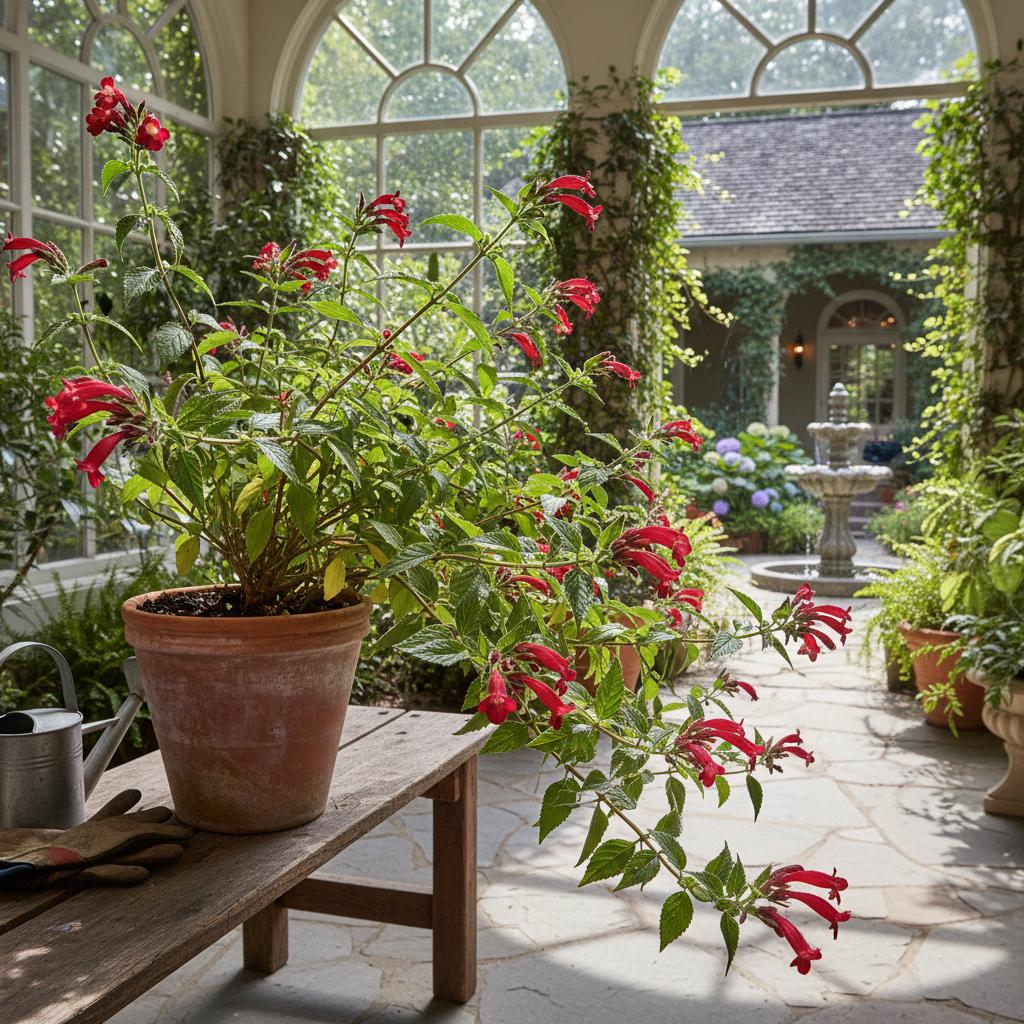
- Leaves: Ovate to lanceolate, dark green, rough-textured (hirsute) with entire margins, arranged oppositely along the stems;
- Flowers: Tubular and distinctive, featuring a dark purple to blackish calyx tube tipped with two upward-facing, bright red petals that resemble the face and ears of a bat;
- Stems: Reddish-green, covered in fine hairs, branching freely to form a bushy, mounded habit.
Care Guide
Watering
Water deeply when the top inch of soil feels dry, typically 1-2 times a week depending on heat.
Fertilization
Apply a balanced fertilizer as new growth emerges.. Avoid over-fertilizing, which can lead to excessive foliage growth at the expense of flowers.
Banana Peel Tea:Soak chopped banana peels in a jar of water for 24 to 48 hours. Strain the liquid and dilute 1:1 with fresh water to irrigate the base of the plant. This provides a gentle potassium boost to encourage the bright red blooms. Discard the solid peels in an outdoor compost bin to prevent fruit flies and odors.Pruning
- Pinch back the tips of young plants to encourage a bushier growth habit;
- Lightly trim back leggy stems in mid-summer to rejuvenate the plant and stimulate a new flush of flowers;
- In frost-free zones, prune back by one-third in late winter to maintain shape.
Toxicity
Warning: this plant may be toxic.
Pets & Humans
Pets: Non-toxic to cats per ASPCA guidelines for the Cuphea genus.
Humans: Non-toxic to humans.
Garden Uses & Culture
Culture: Highly valued in American pollinator gardens, particularly in the South and Southwest, for its exceptional ability to attract hummingbirds and butterflies during the hottest months of the year.
Usage: Excellent for hanging baskets, window boxes, patio containers, and as a border plant in pollinator-friendly landscapes.