 PlantFun
Plant Needs
Sunlight
Requires full sun to partial shade; best blooming occurs with at least 6 hours of direct sunlight.
Watering
Moderate water needs; allow the top inch of soil to dry out between waterings.
Temperature
Thrives in heat; not frost-tolerant and will die back when temperatures drop below freezing.
Characteristics
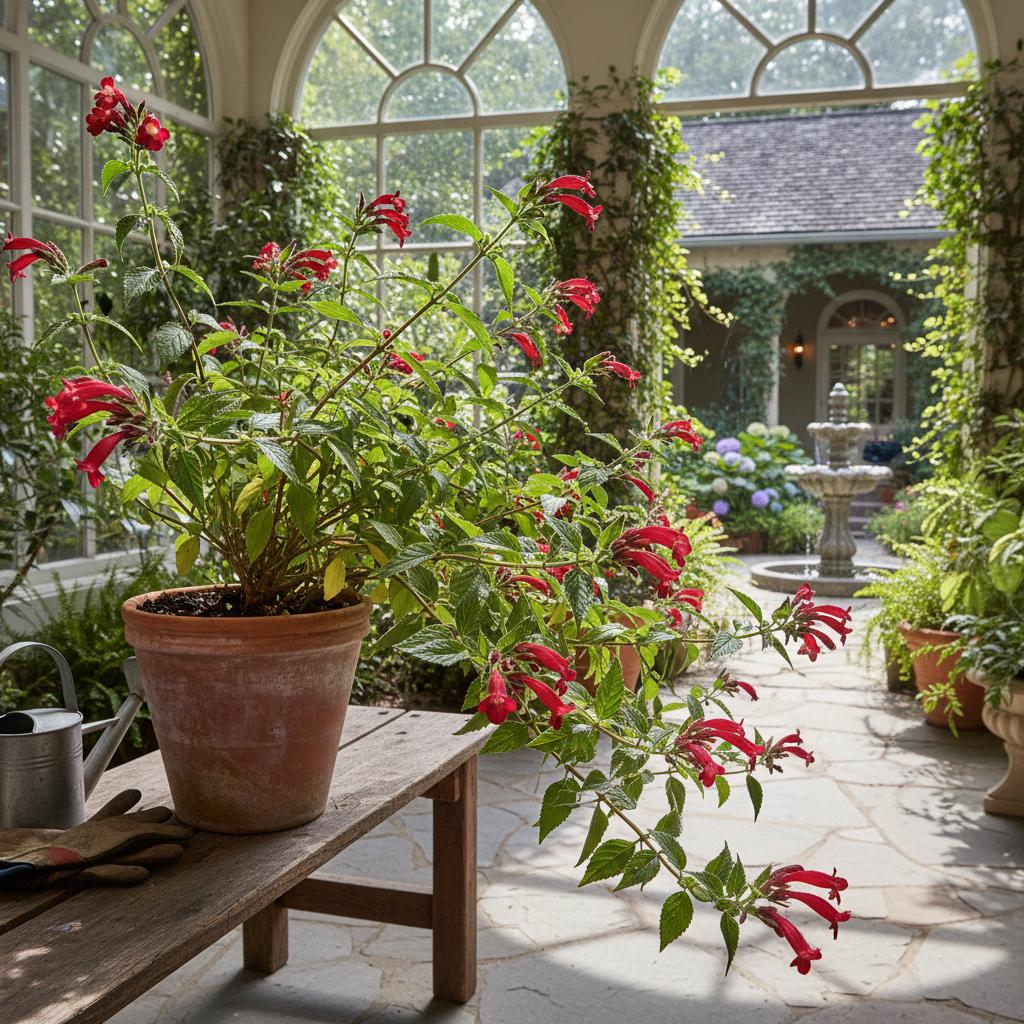
- Leaves: Lanceolate to ovate, opposite, dark green, with slightly sticky or hairy surfaces;
- Flowers: Tubular calyx with two prominent, upward-facing bright red to purple petals resembling bat ears, and a dark purple center;
- Stems: Upright, branching, often tinged red and covered in fine glandular hairs.
Care Guide
Watering
Water deeply when the top inch of soil feels dry, especially during extreme heat.
Fertilization
Apply a balanced slow-release fertilizer at planting.. Avoid over-fertilizing with nitrogen, which promotes foliage at the expense of flowers.
Banana Peel Tea:Soak chopped banana peels in water for 24-48 hours. Strain and use the liquid to water the plant to encourage prolific blooming. Discard peels in compost to avoid fruit flies and odors.Pruning
- Pinch back stem tips on young plants to encourage branching and a bushier habit;
- Lightly shear mid-season if the plant becomes leggy to rejuvenate growth;
- Remove spent flowers to maintain a tidy appearance, though the plant is largely self-cleaning.
Toxicity
Warning: this plant may be toxic.
Pets & Humans
Pets: Non-toxic to cats per ASPCA guidelines for the Cuphea genus.
Humans: Generally considered non-toxic to humans.
Garden Uses & Culture
Culture: Highly valued in North American pollinator gardens for its exceptional ability to attract hummingbirds and butterflies during the peak of summer.
Usage: - Container gardening and hanging baskets; - Mixed summer borders; - Pollinator and wildlife gardens.