 PlantFun
Plant Needs
Sunlight
Prefers full sun to partial shade; best blooming occurs in full sun.
Watering
Moderate water needs; drought-tolerant once established but performs best with consistent moisture.
Temperature
Thrives in heat; grown as a perennial in USDA zones 8-11 and as an annual in cooler climates.
Characteristics
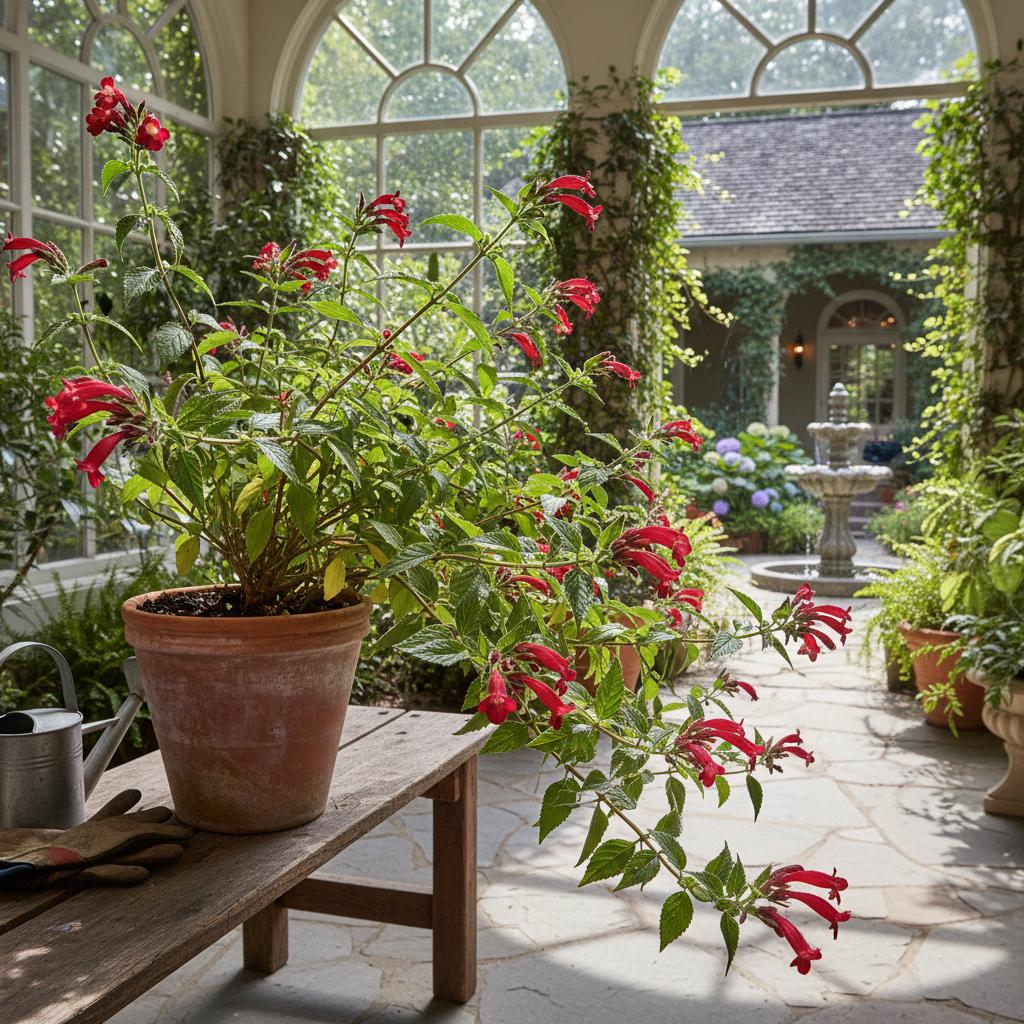
- Leaves: Ovate to lanceolate, dark green, rough-textured (hirsute) with entire margins, arranged oppositely along the stems;
- Flowers: Distinctive tubular shape, bright red with a dark purple to black face and two upward-facing bright red petals resembling bat ears;
- Stems: Branching, slightly hairy, forming a bushy, mounded habit.
Care Guide
Watering
Water deeply when the top inch of soil feels dry.
Fertilization
Apply a balanced slow-release fertilizer as new growth emerges.. Avoid over-fertilizing, which can promote foliage growth at the expense of flowers.
Banana Peel Tea:Steep chopped banana peels in water for 24-48 hours, strain, and use the liquid to water the plant. This provides a gentle potassium boost to encourage continuous blooming. Discard peels in compost to avoid attracting pests.Pruning
- Pinch back stem tips on young plants to encourage a bushier, more compact habit;
- Lightly trim back in mid-summer if the plant becomes leggy;
- In frost-free zones, prune heavily in late winter to rejuvenate growth for the spring.
Toxicity
Warning: this plant may be toxic.
Pets & Humans
Pets: Non-toxic to cats per ASPCA guidelines for the Cuphea genus.
Humans: Generally considered non-toxic to humans.
Garden Uses & Culture
Culture: Highly valued in North American pollinator gardens, particularly for its exceptional ability to attract hummingbirds during the hot summer months.
Usage: Excellent for borders, mass plantings, containers, hanging baskets, and butterfly/hummingbird gardens.