 PlantFun
Plant Needs
Sunlight
Requires bright, indirect sunlight to full sun; insufficient light causes weak, elongated stems.
Watering
Highly drought-tolerant; requires watering only when the soil is completely dry.
Temperature
Prefers warm temperatures but can tolerate brief drops to 5°C; not frost hardy.
Characteristics
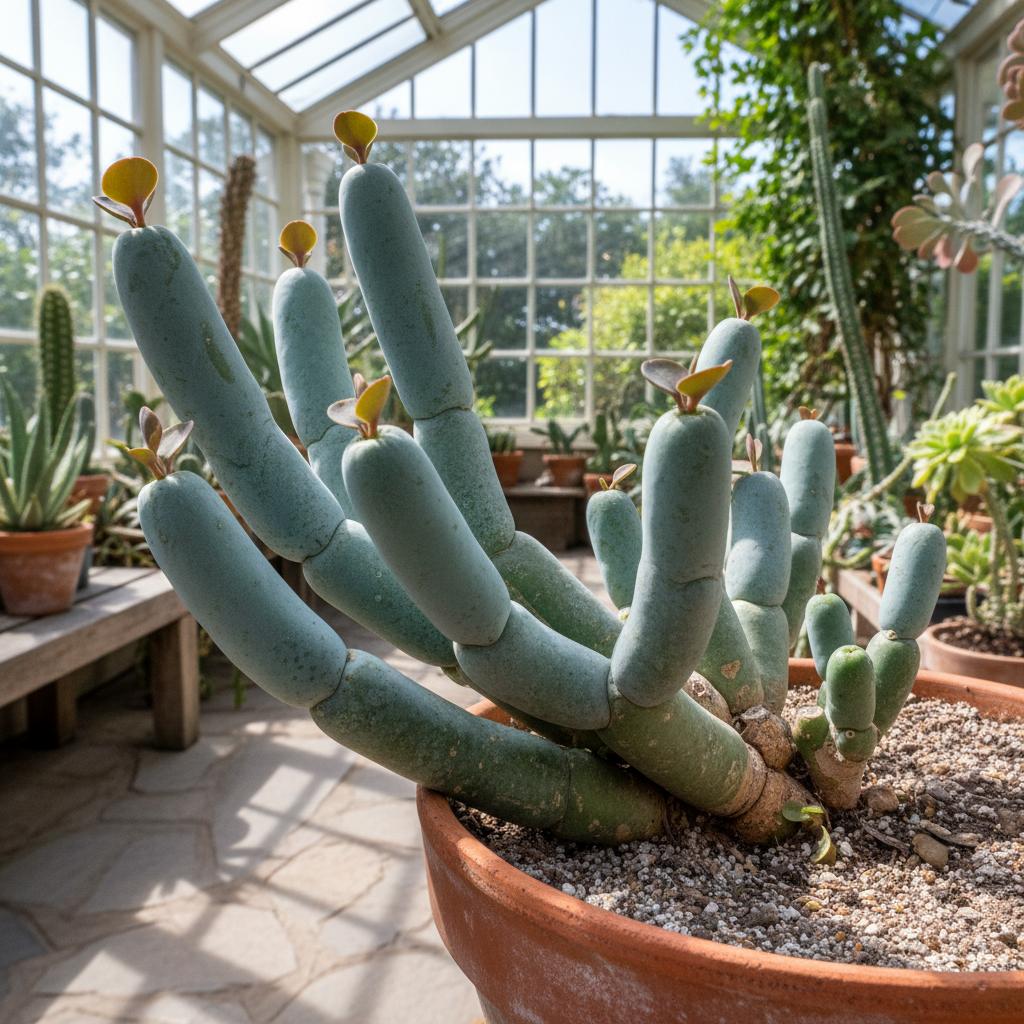
- Stems: Succulent, tubular, and distinctly jointed or segmented, pale glaucous green to grayish-blue, often adorned with darker green or purplish markings.
- Leaves: Deeply lobed, grayish-green, sometimes with purple undersides; they appear during the active winter growing season and drop during summer dormancy.
- Flowers: Small, rayless (discoid) capitula that are whitish to pale yellow or pinkish, borne on long stalks, and often emit a foul odor.
- Roots: Fibrous, adapted to shallow, well-draining soils.
Care Guide
Watering
Water very sparingly, as the plant is dormant and will naturally drop its leaves.
Fertilization
Do not fertilize (entering dormancy).. Feed lightly only during the active autumn and winter growing season.
Banana Peel Tea:Steep chopped banana peels in water for 24 hours, then dilute 1:1 with water. Use this mild potassium boost during the active winter growing season to support root and stem health. Discard the solid peels to avoid attracting pests.Pruning
- Remove dead or shriveled stems at the joints to maintain a tidy appearance.
- Prune overly leggy growth to encourage branching.
- Retain healthy pruned segments, let them callous for a few days, and replant to propagate.
Toxicity
Warning: this plant may be toxic.
Pets & Humans
Pets: Toxic per ASPCA (as Senecio spp.); ingestion causes liver failure, lethargy, and gastrointestinal distress.
Humans: Contains pyrrolizidine alkaloids which are hepatotoxic; ingestion can cause liver damage over time.
Garden Uses & Culture
Culture: Highly prized in Western succulent collections and xeriscaping for its bizarre, architectural form, earning it the affectionate moniker "Hot Dog Cactus" in North America.
Usage: Excellent as a potted specimen for sunny windowsills, in succulent dish gardens, or in dry, frost-free rockeries.