 PlantFun
Plant Needs
Characteristics
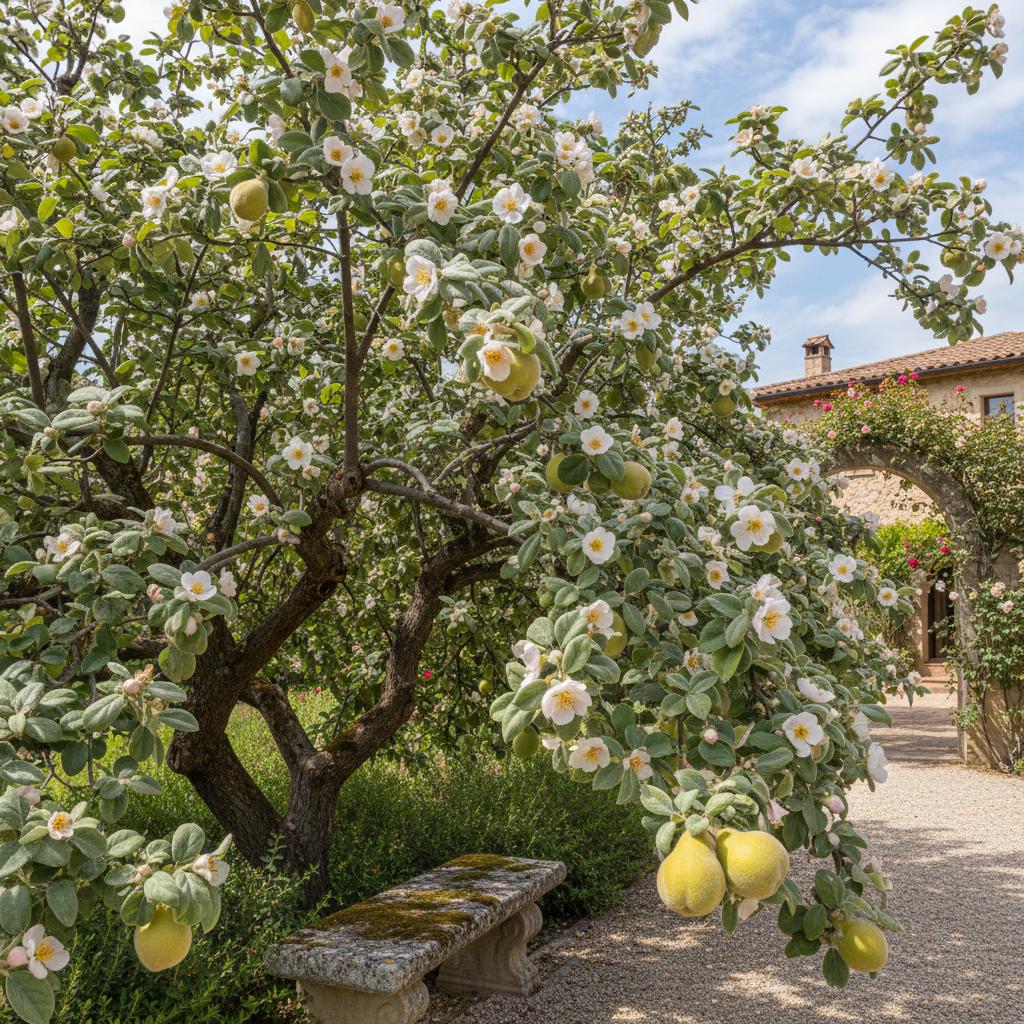
- Leaves: Alternate, simple, ovate to elliptic, 6-11 cm long, with entire margins; densely covered with fine white pubescence on the underside.
- Flowers: Solitary, large (up to 5 cm across), appearing after the leaves; featuring 5 petals that are white to pale pink, with numerous stamens.
- Fruit: A large, pear-shaped or apple-shaped pome, turning bright golden-yellow when mature; covered in a fine, easily rubbed-off down, and highly aromatic.
- Bark: Grayish-brown, relatively smooth on young branches but peeling in irregular flakes on older trunks.
Care Guide
Water deeply once a week during active growth and fruit development, especially in dry spells.
Apply a balanced organic fertilizer just before bud break.. Avoid excessive nitrogen, which promotes vegetative growth at the expense of fruit and increases susceptibility to fire blight.
Banana Peel and Wood Ash Blend:Bury chopped banana peels and a small amount of untreated wood ash in the soil around the drip line. This provides potassium for fruit development and calcium to prevent bitter pit. Do not apply wood ash if your soil is already highly alkaline.- Prune in late winter while the tree is fully dormant.
- Remove dead, diseased, or crossing branches to maintain an open center or modified leader structure.
- Thin out older wood to encourage new fruiting spurs, as quince bears fruit on the tips of shoots made the previous year.
- Remove any suckers growing from the base of the trunk or rootstock.
Toxicity
Warning: this plant may be toxic.
Pets: Non-toxic per ASPCA. The flesh is safe, though seeds should be avoided.
Humans: The fruit flesh is entirely safe and edible (typically cooked). Seeds contain trace amounts of cyanogenic glycosides (amygdalin) but are not harmful unless chewed and consumed in massive quantities.
Garden Uses & Culture
Culture: In ancient Greek mythology, the quince was sacred to Aphrodite and was given as a symbol of love, fertility, and happiness. It was a traditional wedding gift, and brides were encouraged to nibble a quince before entering the bridal chamber to ensure sweet breath.
Usage: Primarily cultivated for its fruit, which is high in pectin and used to make jams, jellies, and membrillo (quince paste). Also used as a dwarfing rootstock for pear trees and grown as an ornamental landscape tree.