 PlantFun
Plant Needs
Sunlight
Requires bright, indirect sunlight; direct midday sun can scorch leaves, but insufficient light prevents blooming.
Watering
Water thoroughly when the potting medium is almost completely dry. Requires a distinct dry rest period in winter.
Temperature
Prefers warm summers and cool winters; a temperature drop in autumn/winter is essential to trigger flower spikes.
Characteristics
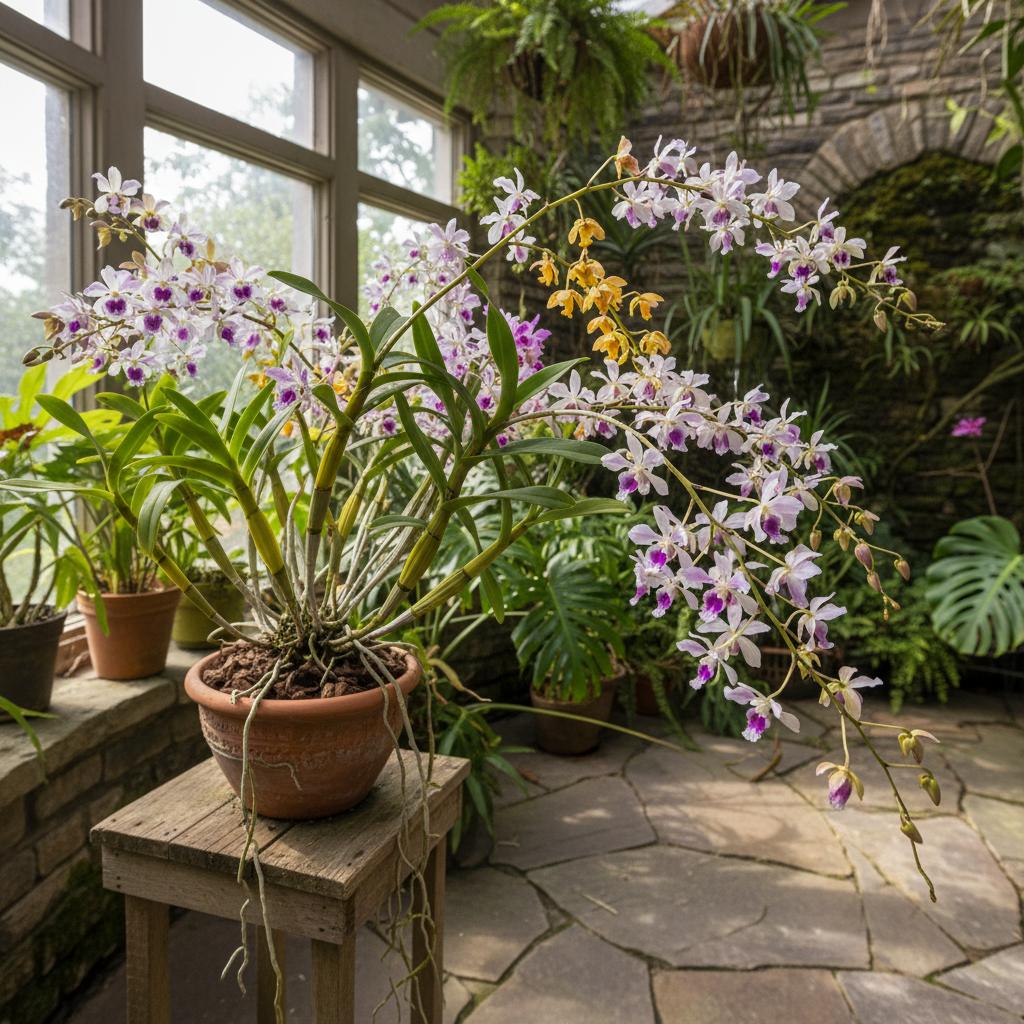
- Leaves: Alternate, strap-shaped to narrowly ovate, leathery, arranged in two ranks along the pseudobulbs, often deciduous in winter;
- Flowers: Borne on short racemes from the upper nodes of older, leafless canes; petals and sepals typically white with pink to purple tips, featuring a prominent tubular lip with a dark maroon or purple throat;
- Stems: Erect or pendulous, cane-like pseudobulbs, swollen at the internodes, yellowish-green, storing water and nutrients;
- Roots: Thick, white, fleshy epiphytic roots covered in velamen for rapid moisture absorption.
Care Guide
Watering
Water generously as new growth appears, allowing the medium to nearly dry between waterings.
Fertilization
Apply a balanced, water-soluble fertilizer at quarter strength weekly.. Cease fertilization entirely during the autumn and winter rest period.
Banana Peel Tea:Steep chopped banana peels in water for 24-48 hours, strain, and dilute 1:1 with fresh water. Use during the active growing season to support strong canes and future blooms. Discard solids in compost to avoid attracting fungus gnats.Pruning
- Do not cut old canes: Even leafless, shriveled canes store energy and water, and can produce flowers or keikis (baby plants) in subsequent years;
- Remove spent flowers: Snip off individual faded blooms to maintain a tidy appearance;
- Trim dead roots: When repotting, use sterilized shears to remove mushy, brown, or hollow roots, leaving the firm white or green ones intact.
Toxicity
Warning: this plant may be toxic.
Pets & Humans
Pets: Non-toxic to cats per ASPCA.
Humans: Non-toxic to humans; safe to handle.
Garden Uses & Culture
Culture: Highly prized in Victorian-era European conservatories, Dendrobiums became a symbol of exotic refinement and botanical prestige among 19th-century orchid collectors.
Usage: Cultivated extensively as a flowering houseplant and greenhouse specimen; frequently used in the cut flower industry for corsages and floral arrangements.