 PlantFun
Plant Needs
Characteristics
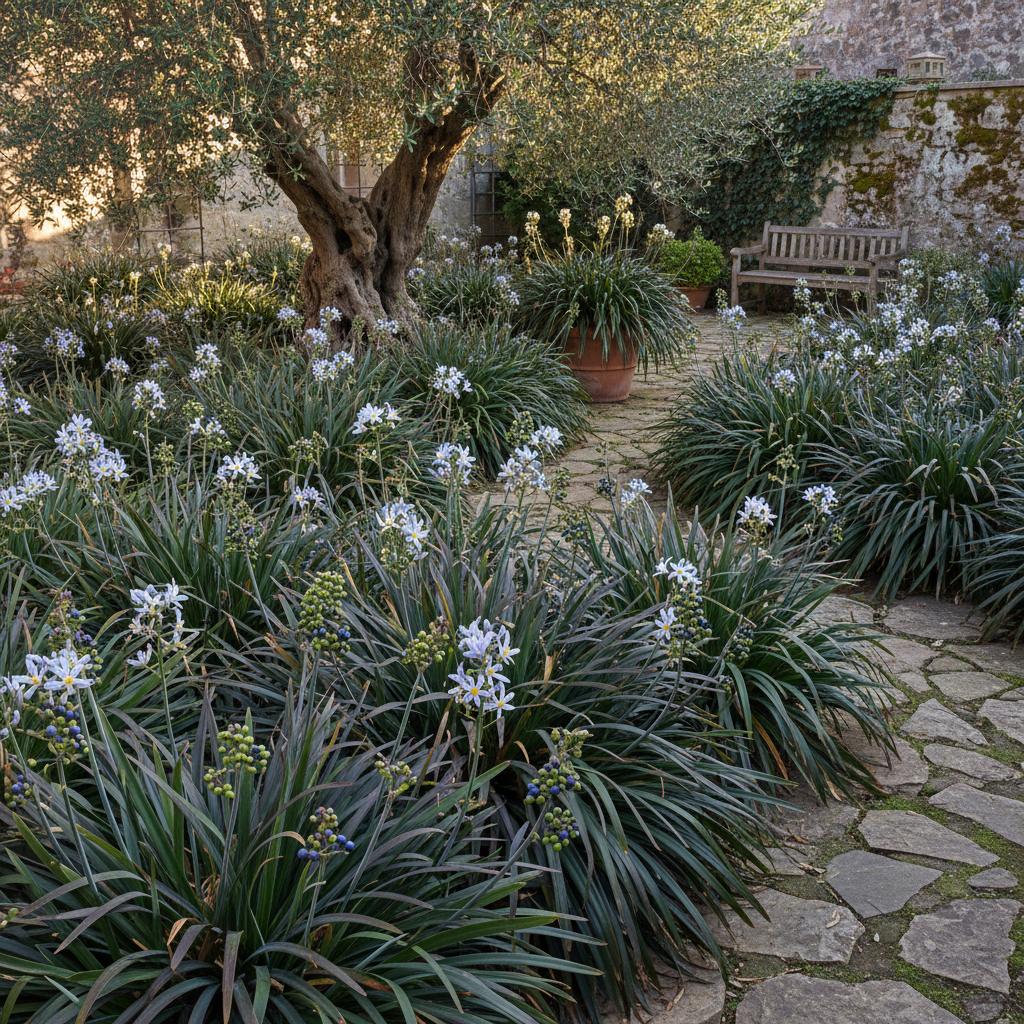
- Leaves: Evergreen, strap-shaped, linear to lanceolate, leathery, with finely serrated and often rough margins, growing in dense basal clumps;
- Flowers: Star-shaped, nodding, pale blue to violet tepals with prominent yellow stamens, borne on loose, branched panicles extending above the foliage;
- Fruit: Fleshy, globose to oblong berries, turning a striking bright metallic blue or purple when ripe;
- Rhizomes: Spreading underground rhizomes that form dense, robust clumps over time.
Care Guide
Water moderately during the active growing season, allowing the top inch of soil to dry out.
Apply a balanced, slow-release fertilizer at the beginning of the growing season.. Avoid over-fertilizing, which can lead to excessive foliage growth at the expense of flowers and berries.
Banana Peel Tea:Steep chopped banana peels in water for 24-48 hours. Strain and use the liquid to water the base of the plant. This provides a gentle potassium boost to support root health and berry development. Discard the peels in compost to avoid attracting pests.- Remove dead, damaged, or yellowing leaves at the base to maintain a tidy appearance;
- Cut back spent flower stalks down to the foliage line after the berries have dropped or shriveled;
- Divide large, congested clumps every 3-4 years in early spring to rejuvenate the plant.
Toxicity
Warning: this plant may be toxic.
Pets: May cause mild gastrointestinal irritation if leaves or berries are ingested (per ASPCA guidelines for similar saponin-containing plants).
Humans: Berries can cause mild gastrointestinal upset if ingested in large quantities.
Garden Uses & Culture
Culture: In Western landscaping, it is highly prized for its architectural form and drought tolerance, frequently utilized in modern, minimalist, and xeriscape garden designs.
Usage: Ornamental landscaping, border planting, mass planting, container gardening, and erosion control on slopes.