 PlantFun
Plant Needs
Sunlight
Prefers bright indirect light but can tolerate partial direct sun and low light conditions.
Watering
Highly drought-tolerant; allow soil to dry out completely between waterings.
Temperature
Thrives in warm temperatures; protect from frost and cold drafts.
Characteristics
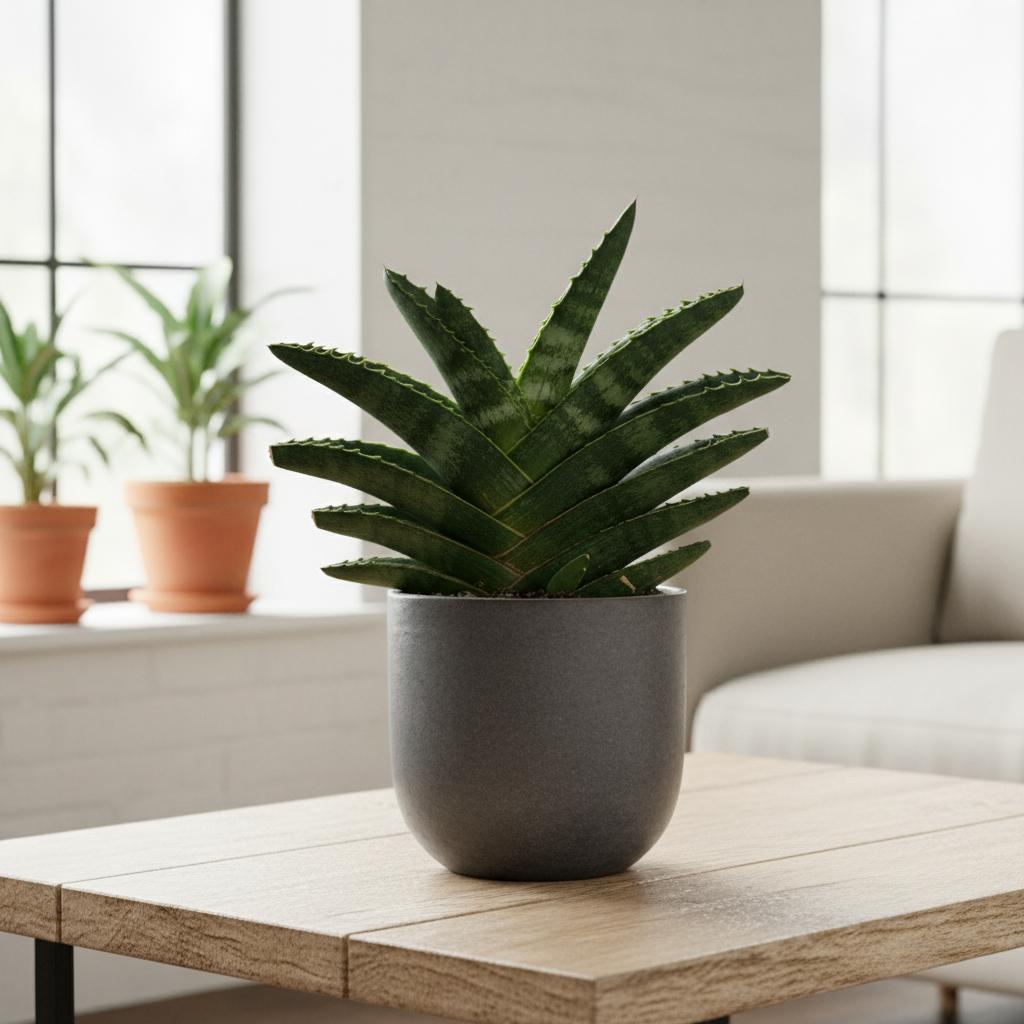
- Leaves: Short, thick, V-shaped in cross-section, arranged in a tight alternating spiral or fan shape, dark green with reddish-brown and white margins, sharp terminal spine;
- Stem: Extremely short, growing in a compact rosette form from a thick underground rhizome;
- Roots: Fleshy, creeping rhizomes adapted for water storage and anchoring in rocky soils;
- Flowers: Grayish-white to pale purple, borne on a raceme, though extremely rare on indoor dwarf cultivars.
Care Guide
Watering
Water thoroughly when the soil is completely dry.
Fertilization
Apply a diluted succulent fertilizer once.. Requires very little feeding; over-fertilizing can cause leggy growth and loss of its compact form.
Banana Peel Tea:Steep chopped banana peels in water for 24 hours, strain, and dilute 1:1 with water. Use sparingly to avoid attracting pests or causing soil rot.Pruning
- Remove any dead, mushy, or severely damaged leaves at the base using sterile shears;
- Pruning is rarely needed due to its extremely slow growth rate;
- Do not cut the tips of the leaves, as this will stop the leaf from growing and leave a permanent scar.
Toxicity
Warning: this plant may be toxic.
Pets & Humans
Pets: Toxic to cats per ASPCA. Ingestion can cause nausea, vomiting, and diarrhea.
Humans: Mildly toxic if ingested due to saponins, causing gastrointestinal upset.
Garden Uses & Culture
Culture: In modern Western houseplant culture, its sharp, sword-like leaves are often associated with resilience, boundaries, and protection.
Usage: Excellent for small spaces, desks, and terrariums due to its dwarf size; highly popular in succulent collections.