 PlantFun
Plant Needs
Characteristics
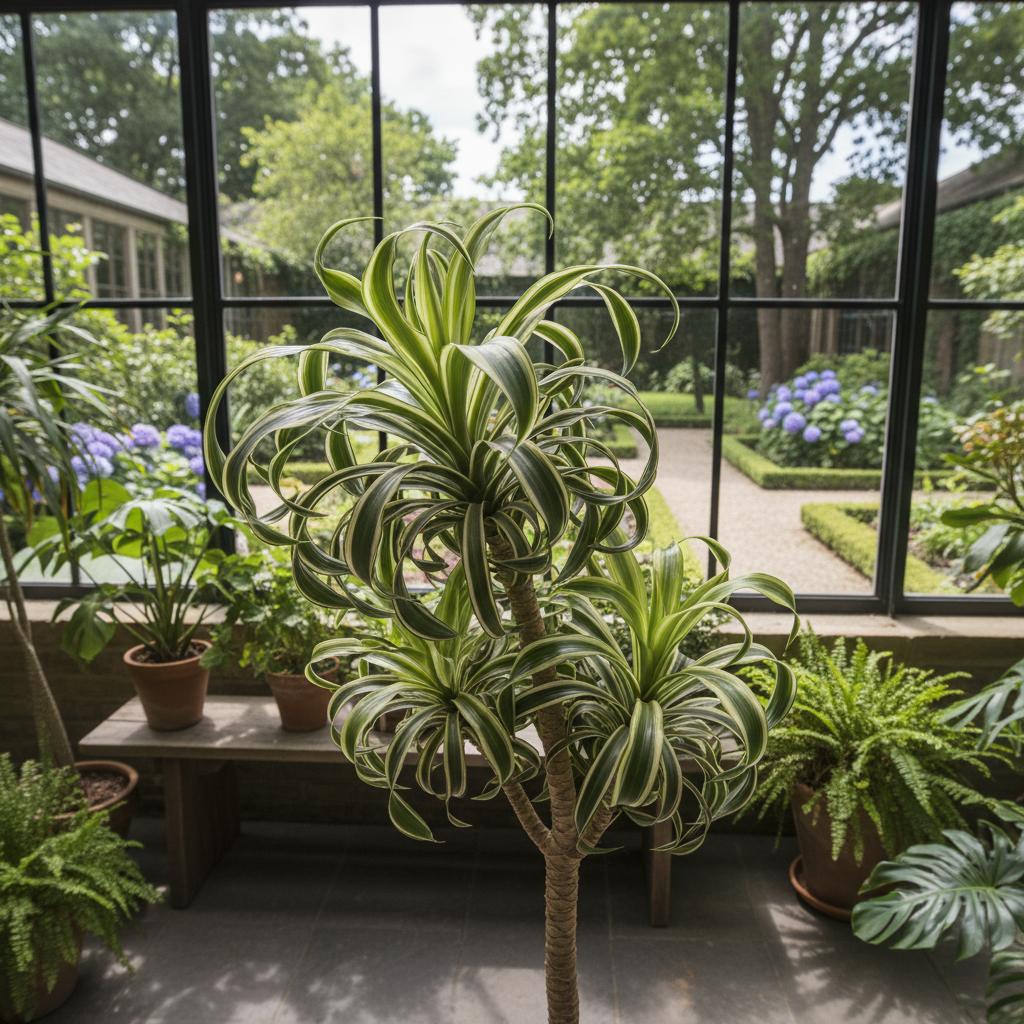
- Leaves: Glossy, dark green, tightly curled or twisted, spirally arranged around the stem, creating a distinctive swirling effect;
- Stems: Upright, sturdy, becoming woody with age, often showing leaf scars;
- Flowers: Small, clustered, white to cream-colored, highly fragrant (rarely seen in indoor cultivation);
- Roots: Thick, fleshy, orange-yellow root system typical of the genus.
Care Guide
Water thoroughly when the top 2 inches of soil feel dry to the touch.
Apply a balanced liquid fertilizer diluted to half strength.. Feed only during the active growing season; pause fertilization during autumn and winter.
Banana Peel Tea:Soak chopped banana peels in water for 24-48 hours. Strain the liquid and dilute 1:1 with fresh water before applying to the soil. Discard the solid peels in compost to avoid attracting fungus gnats indoors. This provides gentle potassium for strong cellular structure in the twisted leaves.- Remove any yellowing or dead leaves at the base of the stem by gently pulling them downward;
- Prune the top of the main stem if the plant becomes too tall; this will encourage branching;
- Wipe leaves regularly with a damp cloth to remove dust and support photosynthesis.
Toxicity
Warning: this plant may be toxic.
Pets: Toxic per ASPCA. Contains steroidal saponins causing vomiting, depression, and dilated pupils.
Humans: Mildly toxic if ingested, causing minor gastrointestinal upset.
Garden Uses & Culture
Culture: In modern Western interior design, the 'Twister' cultivar is highly valued as a living architectural element, bringing dynamic, swirling lines into minimalist spaces.
Usage: Primarily used as an indoor ornamental plant; also known for its air-purifying qualities, helping to remove indoor toxins like formaldehyde and benzene.