 PlantFun
Plant Needs
Characteristics
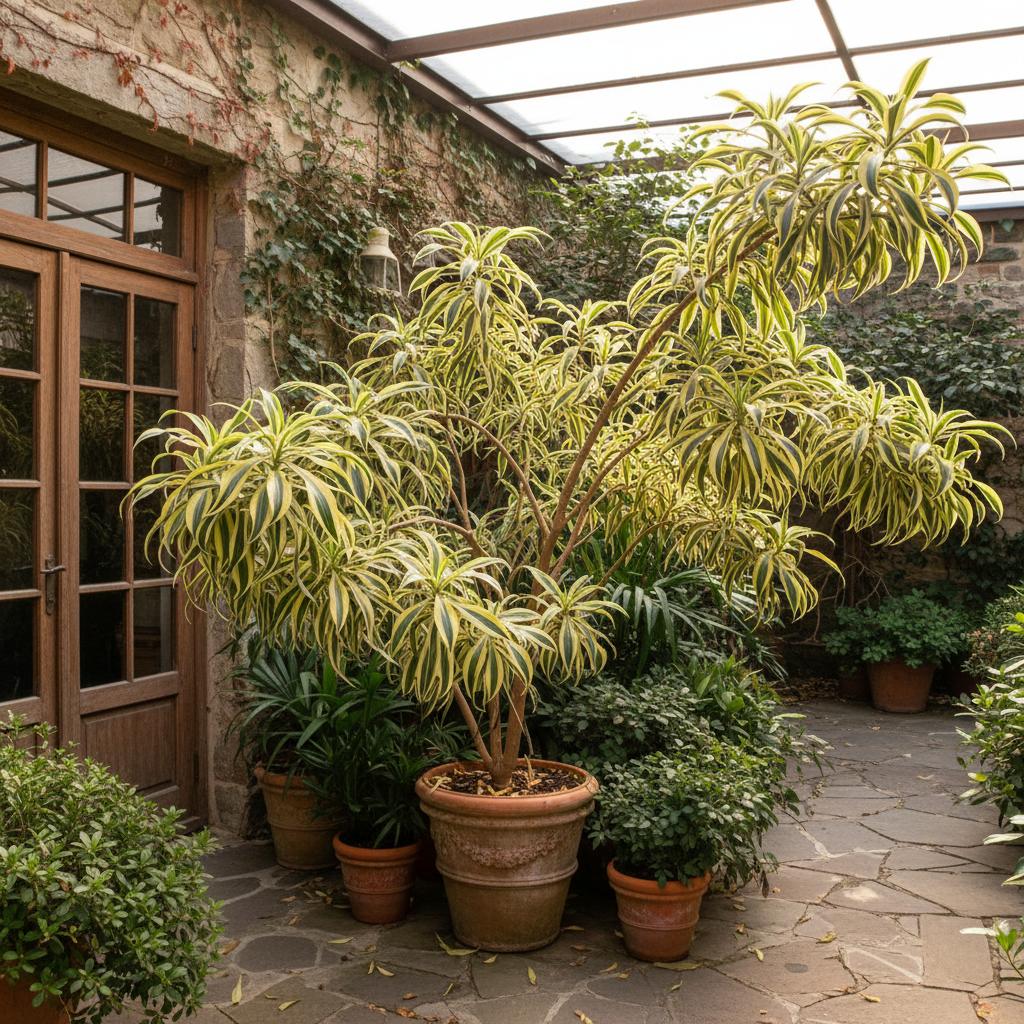
- Leaves: Lanceolate, spirally arranged, tightly packed, featuring dark green centers with prominent, vibrant yellow or cream-colored margins.
- Stems: Woody, flexible, and relatively slender, often twisting or branching gracefully as the plant matures.
- Flowers: Small, clustered, white, and highly fragrant, borne in panicles, though they rarely appear on indoor specimens.
Care Guide
Water thoroughly when the topsoil feels dry, ensuring excess water drains away.
Apply a balanced liquid fertilizer diluted to half strength.. Do not fertilize during the winter dormancy period.
Banana Peel Tea:Soak chopped banana peels in water for 24-48 hours, strain, and use the liquid to water the plant. This provides a gentle potassium boost for root and stem health. Avoid leaving raw peels on the soil surface to prevent fungus gnats.- Shape control: Prune the top stems to control height and encourage a bushier, branching growth habit.
- Maintenance: Remove any yellowing, brown, or dead leaves at the base of the stems to maintain a tidy appearance.
- Propagation: Stem cuttings taken during pruning can be easily rooted in water or moist soil.
Toxicity
Warning: this plant may be toxic.
Pets: Toxic (per ASPCA); contains steroidal saponins causing vomiting, depression, inappetence, hypersalivation, and dilated pupils.
Humans: Mildly toxic if ingested; may cause minor gastrointestinal upset.
Garden Uses & Culture
Culture: Popularized in Western interior design during the mid-20th century for its architectural, sculptural form, often used to add a tropical yet structured aesthetic to modern living spaces.
Usage: Widely used as an indoor ornamental specimen plant. Known to help purify indoor air by removing volatile organic compounds (VOCs) like formaldehyde and xylene.