 PlantFun
Plant Needs
Sunlight
Prefers bright, indirect light but tolerates low light conditions.
Watering
Allow the top half of the soil to dry out between waterings.
Temperature
Thrives in average room temperatures; avoid cold drafts below 10°C.
Characteristics
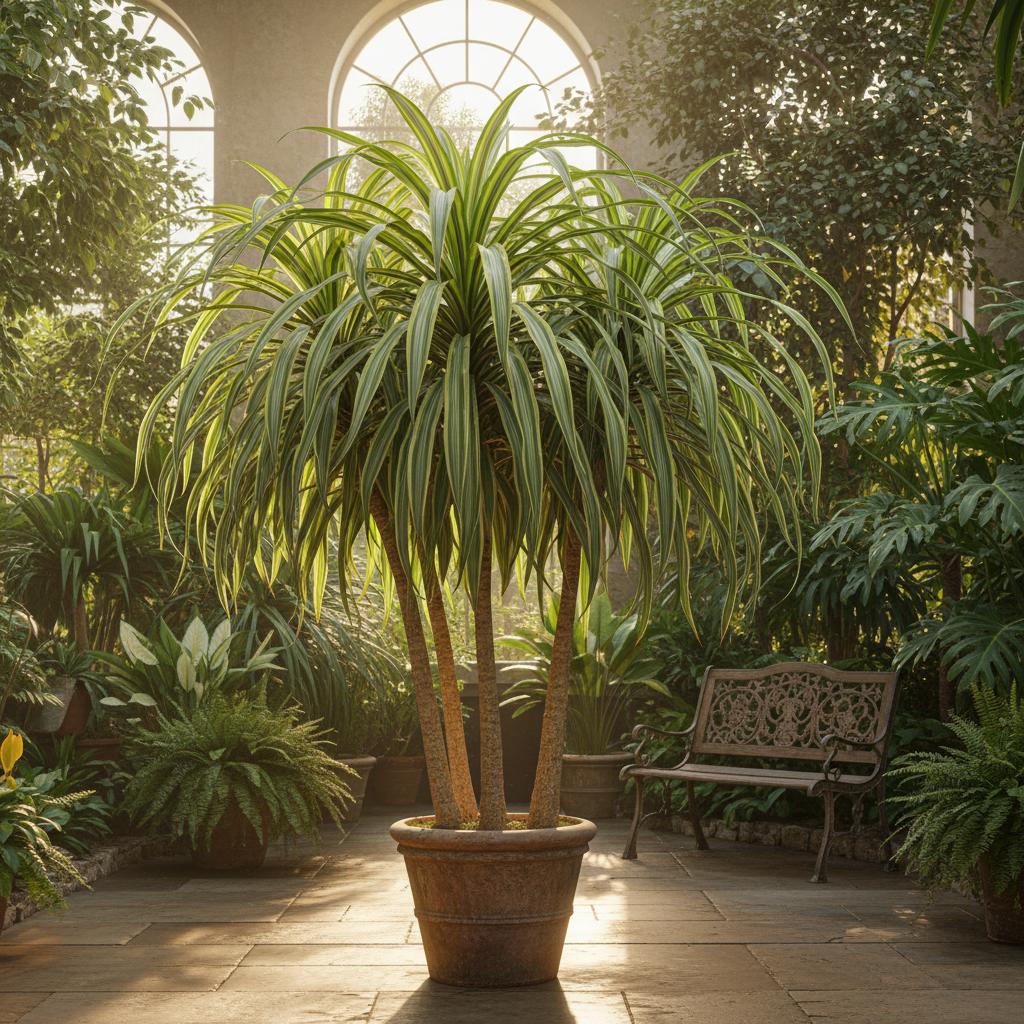
- Leaves: Glossy, lanceolate to linear, arching, often with central yellow or light green stripes, up to 60 cm long;
- Stems: Stout, unbranched or sparsely branched woody canes, revealing leaf scars as lower leaves shed;
- Flowers: Panicles of highly fragrant, small white or yellowish-green flowers (rare indoors);
- Roots: Thick, fleshy, and orange-yellow in color.
Care Guide
Watering
Water thoroughly when top 50% of soil is dry.
Fertilization
Apply a balanced liquid fertilizer diluted to half strength.. Do not fertilize in winter.
Banana Peel Tea:Soak chopped banana peels in water for 24-48 hours. Strain and use the liquid to water the plant. Avoid leaving solid peels on the soil to prevent gnats.Pruning
- Remove yellowing or dead lower leaves by peeling them gently downward;
- Cut back tall canes to desired height to encourage new branching just below the cut;
- Wipe leaves regularly with a damp cloth to remove dust and prevent pest infestations.
Toxicity
Warning: this plant may be toxic.
Pets & Humans
Pets: Toxic (per ASPCA); contains saponins causing vomiting, hypersalivation, and dilated pupils.
Humans: Mildly toxic if ingested, causing minor gastrointestinal upset.
Garden Uses & Culture
Culture: Popularized in Victorian Europe as a resilient parlor plant, it remains a staple in modern interior design for its architectural form.
Usage: Widely used as an indoor ornamental floor plant; known for air-purifying qualities, specifically removing formaldehyde and benzene.