 PlantFun
Plant Needs
Characteristics
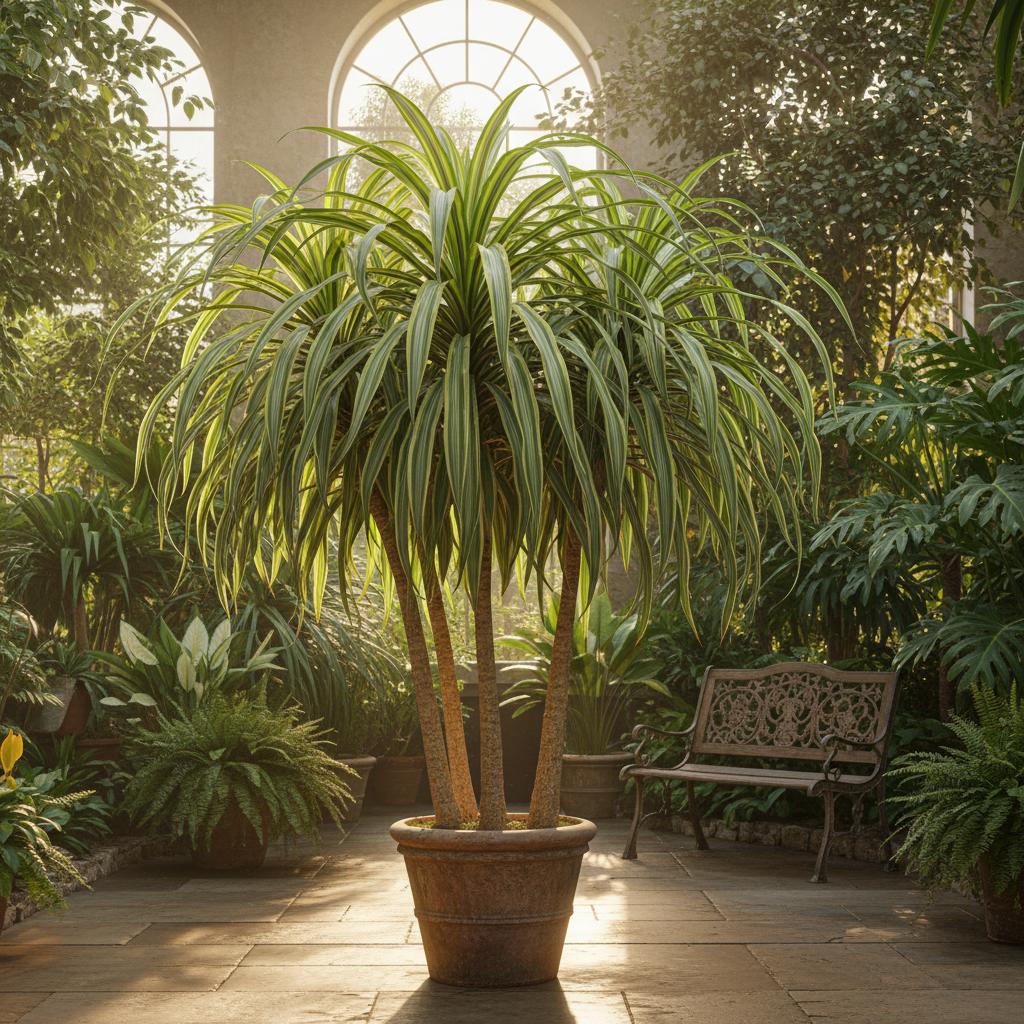
- Leaves: Glossy green, lanceolate to linear, up to 1 meter long and 10 cm wide, often featuring a central yellow or pale green stripe, arranged in a rosette at the top of the stem;
- Stem: Stout, erect, woody canes that are unbranched or sparsely branched, showing prominent leaf scars as lower leaves naturally shed;
- Flowers: Panicles of highly fragrant, small white or pinkish tubular flowers (rarely seen in indoor cultivation);
- Roots: Thick, fleshy, and orange-yellow in color.
Care Guide
Water thoroughly when the topsoil feels dry to the touch, ensuring excess water drains away.
Apply a diluted liquid fertilizer once a month.. Do not fertilize during the winter dormancy period.
Banana Peel Tea:Soak chopped banana peels in water for 24-48 hours, strain, and use the liquid to water the plant. This provides gentle potassium for strong cellular walls and healthy foliage. Avoid leaving raw peels on the soil surface to prevent fungus gnats.- Remove lower leaves as they naturally yellow and dry out to maintain a tidy appearance;
- Cut back tall, leggy canes to the desired height using sterile shears; new growth will sprout just below the cut;
- Trim brown leaf tips with clean scissors, following the natural shape of the leaf.
Toxicity
Warning: this plant may be toxic.
Pets: Toxic per ASPCA; ingestion can cause gastrointestinal and mild neurological symptoms.
Humans: Saponins can cause mild gastrointestinal upset if ingested in large quantities.
Garden Uses & Culture
Culture: Popularized in Victorian-era Europe as a resilient parlor plant, it became a staple of mid-century modern interior design, symbolizing endurance and steady growth in Western homes.
Usage: Widely used as an ornamental floor plant for homes and offices. Recognized in the NASA Clean Air Study for its ability to remove indoor air pollutants like formaldehyde, xylene, and toluene.