 PlantFun
Plant Needs
Sunlight
Requires bright, direct sunlight to maintain its compact shape and vibrant red leaf edges.
Watering
Highly drought-tolerant; allow the soil to dry out completely between waterings.
Temperature
Prefers warm temperatures and is not frost-hardy; protect from freezing.
Characteristics
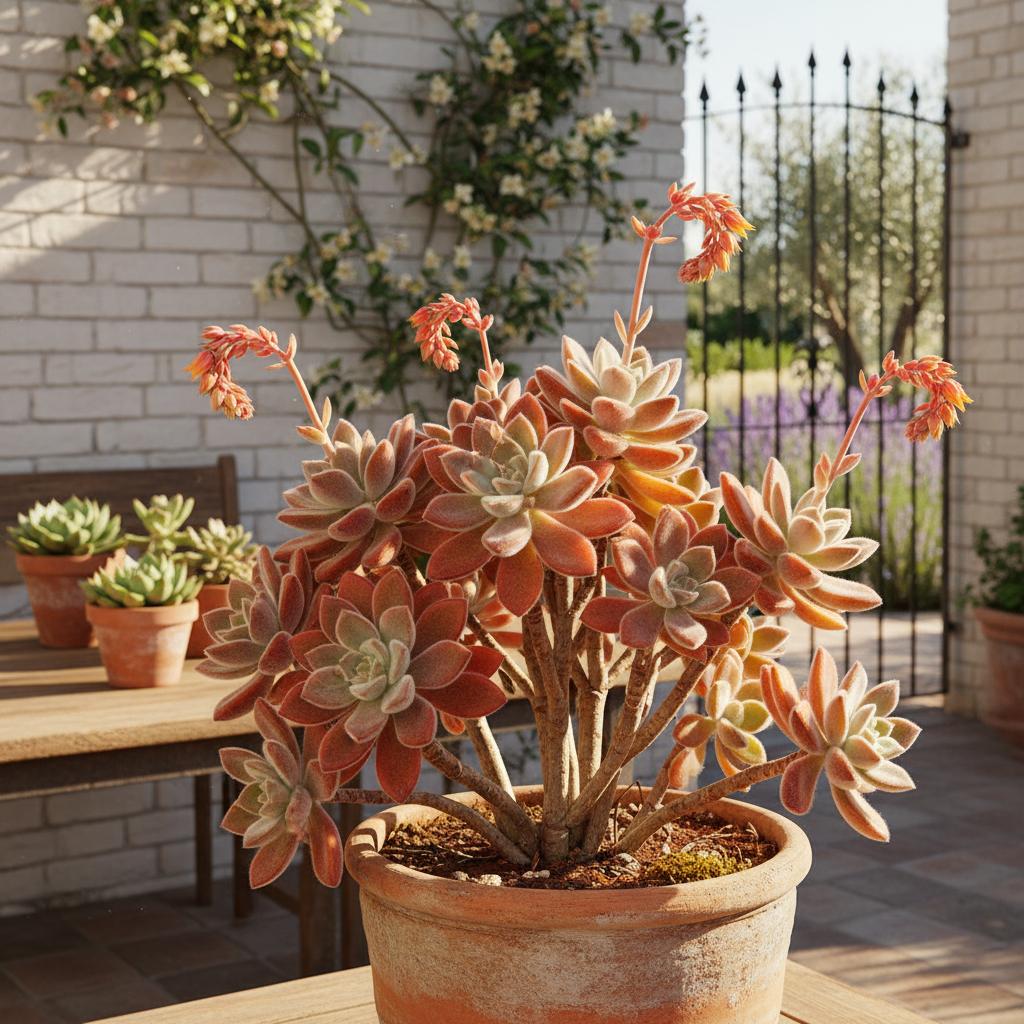
- Leaves: Fleshy, spatulate leaves arranged in loose rosettes, densely covered in fine silvery-white hairs (trichomes), with margins turning bright red in strong light or cool temperatures;
- Flowers: Arching racemes bearing tubular to bell-shaped flowers that are yellow inside and orange-red outside;
- Stem: Branching, shrubby stems that become woody with age, covered in fine brown or white hairs.
Care Guide
Watering
Water thoroughly when the soil is completely dry, allowing excess water to drain.
Fertilization
Apply a diluted, balanced liquid fertilizer once at the start of the growing season.. Avoid over-fertilizing, which can cause weak, leggy growth.
Banana Peel Tea:Soak chopped banana peels in water for 24-48 hours, strain, and dilute 1:1 with water. Use this to water the soil to support blooming. Discard the peels in compost; do not leave them on the soil surface to avoid pests.Pruning
- Gently remove dried, dead leaves from the bottom of the rosette to prevent pest hiding spots;
- Behead leggy stems in spring to propagate new plants and encourage branching;
- Snip off spent flower stalks near the base to redirect energy to foliage growth.
Toxicity
Warning: this plant may be toxic.
Pets & Humans
Pets: Non-toxic to cats per ASPCA.
Humans: Non-toxic to humans.
Garden Uses & Culture
Culture: Highly prized in Western xeriscaping and indoor succulent collections for its tactile, velvety texture and striking color contrast.
Usage: Excellent for container gardens, sunny windowsills, rock gardens, and succulent arrangements.