 PlantFun
Plant Needs
Characteristics
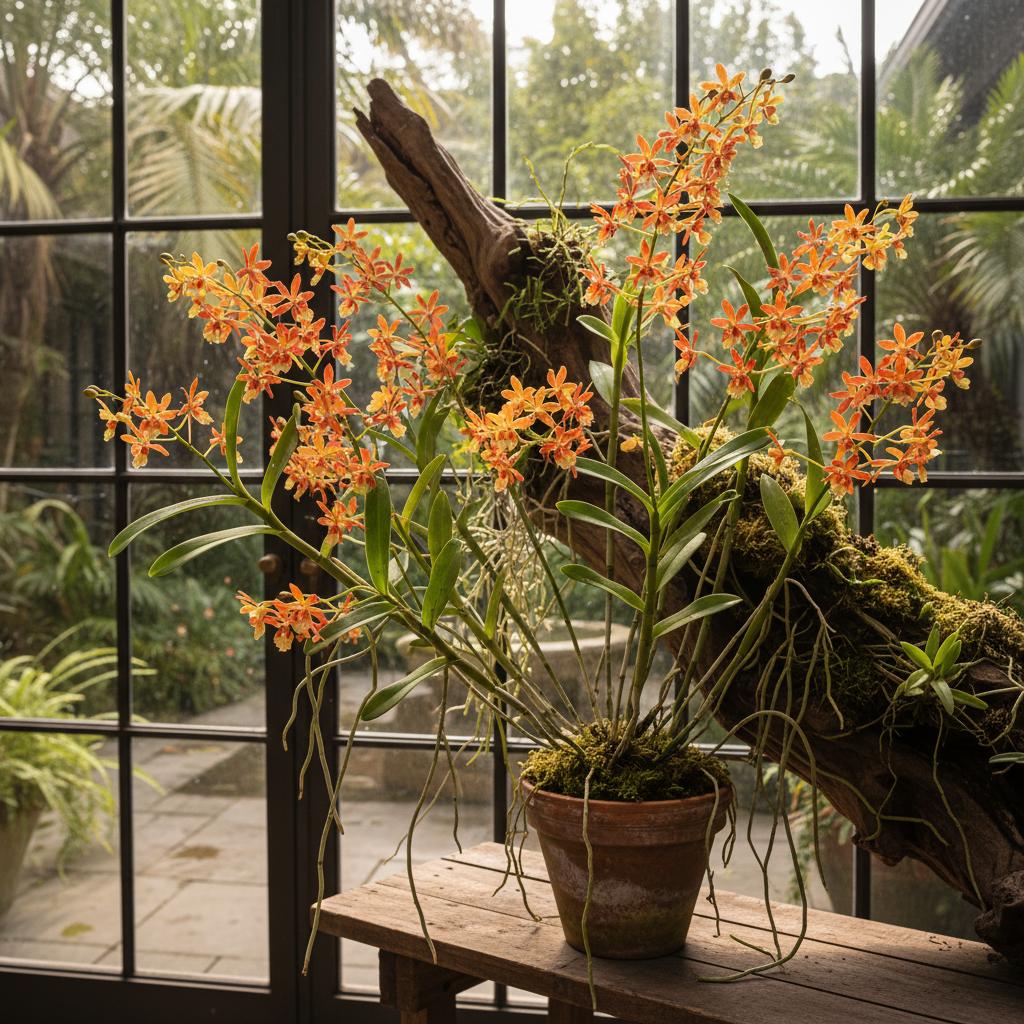
- Leaves: Alternate, leathery, fleshy, elliptic to lanceolate, arranged distichously along tall, reed-like stems;
- Flowers: Terminal racemes or corymbs, featuring a distinctive three-lobed lip fused to the column, resembling a cross, typically in bright red, orange, yellow, or pink;
- Stems: Elongated, reed-like, often producing aerial roots and keikis (offshoots) along their length;
- Roots: Thick, fleshy aerial and terrestrial roots adapted for rapid moisture absorption.
Care Guide
Water thoroughly 1-2 times a week, allowing the medium to almost dry between waterings.
Apply a balanced, water-soluble fertilizer at quarter strength weekly.. Orchids benefit from a 'weakly, weekly' feeding schedule during the growing season.
Banana Peel Tea:Soak chopped banana peels in water for 24 hours. Strain and dilute 1:1 with water. Use to promote blooming. Avoid leaving raw peels in the pot to prevent fungal issues and pests.- Flower Spikes: Remove spent flower spikes down to the nearest healthy leaf to maintain appearance and encourage branching;
- Keikis: Remove and pot up 'keikis' (baby plants) that form on the stems once they have developed roots 2-3 inches long;
- Roots: Trim away dead, papery, or rotting roots using sterilized shears during repotting.
Toxicity
Warning: this plant may be toxic.
Pets: Non-toxic to cats per ASPCA guidelines for general orchids.
Humans: Generally considered non-toxic to humans.
Garden Uses & Culture
Culture: In Victorian England, orchids became a symbol of luxury and exoticism, sparking a frenzy known as "orchidelirium" among wealthy collectors who funded dangerous expeditions to the Americas to retrieve them.
Usage: Popular ornamental plants for tropical gardens, containers, and greenhouse collections, valued for their long-lasting, vibrant floral displays.