 PlantFun
Plant Needs
Sunlight
Prefers bright, indirect light or filtered sunlight; direct afternoon sun can scorch the fleshy stems.
Watering
Water thoroughly when the top inch of soil feels dry, ensuring excellent drainage to prevent root rot.
Temperature
Thrives in warm temperatures between 15-25°C; must be protected from frost.
Characteristics
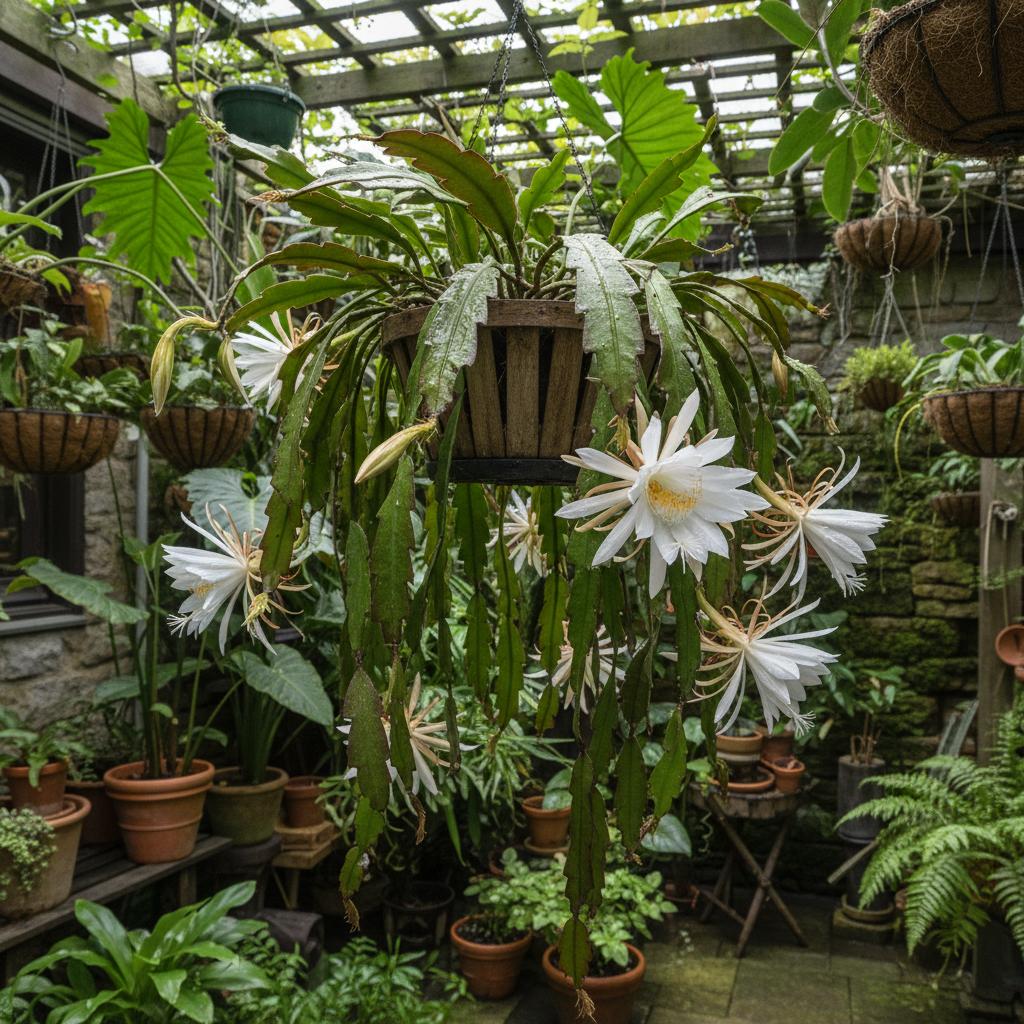
- Stems: Flattened, leaf-like cladodes with scalloped or undulating margins, acting as the primary photosynthetic organs, woody at the base;
- Flowers: Spectacular, nocturnal, pure white, funnel-shaped, up to 30 cm across, highly fragrant with numerous narrow petals;
- Roots: Epiphytic aerial roots that absorb moisture and nutrients from the surrounding humid environment.
Care Guide
Watering
Water regularly, keeping the soil slightly moist but never soggy.
Fertilization
Apply a balanced, water-soluble fertilizer to support new stem growth.. Fertilize only during the active growing season; withhold fertilizer during winter dormancy.
Banana Peel Tea:Soak chopped banana peels in water for 24-48 hours, strain, and dilute 1:1 with water. Apply during the growing season to encourage blooming. Discard solids in compost to avoid fruit flies and odors.Pruning
- Prune away dead, damaged, or unsightly stems at the base using sterilized shears;
- Remove spent flowers to keep the plant tidy and redirect energy to new growth;
- Trim excessively long stems to maintain a compact shape and encourage branching.
Toxicity
Warning: this plant may be toxic.
Pets & Humans
Pets: Non-toxic to cats (per ASPCA).
Humans: Non-toxic to humans; the stems and small fruits are safe, though not commonly consumed.
Garden Uses & Culture
Culture: In Western cultivation, it is highly prized by collectors who often host late-night viewing parties to witness the rare, ephemeral blooming event.
Usage: Popular as an ornamental houseplant, particularly suited for hanging baskets where its trailing stems can cascade elegantly.