 PlantFun
Plant Needs
Characteristics
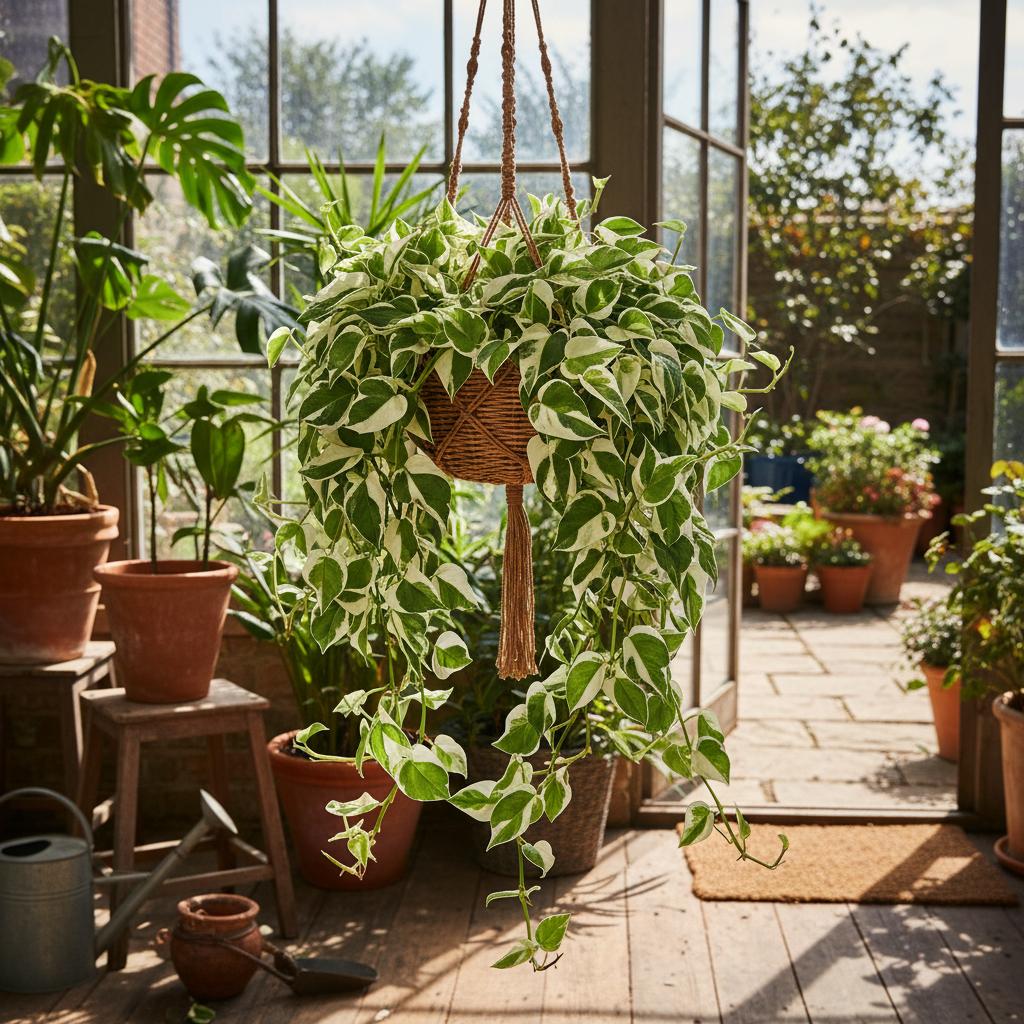
- Leaves: Compact, ovate to heart-shaped, heavily variegated with distinct, sharply defined patches of bright green and pure white or cream; leaf margins are slightly wavy.
- Stems: Slender, trailing or climbing vines that produce aerial roots at the nodes for clinging.
- Flowers: Produces a spathe and spadix typical of the Araceae family, though extremely rare outside of its natural tropical habitat.
- Roots: Fibrous root system with prominent aerial roots on mature nodes.
Care Guide
Water thoroughly when the top 2 inches of soil feel dry to the touch.
Apply a balanced liquid houseplant fertilizer diluted to half strength.. Do not fertilize in winter when plant growth naturally slows down.
Banana Peel Tea:Soak chopped banana peels in water for 24 hours, strain, and use the liquid to water the plant. Discard the solid peels in the compost to avoid attracting fungus gnats indoors.- Pinching: Pinch back the growing tips to encourage a bushier, more compact growth habit.
- Maintenance: Remove any fully green leaves to prevent the plant from reverting, and trim away any dead or yellowing foliage.
- Propagation: Cut a healthy vine just below a node and place it in water or moist soil to root.
Toxicity
Warning: this plant may be toxic.
Pets: Toxic per ASPCA: Ingestion causes intense burning and irritation of the mouth, tongue, and lips, excessive drooling, vomiting, and difficulty swallowing.
Humans: Contains insoluble calcium oxalates which can cause oral irritation and mild gastrointestinal upset if ingested.
Garden Uses & Culture
Culture: Popularized in the early 21st century in Europe and North America as a modern, compact alternative to traditional trailing houseplants, fitting perfectly into small urban apartments and minimalist decor.
Usage: Excellent for hanging baskets, terrariums, or trailing down from bookshelves and plant stands.