 PlantFun
Plant Needs
Characteristics
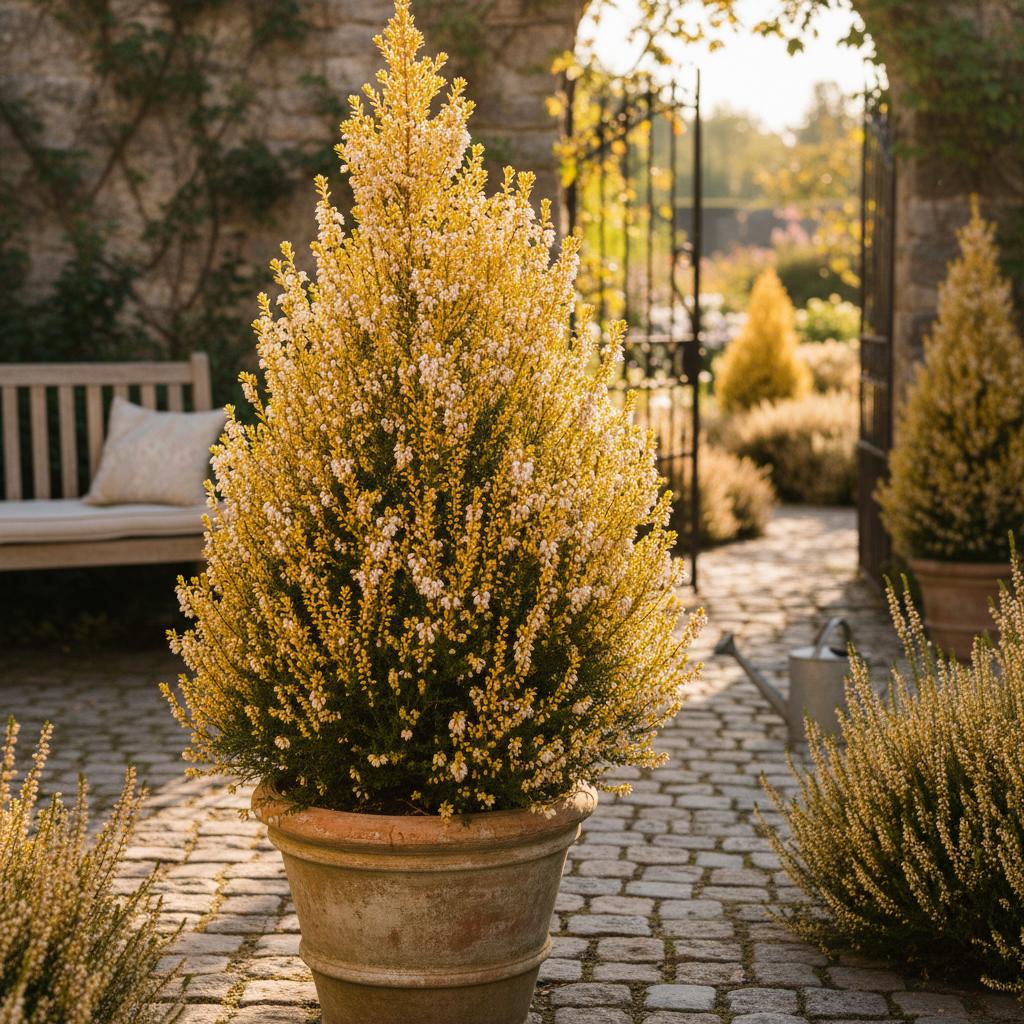
- Leaves: Needle-like, bright golden-yellow to lime-green, retaining their vibrant color year-round;
- Flowers: Tiny, bell-shaped, white, highly fragrant with a honey scent, borne in dense, showy panicles;
- Stems: Woody, brittle, with reddish-brown bark that becomes rough and fissured with age.
Care Guide
Water regularly during active growth and dry spells, allowing the top inch of soil to dry out between waterings.
Apply a light layer of organic mulch or a mild, acid-forming fertilizer in early spring.. Requires very little feeding; over-fertilizing can damage the delicate root system.
Used Coffee Grounds:Sprinkle a thin layer of used, cooled coffee grounds around the base of the plant and water in well. This helps maintain slight soil acidity and provides gentle organic nutrients. Avoid piling thickly to prevent mold.- Prune lightly immediately after flowering in late spring to maintain a compact, bushy shape;
- Trim off the faded flower spikes and the tips of the shoots;
- Never cut back into old, bare wood, as it will not regenerate from old stems;
- Remove any dead or damaged branches as noticed.
Toxicity
Warning: this plant may be toxic.
Pets: Non-toxic to cats per ASPCA guidelines for Erica species.
Humans: Generally considered non-toxic to humans.
Garden Uses & Culture
Culture: In Western culture, particularly in Scottish and Celtic traditions, heather (including Erica species) is a symbol of good luck, protection, and solitude. White heather is especially prized as a lucky charm.
Usage: - **Ornamental**: Excellent for adding year-round color and structure to rock gardens, coastal gardens, and mixed borders; - **Crafting**: The thick, heat-resistant root burls of the species (Erica arborea) are historically harvested to make high-quality briar tobacco pipes.