 PlantFun
Plant Needs
Characteristics
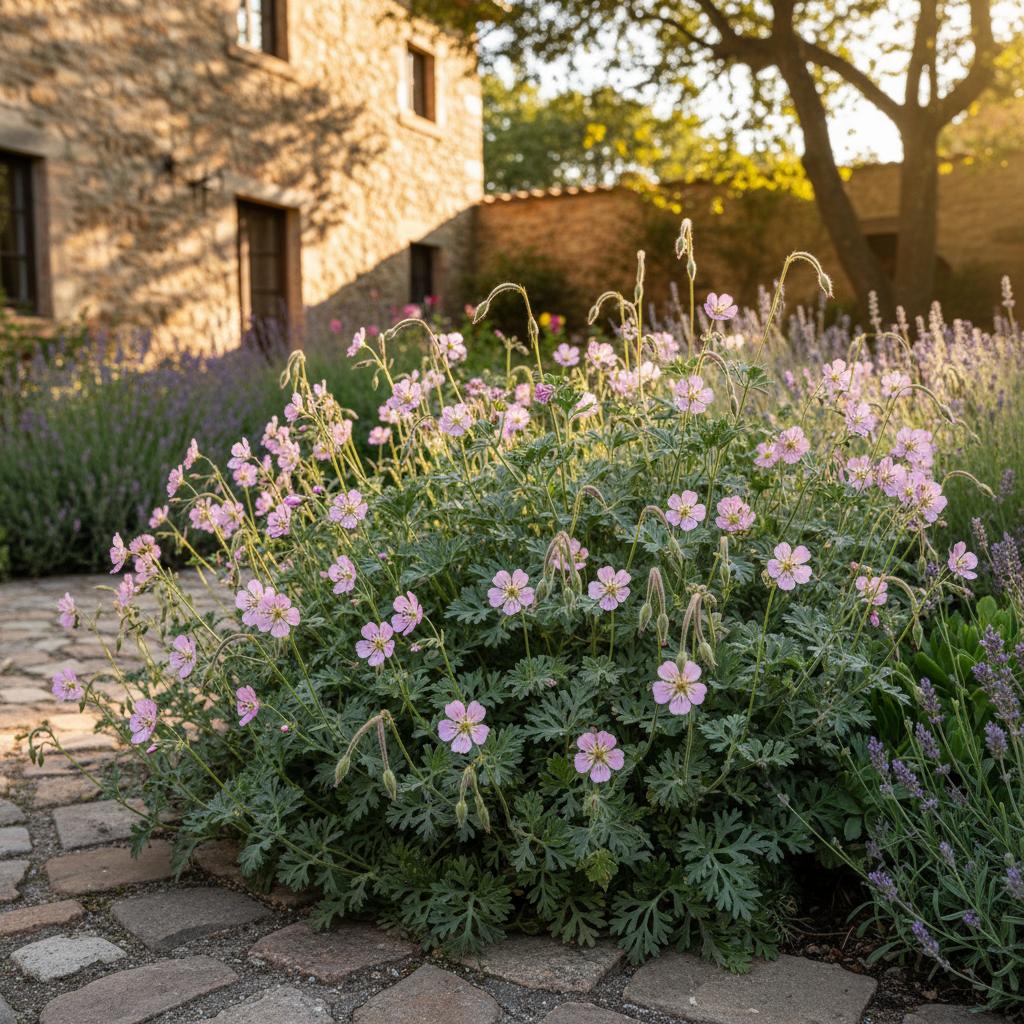
- Leaves: Finely divided, fern-like, silvery-grey to grey-green, forming a low basal rosette or dense mound;
- Flowers: Five-petaled, cup-shaped, pale pink to almost white, featuring prominent dark magenta or purple blotches and veining on the upper two petals;
- Stems: Short, trailing or mounding, slightly pubescent, bearing the delicate blooms just above the foliage;
- Fruit: Long, beak-like schizocarp resembling a heron's bill, which twists as it dries to disperse seeds.
Care Guide
Water moderately, allowing the soil to dry out completely between waterings.
Apply a light, low-nitrogen organic top-dressing in early spring.. Avoid rich fertilizers which cause floppy growth and reduce flowering.
Eggshell Tea:Crush clean, dry eggshells and steep in water for a few days. Use the strained liquid to water the plant, providing gentle calcium without excess nitrogen. Avoid high-nitrogen materials like coffee grounds to maintain compact alpine growth.- Deadhead spent flowers regularly to prolong the blooming period;
- Trim back any straggly or dead foliage in early spring to tidy the mound;
- Divide every few years in spring if the center begins to die out or become woody.
Toxicity
Warning: this plant may be toxic.
Pets: Non-toxic to cats per general botanical consensus (ASPCA lists no specific toxicity for Erodium).
Humans: Generally considered non-toxic to humans.
Garden Uses & Culture
Culture: In Western rock gardening traditions, alpine plants like Erodium are prized for their resilience and delicate beauty in harsh, stony environments, often featured in specialized alpine troughs and scree gardens.
Usage: - Excellent for rock gardens, alpine houses, troughs, and crevice gardens; - Edging plant for well-drained, sunny borders.