 PlantFun
Plant Needs
Sunlight
Requires full sun for optimal growth and health.
Watering
Drought tolerant once established; water deeply but infrequently.
Temperature
Tolerates moderate frost but thrives in warm, Mediterranean climates.
Characteristics
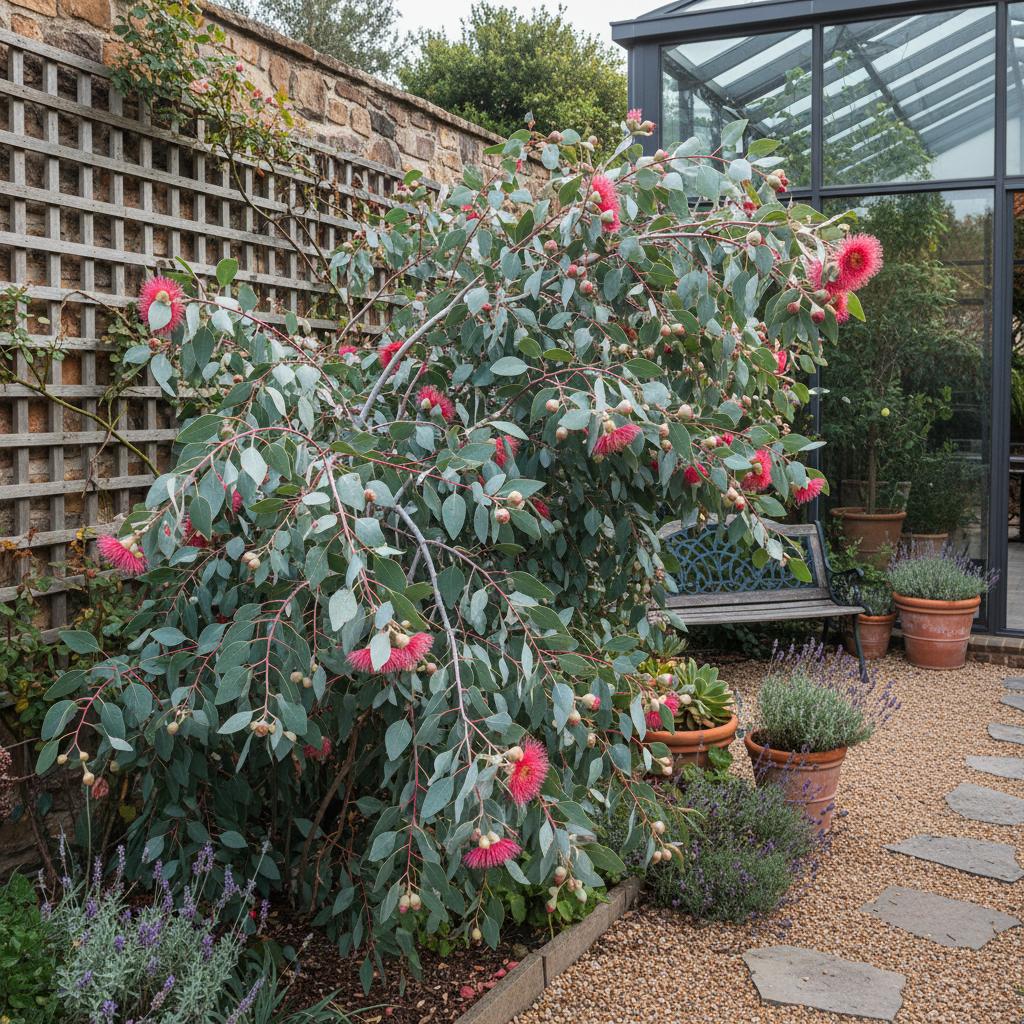
- Leaves: Juvenile leaves are broad, glaucous, and opposite; adult leaves are sickle-shaped, dark green, alternate, and highly aromatic.
- Flowers: Solitary, axillary, with a warty, woody receptacle and numerous creamy-white stamens; lacking traditional petals.
- Bark: Sheds in long ribbons, leaving a smooth, grayish-white or bluish surface on the trunk.
Care Guide
Watering
Water deeply once a week for young trees; mature trees rely on rainfall.
Fertilization
Apply a balanced, slow-release fertilizer if soil is very poor.. Generally does not require fertilization once established.
Coffee Grounds Compost:Mix used coffee grounds into the topsoil to provide a gentle nitrogen boost and maintain slight soil acidity. Avoid applying too close to the trunk.Pruning
- Prune young trees to establish a strong central leader.
- Remove dead, damaged, or crossing branches in late winter.
- Avoid heavy pruning of mature trees as it can induce vigorous, weak epicormic growth.
Toxicity
Warning: this plant may be toxic.
Pets & Humans
Pets: Toxic to cats per ASPCA. Ingestion of leaves can cause salivation, vomiting, diarrhea, and weakness.
Humans: Essential oil can be toxic if ingested in large amounts, causing nausea and dizziness. Skin contact with sap may cause mild irritation.
Garden Uses & Culture
Culture: In Western herbalism, eucalyptus leaves have been historically used in steam inhalations to clear respiratory congestion.
Usage: Timber, pulpwood, essential oil production, and ornamental planting.