 PlantFun
Plant Needs
Sunlight
Requires full sun for optimal growth and proper foliage development.
Watering
Highly drought-tolerant once established; water deeply but infrequently.
Temperature
Tolerates extreme heat well; frost tolerance varies but generally hardy to mild freezes.
Characteristics
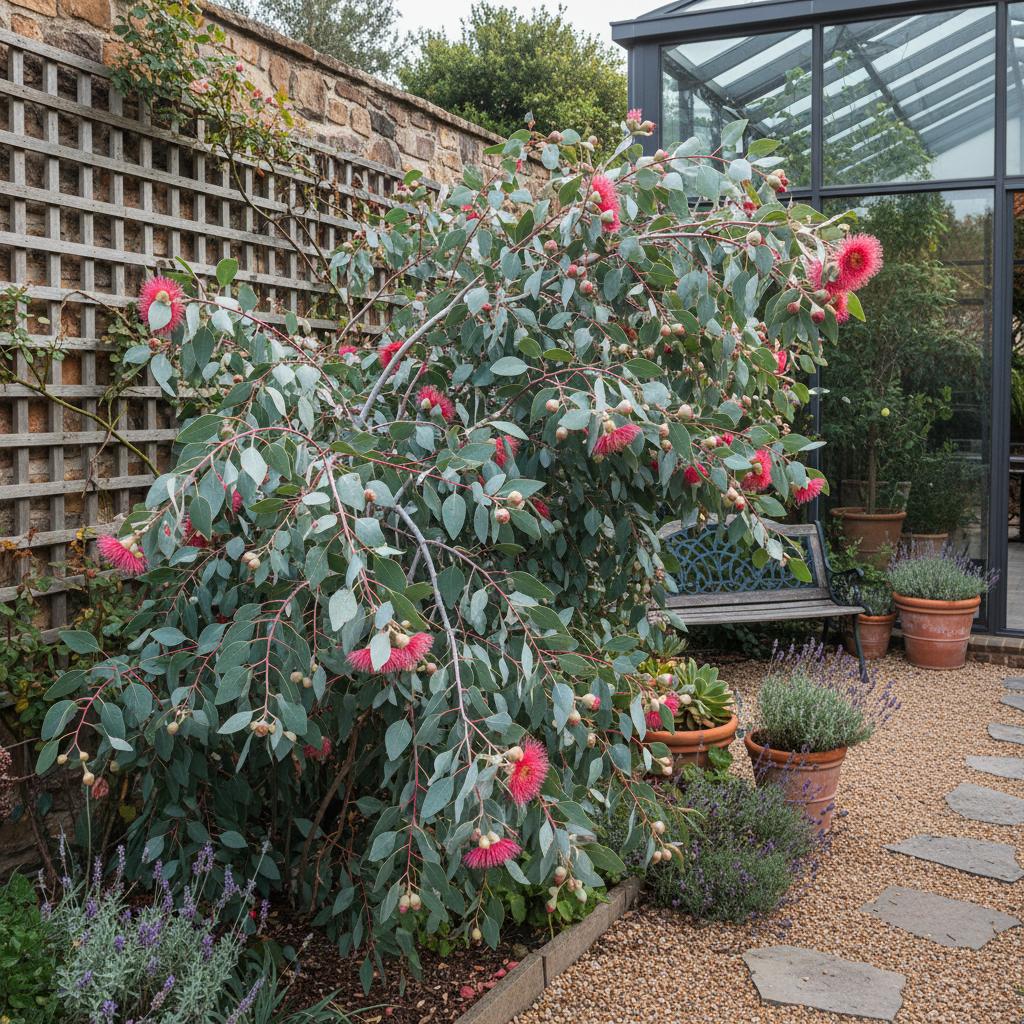
- Leaves: Lanceolate to falcate, leathery, grayish-green, highly aromatic when crushed due to essential oils;
- Flowers: Axillary umbels lacking distinct petals, featuring numerous prominent, fluffy stamens;
- Bark: Smooth, shedding in ribbons or flakes, revealing lighter, multi-colored patches underneath.
Care Guide
Watering
Water deeply once a week during dry spells
Fertilization
Apply a light layer of organic mulch. Eucalyptus generally requires little to no supplemental feeding once established.
Coffee Grounds Top Dressing:Sprinkle used, dried coffee grounds lightly around the base to provide a gentle nitrogen boost and maintain slight soil acidity. Do not apply thickly to prevent mold.Pruning
- Prune in late winter or early spring before new growth begins;
- Remove dead, diseased, or crossing branches to maintain a strong structural canopy;
- Can be coppiced to control height and encourage attractive juvenile foliage.
Toxicity
Warning: this plant may be toxic.
Pets & Humans
Pets: Toxic per ASPCA; ingestion of leaves can cause salivation, vomiting, diarrhea, depression, and weakness.
Humans: Essential oils can cause nausea and gastrointestinal upset if ingested in large quantities.
Garden Uses & Culture
Culture: Eucalyptus branches are widely used in Western floral arrangements for their architectural shape, muted silvery-green tones, and menthol-like fragrance.
Usage: Ornamental landscaping, floral arrangements, windbreaks, and shade provision.