 PlantFun
Plant Needs
Characteristics
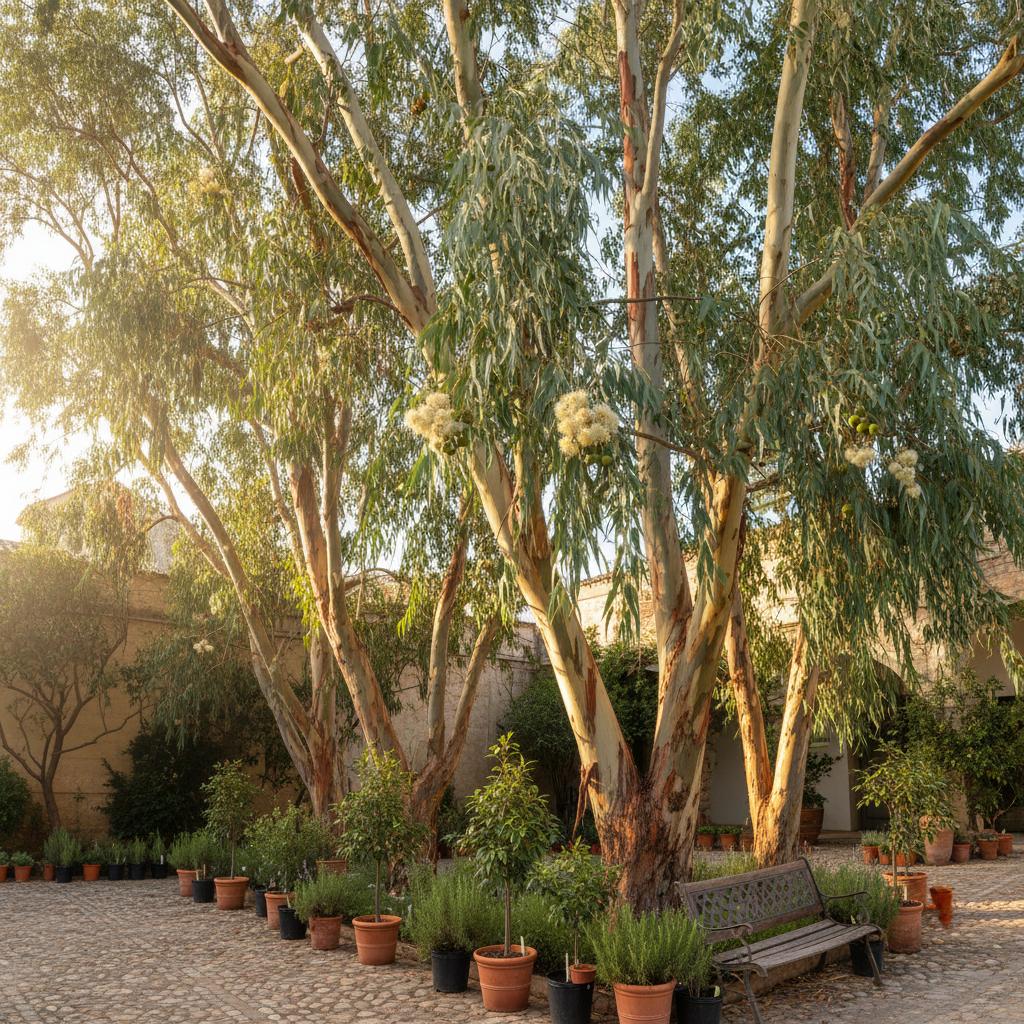
- Leaves: Juvenile leaves are broad, glaucous (blue-grey), and opposite; adult leaves are sickle-shaped, dark green, glossy, and alternate;
- Flowers: Solitary, axillary, with a warty, woody receptacle and numerous creamy-white stamens, lacking distinct petals;
- Bark: Smooth, shedding in long ribbons, leaving a mottled grey, white, and bluish surface, with rough, persistent bark at the base.
Care Guide
Water deeply once a week for young trees; established trees rely mostly on rainfall.
Apply a balanced organic mulch or light fertilizer at the base.. Eucalyptus generally requires little to no supplemental fertilization once established in the landscape.
Coffee Grounds Application:Sprinkle a thin layer of used coffee grounds around the drip line of young trees and water in well. This provides a gentle nitrogen boost and slight acidity. Avoid thick layers to prevent mold and ensure proper soil aeration.- Prune young trees to establish a strong central leader and structural framework;
- Remove dead, diseased, or crossing branches during the dormant season;
- Can be coppiced (cut back to the stump) to control size and encourage bushy juvenile foliage;
- Avoid heavy pruning of mature trees unless necessary for safety, as they can drop large limbs.
Toxicity
Warning: this plant may be toxic.
Pets: Toxic to cats per ASPCA. Ingestion of leaves or oils can cause gastrointestinal and neurological issues.
Humans: Essential oils can cause nausea, vomiting, and dizziness if ingested in large amounts.
Garden Uses & Culture
Culture: Introduced to Europe and the Americas in the 19th century, it became a symbol of rapid growth and was widely planted in California and the Mediterranean for timber, windbreaks, and marsh drainage.
Usage: Timber, paper pulp production, essential oil extraction (eucalyptol), ornamental landscaping, and windbreaks.