 PlantFun
Plant Needs
Characteristics
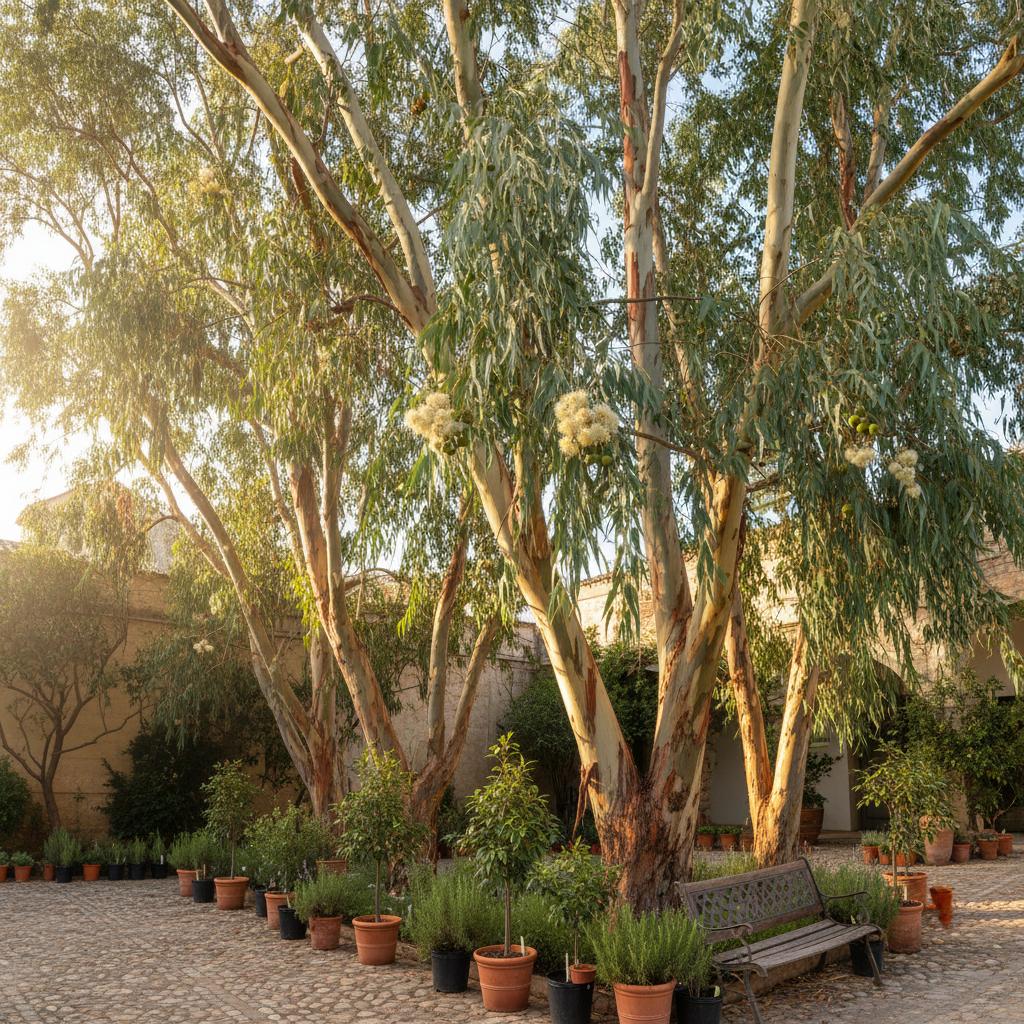
- Leaves: Juvenile leaves are broad, glaucous, and opposite; adult leaves are sickle-shaped (falcate), dark green, glossy, and alternate;
- Flowers: Solitary, axillary, with a warty, glaucous operculum (cap) that falls off to reveal numerous white stamens;
- Bark: Smooth, peeling in long strips to reveal yellowish or bluish-grey underbark, rough and persistent at the base.
Care Guide
Water deeply but infrequently to encourage deep root systems
Apply a light layer of organic compost if soil is extremely poor. Eucalyptus trees are heavy feeders but generally extract sufficient nutrients from the soil without supplemental fertilizer.
Coffee grounds top-dressing:Sprinkle a thin layer of used, cooled coffee grounds around the drip line of young trees and water in well. Avoid thick layers to prevent mold growth.- Prune young trees to establish a strong central leader and remove co-dominant stems;
- Remove dead, diseased, or crossing branches during the dormant season;
- Can be coppiced (cut back to the stump) to control size and encourage bushy juvenile foliage;
- Avoid heavy pruning of mature trees unless necessary for safety, as it can induce weak epicormic growth.
Toxicity
Warning: this plant may be toxic.
Pets: Toxic per ASPCA; ingestion of leaves or oils can cause significant gastrointestinal and neurological issues.
Humans: Essential oils are highly toxic if ingested pure; leaves can cause mild gastrointestinal upset.
Garden Uses & Culture
Culture: Introduced to California in the 1850s, it became a defining feature of the coastal landscape, though its ecological impact remains a subject of debate in Western forestry.
Usage: Timber, paper pulp, windbreaks, and extraction of eucalyptol for medicinal and cleaning products.