 PlantFun
Plant Needs
Sunlight
Requires full sun to maintain its compact growth and vibrant coloration.
Watering
Highly drought-tolerant; water only when the soil is completely dry.
Temperature
Prefers warm climates and is not frost-tolerant; protect from freezing temperatures.
Characteristics
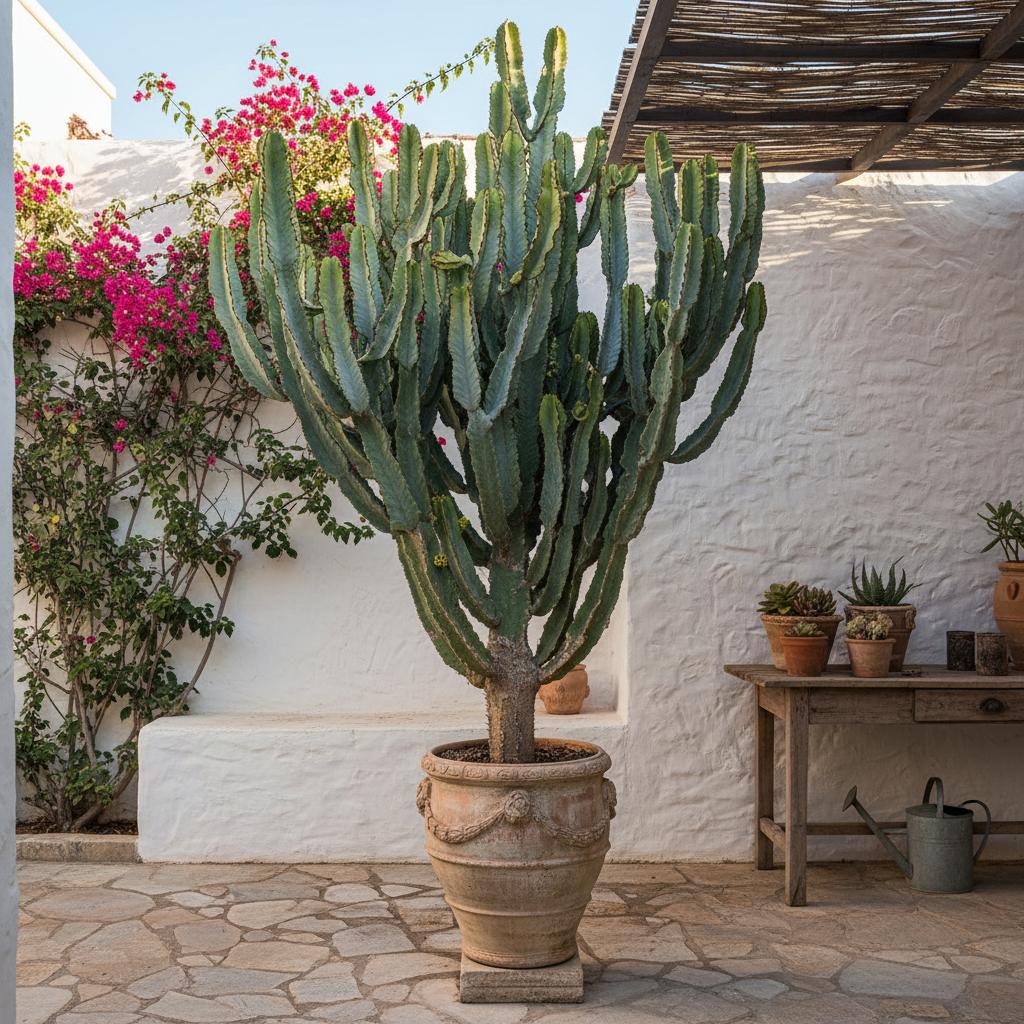
- Stems: Thick, fleshy, ribbed stems (usually 4-ribbed) with a dark green or variegated surface, branching upward to form a candelabra shape;
- Spines: Short, paired, dark brown spines along the ridges of the stems;
- Leaves: Small, ephemeral leaves that appear on new growth and quickly drop off to conserve water;
- Flowers: Small, yellowish-green cyathia appearing near the tips of the branches.
Care Guide
Watering
Water thoroughly when the soil is completely dry, about once every two weeks.
Fertilization
Apply a diluted, low-nitrogen succulent fertilizer once.. Fertilization recommendations description
Banana Peel Tea:Soak dried banana peels in water for 48 hours, dilute 1:1 with water. Avoid using raw peels directly on the soil to prevent pests and mold.Pruning
- Wear thick gloves and protective eyewear before pruning due to the toxic, pressurized sap;
- Use a sterile, sharp knife to remove damaged or diseased branches at the joint;
- Spray the cut area with cold water to stop the flow of latex;
- Allow cuttings to callous over for several days before attempting propagation.
Toxicity
Warning: this plant may be toxic.
Pets & Humans
Pets: Toxic per ASPCA. Ingestion causes vomiting, oral irritation, and diarrhea; sap causes severe dermal and ocular irritation.
Humans: The milky latex is highly irritating to the skin and eyes, and toxic if ingested, potentially causing severe gastrointestinal distress.
Garden Uses & Culture
Culture: Often used in modern xeriscaping and Mediterranean-style gardens in the Americas for its striking architectural silhouette.
Usage: Ornamental landscaping, barrier hedging in arid climates, and as a statement indoor container plant.