 PlantFun
Plant Needs
Characteristics
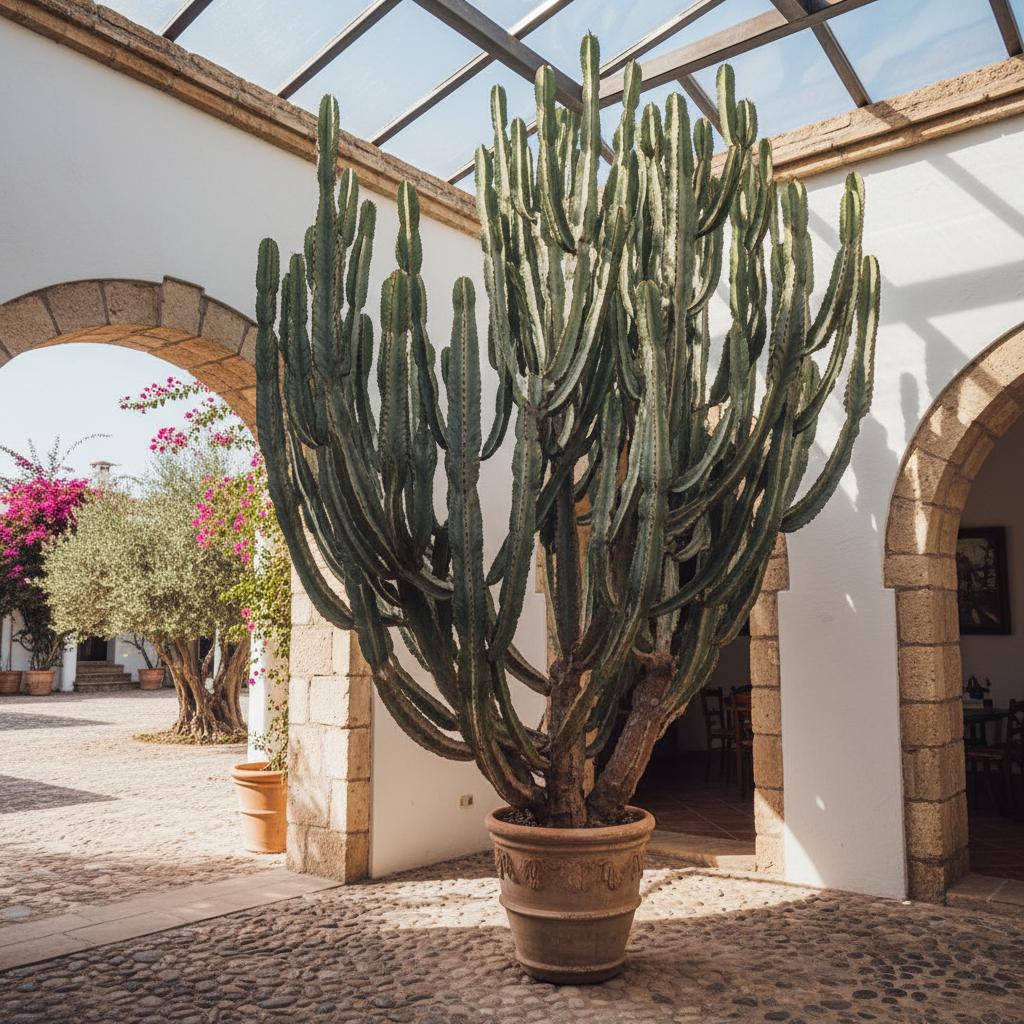
- Leaves: Minute and ephemeral, dropping quickly to leave the stems responsible for photosynthesis;
- Stems: Succulent, deeply ribbed with 3 to 5 angles, green to grayish-green, featuring paired stipular spines along the margins;
- Flowers: Small, yellow-green cyathia clustered tightly along the upper ridges of the stems;
- Sap: Exudes a copious, milky white latex when damaged or cut.
Care Guide
Water deeply once the soil is entirely dry.
Apply a diluted, low-nitrogen succulent fertilizer.. Do not fertilize during the winter dormancy period.
Banana Peel Tea:Steep chopped banana peels in water for 24-48 hours. Dilute 1:1 with water before use. Avoid leaving solid peels on soil to prevent mold and pests.- Safety First: Always wear heavy gloves and protective eyewear before pruning to avoid contact with toxic sap;
- Technique: Use a sterile, sharp knife to remove damaged or diseased arms at the joint;
- Aftercare: Spray the cut area with cold water to coagulate the latex and stop the bleeding.
Toxicity
Warning: this plant may be toxic.
Pets: Toxic per ASPCA. Exposure to sap causes severe dermal and ocular irritation; ingestion leads to intense oral irritation, hypersalivation, and vomiting.
Humans: Highly toxic milky sap (latex) causes severe skin blistering, eye irritation (potential blindness), and severe gastrointestinal distress if ingested.
Garden Uses & Culture
Culture: Often utilized in Western xeriscaping and modernist architectural gardens, symbolizing resilience and structural minimalism in arid landscapes.
Usage: Ornamental landscaping, barrier hedging in dry climates, and architectural indoor container planting.