 PlantFun
Plant Needs
Sunlight
Requires bright, direct sunlight to maintain its compact growth and pale stem coloration.
Watering
Highly drought-tolerant; requires watering only when the soil is completely dry.
Temperature
Prefers warm temperatures and is not frost-tolerant.
Characteristics
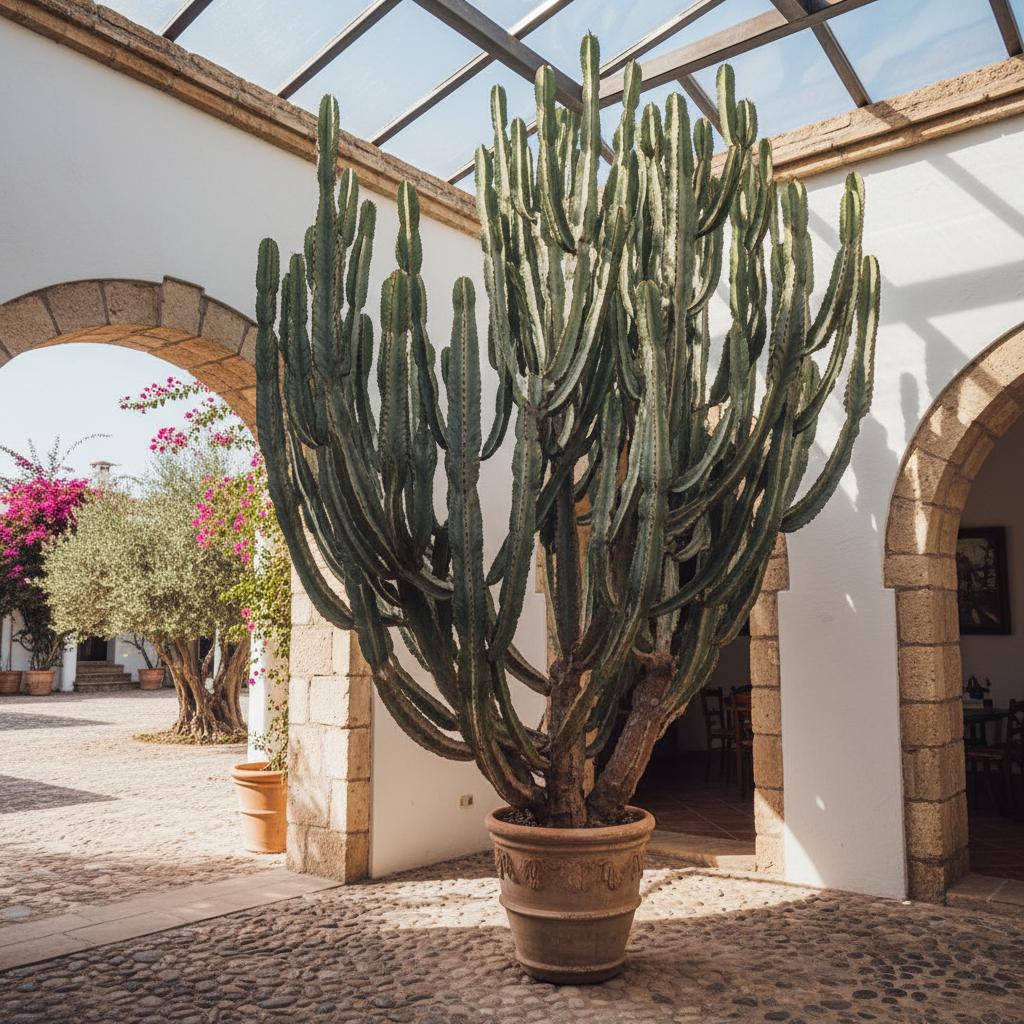
- Stems: Succulent, cylindrical, pale green to whitish-grey, branching from the base, containing milky latex;
- Leaves: Ephemeral, small, often dropping early to reduce water loss, leaving the stems to perform photosynthesis;
- Flowers: Small, yellowish-green cyathia clustered at the tips of the stems;
- Roots: Fibrous, adapted to quickly absorb moisture from shallow soil layers.
Care Guide
Watering
Water thoroughly, then allow the soil to dry out completely before watering again.
Fertilization
Apply a diluted, low-nitrogen succulent fertilizer once at the start of the growing season.. Fertilize very lightly, as succulents in this genus do not require heavy feeding.
Banana Peel Tea:Steep dried banana peels in water for 48 hours. Dilute 1:1 with water before use. Avoid applying too often to prevent salt buildup in the arid soil.Pruning
- Wear protective gear: Always wear thick gloves and eye protection to avoid contact with the toxic, pressurized milky sap;
- Remove dead stems: Carefully cut away any dried, dead, or rotting stems at the base using sterilized secateurs;
- Clean tools: Wash all pruning tools thoroughly with soapy water immediately after use to remove the sticky latex.
Toxicity
Warning: this plant may be toxic.
Pets & Humans
Pets: Toxic per ASPCA; ingestion or contact with the sap causes severe irritation.
Humans: The milky latex is highly irritating to the skin and eyes, and toxic if ingested.
Garden Uses & Culture
Culture: Succulent Euphorbias are highly prized by collectors in Europe and the Americas for their striking, architectural forms, often featured in modern minimalist interior designs.
Usage: Ornamental potted plant, xeriscaping in suitable climates, greenhouse specimen.