 PlantFun
Plant Needs
Characteristics
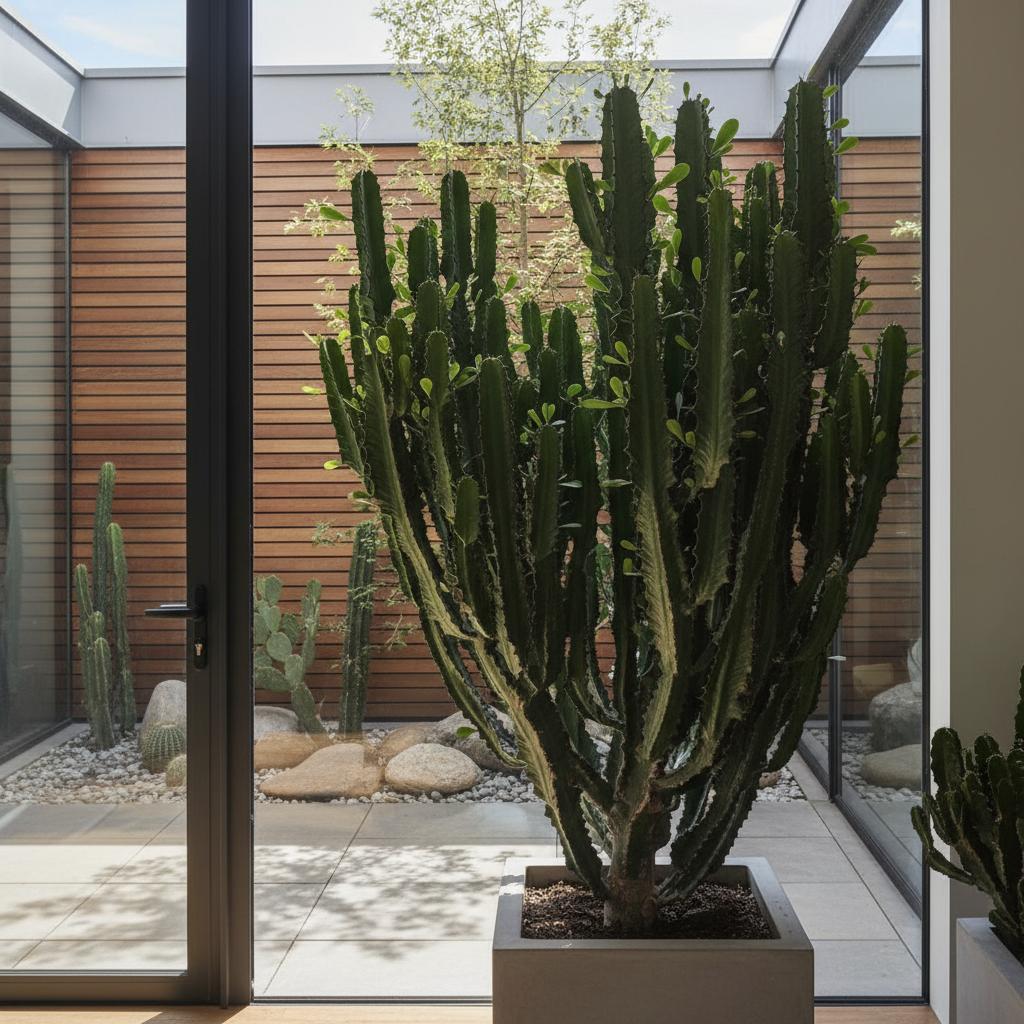
- Leaves: Obovate to spatulate, bright green, mostly found near the growing tips, naturally dropping from older stems;
- Flowers: True flowers are tiny and yellow, surrounded by showy, petal-like cyathial bracts in red, pink, or white;
- Stems: Fleshy, grayish-brown, heavily armed with sharp, stout grayish spines;
- Sap: Produces a copious, milky white latex when cut or damaged.
Care Guide
Water thoroughly when the top inch of soil is completely dry.
Apply a balanced liquid fertilizer diluted to half strength.. Avoid over-fertilizing, which can cause excessive foliage growth at the expense of flowers.
Banana Peel Tea:Soak chopped banana peels in water for 48 hours. Strain and dilute 1:1 with water. Apply to the soil, avoiding direct contact with the stem to prevent rot. Discard solids in compost to avoid attracting pests.- Safety First: Always wear thick, puncture-resistant gloves and eye protection due to the toxic, irritating sap and sharp thorns;
- Timing: Prune in early spring to maintain shape and encourage branching;
- Technique: Remove dead, damaged, or crossing branches at the base using sterilized pruning shears;
- Cleanup: Wash tools immediately after use to remove the sticky latex.
Toxicity
Warning: this plant may be toxic.
Pets: Toxic per ASPCA; exposure to sap causes severe dermal and ocular irritation, and ingestion leads to gastrointestinal distress.
Humans: Highly toxic and irritating; the milky sap causes severe skin inflammation, eye damage, and gastrointestinal distress if ingested.
Garden Uses & Culture
Culture: In Christian tradition, the plant is widely associated with the crown of thorns worn by Jesus Christ during the crucifixion, symbolizing endurance, suffering, and sacrifice.
Usage: Popular as an ornamental houseplant, a barrier hedge in tropical climates, and a staple in xeriscape gardens.