 PlantFun
Plant Needs
Sunlight
Requires bright, direct sunlight for optimal growth and color expression.
Watering
Drought-tolerant; allow soil to dry out completely between waterings.
Temperature
Thrives in warm temperatures; protect from frost.
Characteristics
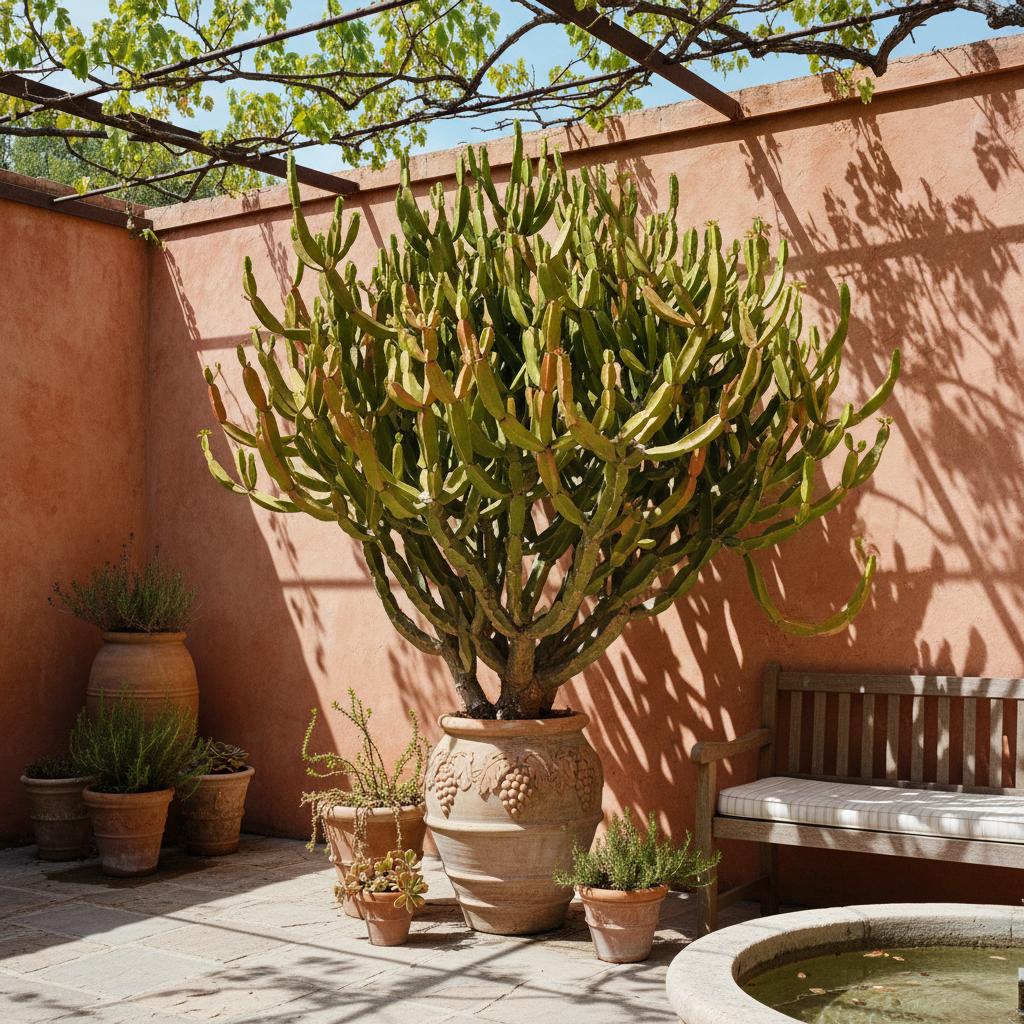
- Stems: Cylindrical, smooth, green, pencil-like branches that photosynthesize in place of leaves, exuding a toxic milky latex when broken;
- Leaves: Minute, ephemeral leaves that drop early, leaving the plant largely leafless;
- Flowers: Small, yellow-green cyathia clustered at the tips of the branches.
Care Guide
Watering
Water thoroughly when the soil is completely dry, about once every 2 weeks.
Fertilization
Apply a diluted, balanced succulent fertilizer once.. Feed lightly during the active growing season.
Banana Peel Tea:Soak chopped banana peels in water for 24 hours, strain, and dilute 1:1 with water. Apply to soil to support root health. Avoid using too frequently to prevent salt buildup.Pruning
- Wear heavy gloves and eye protection before pruning due to the highly toxic, pressurized sap;
- Prune to control size or remove dead/damaged branches;
- Wash pruning tools thoroughly with soapy water immediately after use.
Toxicity
Warning: this plant may be toxic.
Pets & Humans
Pets: Toxic per ASPCA. Ingestion causes vomiting, oral irritation, and gastrointestinal distress; sap causes severe dermal and ocular irritation.
Humans: Highly toxic milky sap (latex) causes severe skin irritation, blistering, and extreme eye pain or temporary blindness upon contact.
Garden Uses & Culture
Culture: In Western landscaping, it is highly valued in xeriscaping and modern architectural garden designs for its striking, minimalist silhouette.
Usage: Ornamental landscaping, drought-tolerant gardens, barrier hedging, and indoor architectural specimen.