 PlantFun
Plant Needs
Sunlight
Prefers bright, indirect sunlight; avoid harsh direct afternoon sun which can scorch leaves.
Watering
Water when the top 2-3 inches of soil feel dry to the touch.
Temperature
Thrives in warm, stable room temperatures; highly sensitive to cold drafts.
Characteristics
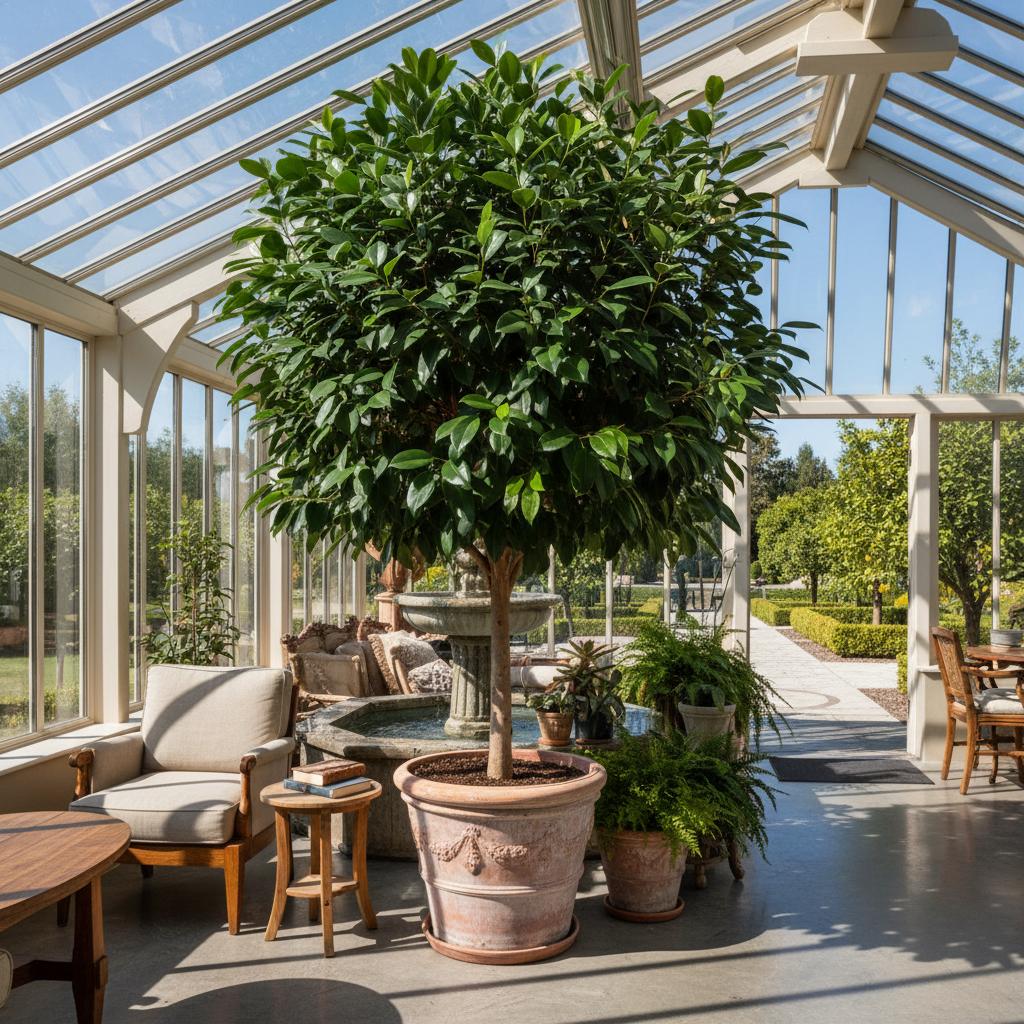
- Leaves: Glossy, ovate-elliptic with an acuminate tip, rich emerald green, slightly drooping along the branches;
- Stem: Trained as a single, straight, woody trunk (standard form) topped with a dense, bushy canopy;
- Flowers: Inconspicuous, enclosed in a fleshy receptacle (syconium), rarely seen on indoor specimens;
- Bark: Light gray to brownish, smooth, developing slight fissures with age.
Care Guide
Watering
Water thoroughly once a week, allowing excess to drain.
Fertilization
Apply a balanced fertilizer once a month.. Feed during the active growing season; halt fertilization in winter.
Banana Peel Tea:Soak chopped banana peels in water for 24-48 hours, strain, and use the liquid to water the plant. Discard the solid peels in the compost to avoid attracting fungus gnats indoors.Pruning
- Canopy Maintenance: Prune in early spring to maintain the rounded, bushy shape of the standard canopy;
- Deadwood Removal: Regularly remove any dead, diseased, or crossing branches to improve air circulation;
- Trunk Cleaning: Pluck off any new shoots that appear on the bare lower trunk to preserve the "standard" tree form.
Toxicity
Warning: this plant may be toxic.
Pets & Humans
Pets: Toxic to cats per ASPCA; sap causes dermal irritation and gastrointestinal upset.
Humans: Sap can cause skin irritation or mild gastrointestinal upset if ingested.
Garden Uses & Culture
Culture: A staple of mid-century modern and contemporary Western interior design, prized for bringing a structural, tree-like presence into homes and offices.
Usage: - **Ornamental**: Popular indoor specimen tree for living rooms and atriums; - **Air Purification**: Known to help filter indoor air pollutants like formaldehyde and xylene.