 PlantFun
Plant Needs
Sunlight
Prefers bright, indirect light; can tolerate a few hours of gentle morning direct sun.
Watering
Water thoroughly when the top 1 to 2 inches of soil feel dry to the touch. Do not let it sit in water.
Temperature
Thrives in warm room temperatures; protect from cold drafts and sudden temperature drops.
Characteristics
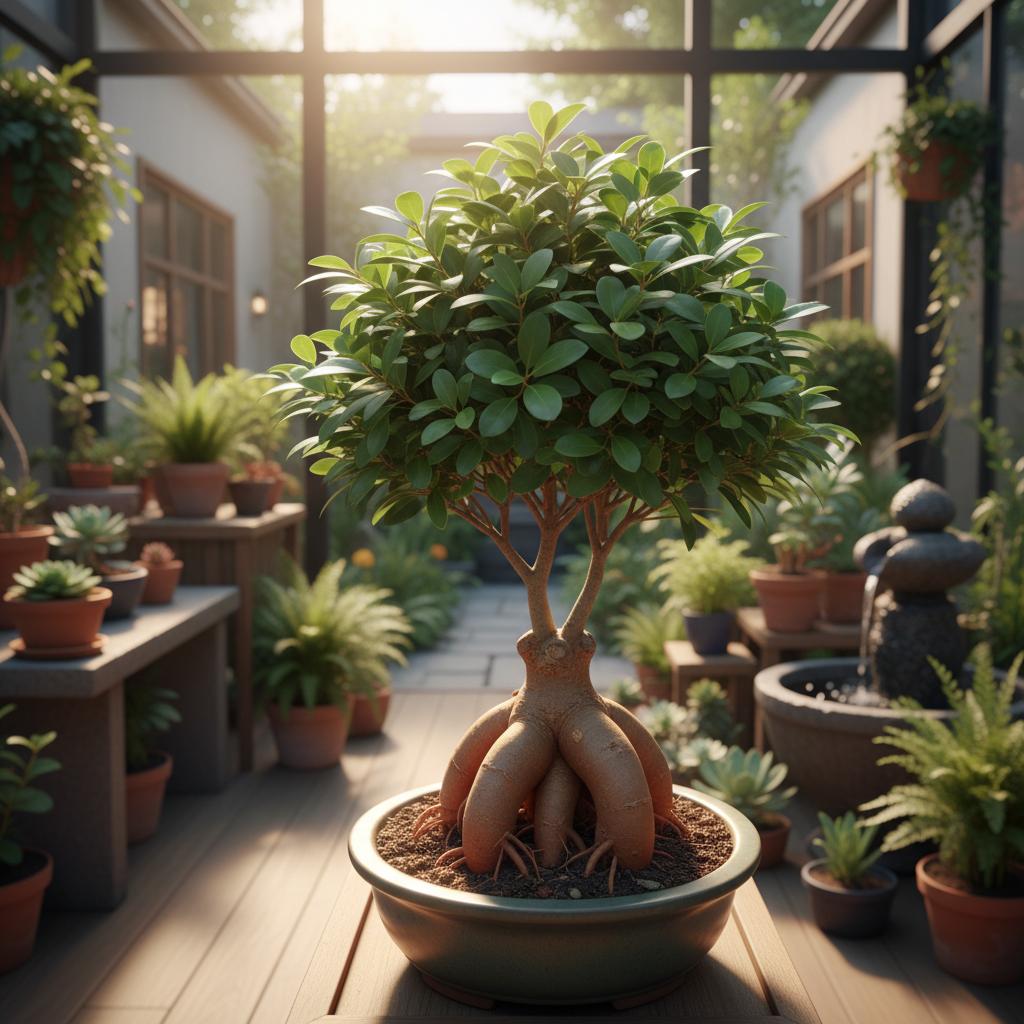
- Leaves: Small, dark green, glossy, oval to elliptical, arranged alternately on the stems;
- Stems and Roots: Features a thick, swollen, bulbous caudex-like aerial root system resembling a ginseng root, covered in smooth grayish-brown bark;
- Flowers: Inconspicuous, enclosed within a fleshy receptacle (syconium), rarely seen in indoor cultivation;
- Sap: Produces a milky white latex when leaves or stems are broken.
Care Guide
Watering
Water thoroughly when the topsoil dries out, ensuring good drainage.
Fertilization
Apply a diluted liquid fertilizer to support new growth.. Fertilize only during the active growing season; pause during winter.
Aquarium Water Fertilizer:Use untreated aquarium change water directly on the soil. It provides gentle, natural nutrients. Avoid using if the tank water contains fish medications or added salts.Pruning
- Shape Maintenance: Prune back elongated shoots to maintain the compact bonsai canopy;
- Branching: Pinch back new growth leaving 2-3 leaves to encourage denser branching;
- Safety: Always wear gloves when pruning to avoid skin contact with the irritating milky sap;
- Root Care: Avoid cutting the thick, swollen display roots unless they are dead or rotting.
Toxicity
Warning: this plant may be toxic.
Pets & Humans
Pets: Toxic per ASPCA; ingestion can cause vomiting, hypersalivation, and oral irritation. Sap causes dermatitis.
Humans: Milky sap can cause contact dermatitis and skin irritation; ingestion may lead to mild gastrointestinal upset.
Garden Uses & Culture
Culture: In Western indoor gardening, it is highly valued as an accessible "gateway" bonsai, symbolizing patience, endurance, and the harmonious balance of nature within the home.
Usage: Primarily cultivated as an ornamental indoor bonsai and tabletop focal point.