 PlantFun
Plant Needs
Sunlight
Prefers full sun for optimal fruit production but tolerates partial shade.
Watering
Drought-tolerant once established; requires moderate watering during the growing season.
Temperature
Highly heat tolerant and moderately cold hardy down to -5°C.
Characteristics
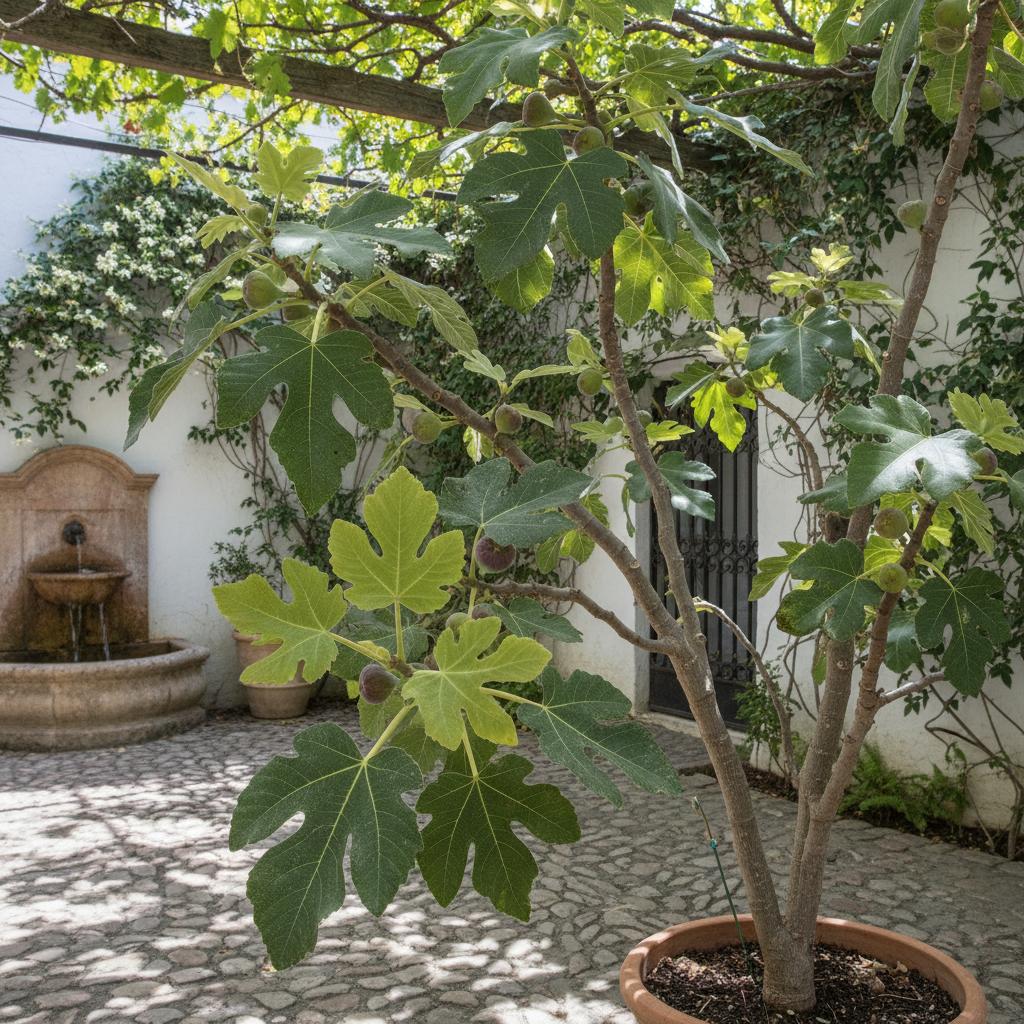
- Leaves: Broadly ovate to orbicular, often 3-5 lobed, margins dentate, rough upper surface and pubescent beneath;
- Flowers: Tiny, unisexual, enclosed within a fleshy receptacle (syconium);
- Fruit: Subglobose to pear-shaped syconium, turning purplish-black or dark red when ripe, edible;
- Bark: Grayish-brown and relatively smooth, exuding milky latex when cut or broken.
Care Guide
Watering
Water deeply when the top few inches of soil dry out.
Fertilization
Apply a balanced fertilizer as new growth appears.. Feed monthly during the active growing season; halt fertilization in winter.
Banana Peel Tea:Soak chopped banana peels in water for 24-48 hours, strain, and use the liquid to water the base. Helps promote healthy fruit development. Avoid leaving raw peels on the soil surface to prevent pests.Pruning
- Prune in late winter during dormancy;
- Remove dead, diseased, or crossing branches to improve air circulation;
- Wear gloves when pruning to protect skin from the irritating milky sap.
Toxicity
Warning: this plant may be toxic.
Pets & Humans
Pets: Toxic to cats per ASPCA (due to ficin and psoralen in sap/leaves).
Humans: Sap may cause skin irritation (phytophotodermatitis) upon sun exposure; ripe fruits are perfectly edible and safe.
Garden Uses & Culture
Culture: In Western horticulture, it is highly valued and studied as a hardy, nematode-resistant rootstock for the common fig (Ficus carica).
Usage: - Edible fruits consumed fresh or dried; - Used as rootstock for commercial fig varieties; - Provides shade in arid landscapes.