 PlantFun
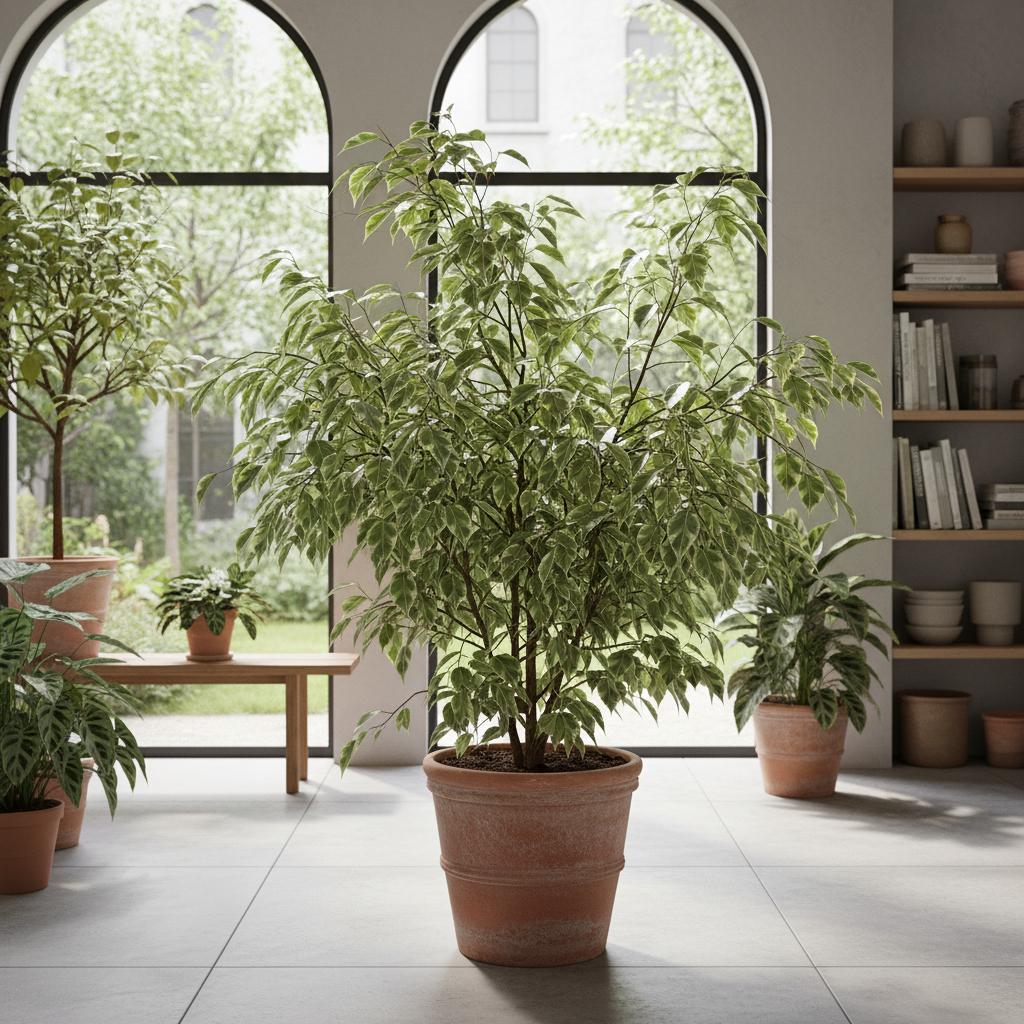
Plant Needs
Characteristics
- Leaves: Distinctive thick, leathery, dark green leaves shaped like inverted triangles (obdeltoid) with a broad, flat or slightly notched apex;
- Stems: Woody, slender, branching readily, producing milky white sap (latex) when cut;
- Fruit: Small, round, yellowish-green to reddish syconia (figs) borne in the leaf axils, rarely seen on indoor specimens.
Care Guide
Water thoroughly when the top 2 inches of soil feel dry, ensuring excess water drains away.
Apply a balanced liquid houseplant fertilizer diluted to half strength.. Do not fertilize during the winter dormancy period.
Banana Peel Tea:Soak chopped banana peels in water for 24-48 hours, strain, and use the liquid to water the plant. Avoid leaving solid peels on the soil to prevent fungus gnats and odors.- Prune in early spring to maintain shape and encourage bushier growth;
- Always wear gloves when pruning to protect skin from the irritating milky sap;
- Remove any dead, yellowing, or damaged leaves regularly to maintain plant health.
Toxicity
Warning: this plant may be toxic.
Pets: Toxic to cats per ASPCA. Ingestion or contact with sap can cause dermal and oral irritation.
Humans: Sap causes skin irritation and contact dermatitis; ingestion may cause mild gastrointestinal upset.
Garden Uses & Culture
Culture: In Western interior design, Ficus species have long been favored as architectural statement plants, symbolizing endurance and bringing a structured, modern aesthetic to living spaces.
Usage: Popular ornamental houseplant, architectural specimen for modern interiors, and occasionally used in tropical landscaping.