 PlantFun
Plant Needs
Sunlight
Requires bright, indirect light; direct sunlight will scorch the delicate leaves.
Watering
Requires consistently moist soil and high ambient humidity; do not let the soil dry out completely.
Temperature
Thrives in warm temperatures between 18-27°C; highly sensitive to cold drafts and frost.
Characteristics
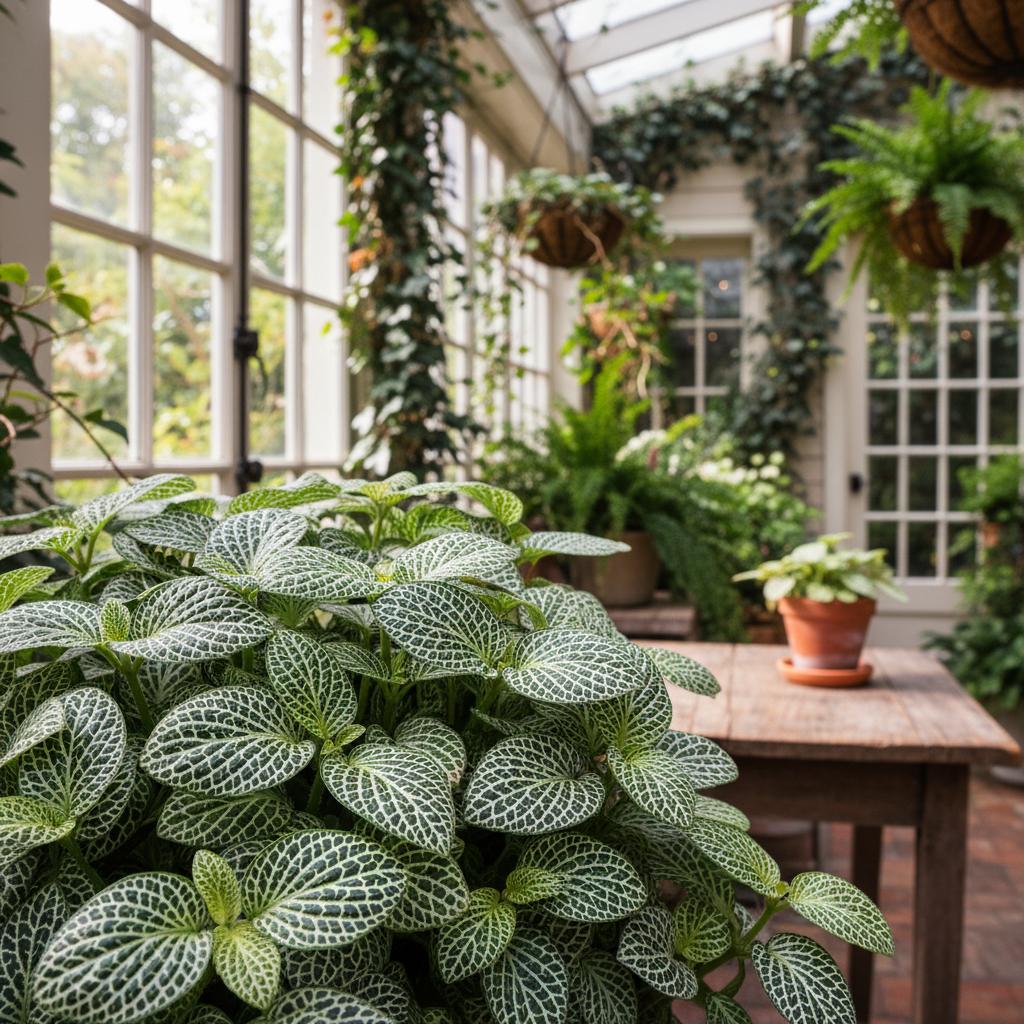
- Leaves: Opposite, ovate to elliptic, dark green with striking, highly contrasting silver-white reticulate venation, margins entire.
- Stems: Creeping, densely pubescent, rooting readily at the nodes.
- Flowers: Small, tubular, yellowish-white, borne on terminal spikes with green bracts; generally inconspicuous and rare in cultivation.
Care Guide
Watering
Keep the soil consistently moist but not soggy; mist the foliage frequently to maintain high humidity.
Fertilization
Apply a balanced liquid houseplant fertilizer diluted to half strength.. Avoid over-fertilizing, which can burn the shallow root system.
Banana Peel Tea:Steep chopped banana peels in water for 24-48 hours. Strain and dilute 1:1 with water. Apply to the soil to boost root health and foliage vibrancy. Discard solids in the compost to avoid attracting fungus gnats.Pruning
- Pinch off the growing tips regularly to encourage a bushier, more compact growth habit.
- Remove any yellowing, dead, or damaged leaves at the base of the stem.
- Trim back leggy stems if the plant stretches due to low light; cuttings can be easily propagated in water or moist soil.
Toxicity
Warning: this plant may be toxic.
Pets & Humans
Pets: Non-toxic to cats per ASPCA.
Humans: Non-toxic to humans; safe to handle.
Garden Uses & Culture
Culture: Popularized in Victorian England as a premier terrarium plant due to its love for high humidity and enclosed glass environments, fitting perfectly into the era's Wardian case craze.
Usage: Widely cultivated as an ornamental houseplant, particularly suited for terrariums, bottle gardens, and as a low-growing underplanting in large indoor containers.