 PlantFun
Plant Needs
Sunlight
Requires bright, indirect light; direct sunlight will scorch the leaves.
Watering
Requires consistently moist soil and high humidity; do not let the soil dry out completely.
Temperature
Prefers warm temperatures and is highly sensitive to cold drafts.
Characteristics
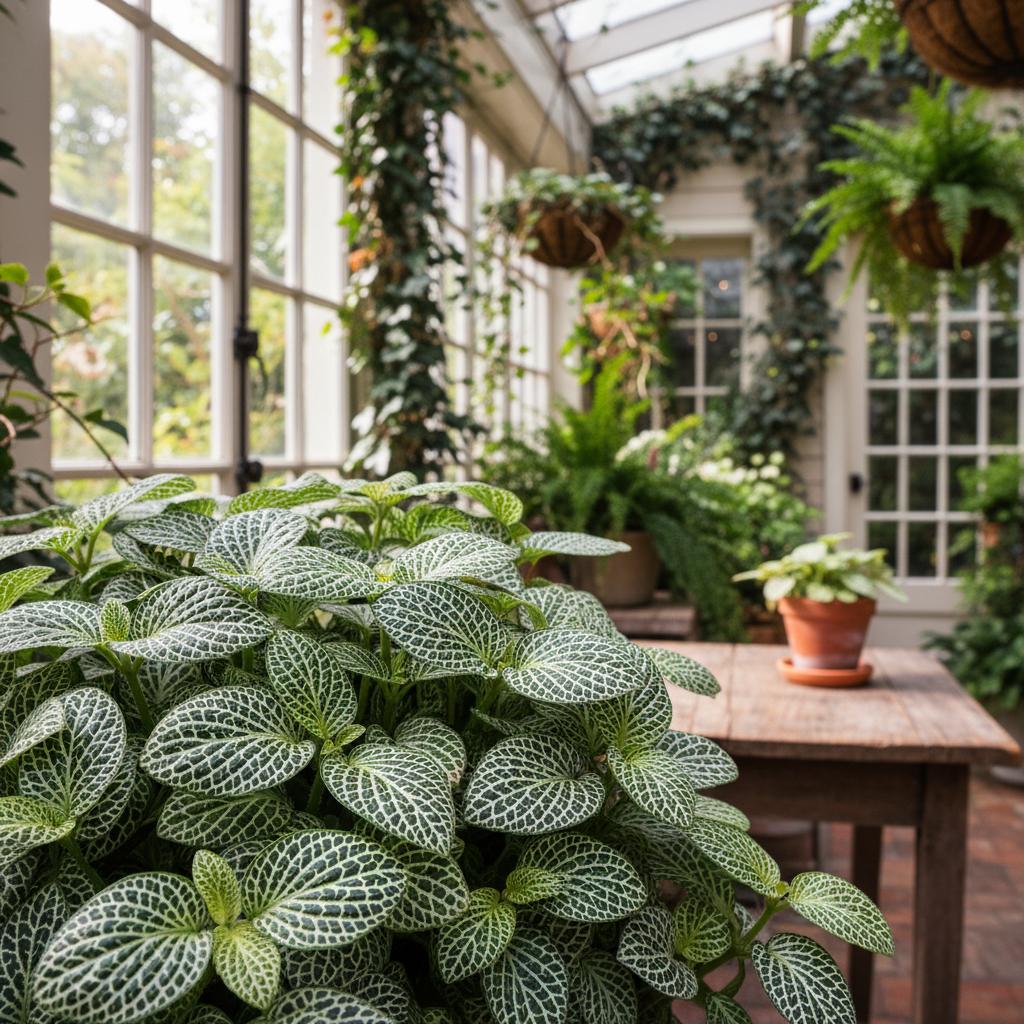
- Leaves: Opposite, ovate to elliptic, dark green with striking, highly contrasting silver-white reticulate venation;
- Stems: Creeping, densely pubescent, rooting at the nodes;
- Flowers: Small, tubular, yellowish-white, borne on terminal spikes with green bracts.
Care Guide
Watering
Keep soil consistently moist but not waterlogged.
Fertilization
Apply a balanced, water-soluble fertilizer diluted to half strength.. Avoid over-fertilizing, which can burn the sensitive roots.
Aquarium Water:Use water from routine aquarium changes as a gentle, low-dose fertilizer. Ensure it is at room temperature and free of chemical medications.Pruning
- Pinch off the tips of growing stems to encourage a bushier, more compact shape;
- Remove any yellowing or dead leaves promptly to prevent fungal issues;
- Snip off flower spikes if they appear, as they detract energy from the foliage.
Toxicity
Warning: this plant may be toxic.
Pets & Humans
Pets: Non-toxic to cats (per ASPCA).
Humans: Non-toxic to humans.
Garden Uses & Culture
Culture: Highly prized in Victorian England, it became a staple of the newly invented Wardian cases (early terrariums) due to its affinity for high humidity.
Usage: - **Ornamental**: Popular indoor houseplant, terrarium, and bottle garden specimen; - **Groundcover**: Used in shaded tropical gardens.