 PlantFun
Plant Needs
Sunlight
Full sun to partial shade; best blooming occurs in full sun.
Watering
Moderate watering; prefers evenly moist, well-drained soil but possesses good drought tolerance once established.
Temperature
Hardy and adaptable, thriving in USDA zones 5-8.
Characteristics
- Leaves: Opposite, simple to occasionally trifoliate, ovate to lanceolate, 5-12 cm long, with serrate margins on the upper half, medium to dark green.
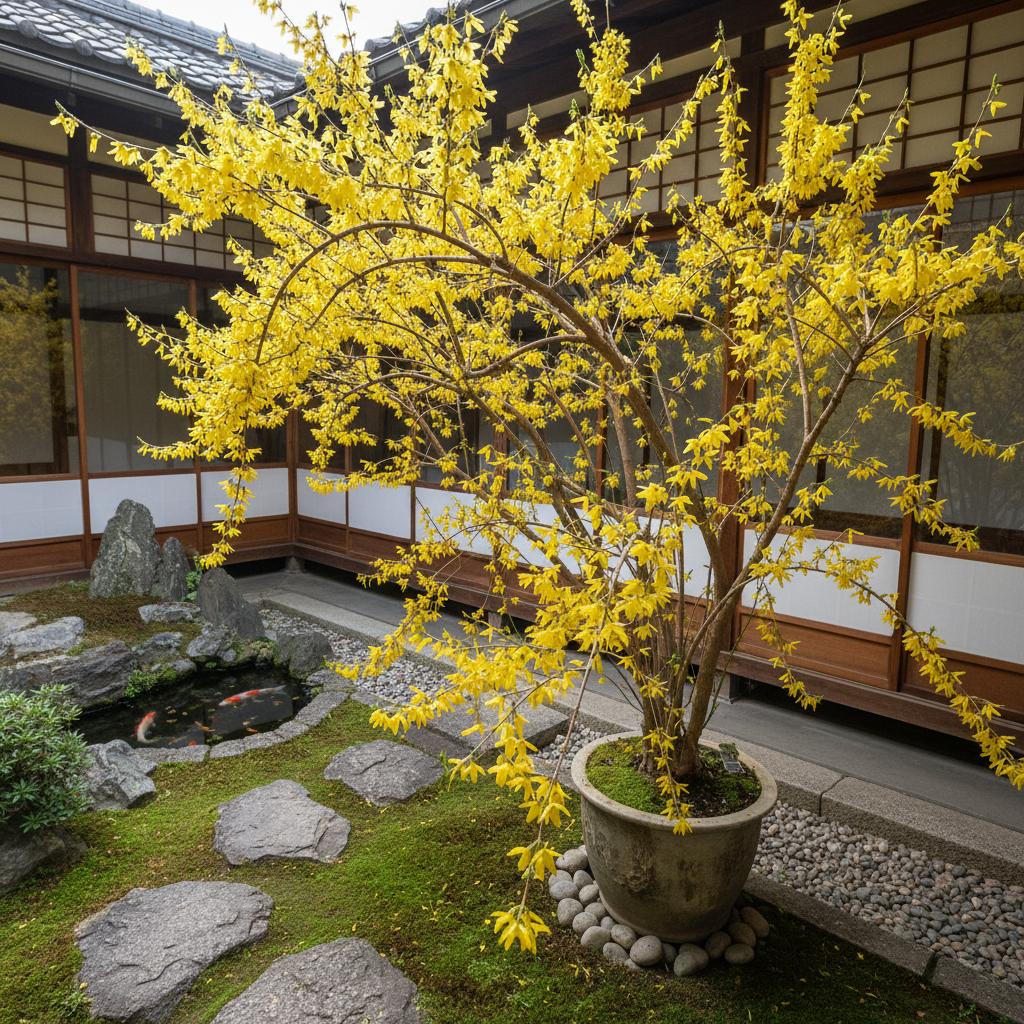
- Flowers: Bright yellow, 4-lobed, tubular at the base, 2-3 cm across, appearing in clusters of 2-6 on bare stems before leaf emergence.
- Bark: Stems are yellowish-brown to olive-brown, prominently lenticellate, featuring a chambered pith.
Care Guide
Watering
Water deeply once a week during active growth and dry spells.
Fertilization
Apply a balanced organic mulch or gentle fertilizer just before new growth begins.. Avoid heavy nitrogen applications which promote foliage at the expense of flowers.
Banana Peel Tea:Steep chopped banana peels in water for 24-48 hours. Use the strained liquid to water the base of the shrub in early spring to support robust blooming. Discard peels in compost to avoid attracting pests.Pruning
- Prune immediately after flowering finishes in spring.
- Do not prune in late summer, fall, or winter, as this will remove the buds set for the following spring.
- Remove about one-third of the oldest, thickest stems right to the ground to encourage vigorous new growth.
- Trim back any crossing or damaged branches to maintain an open, natural arching shape.
Toxicity
Warning: this plant may be toxic.
Pets & Humans
Pets: Non-toxic to cats per ASPCA.
Humans: Generally considered non-toxic to humans.
Garden Uses & Culture
Culture: In Western gardens and landscapes, Forsythia is widely celebrated as one of the earliest and most reliable signs that winter is ending and spring has arrived, often featured in Easter and springtime floral arrangements.
Usage: Excellent for shrub borders, informal hedges, mass plantings, and forcing indoors in late winter for early indoor blooms.