 PlantFun
Plant Needs
Sunlight
Prefers partial shade or dappled sunlight; morning sun with afternoon shade is ideal to prevent leaf scorch.
Watering
Requires consistently moist but well-draining soil; do not allow the root ball to dry out completely.
Temperature
Thrives in cool to moderate temperatures; not frost-hardy and requires overwintering indoors in cold climates.
Characteristics
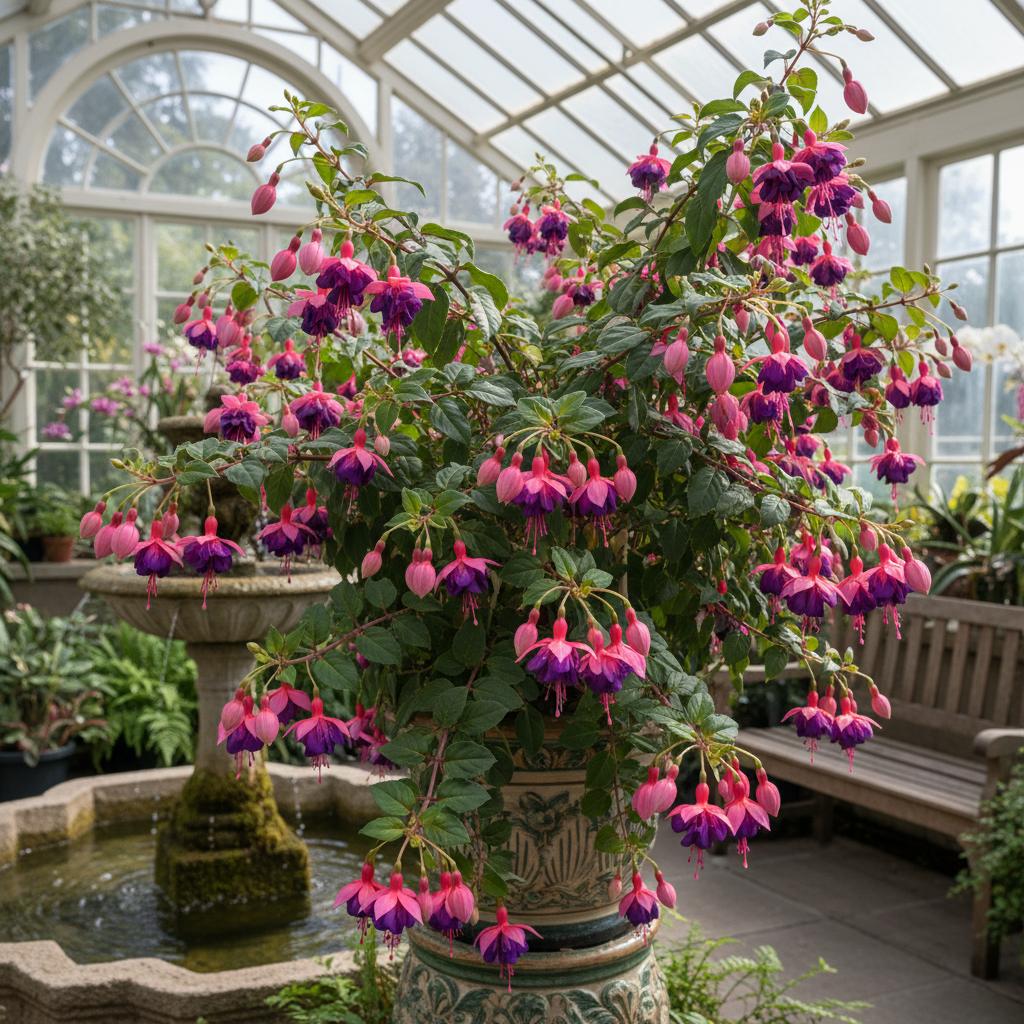
- Leaves: Ovate to lanceolate, mid-green leaves with serrated margins, arranged oppositely or in whorls along the stems.
- Flowers: Pendulous, single to semi-double blooms; the tube and recurving sepals are typically pale pink to carmine, while the corolla is a rich violet-magenta.
- Stems: Upright, bushy habit, woody at the base with reddish-tinged new growth.
Care Guide
Watering
Water thoroughly when the top inch of soil feels dry, keeping it evenly moist.
Fertilization
Apply a balanced liquid fertilizer to encourage leafy growth.. Feed regularly during the active growing season, but stop fertilizing in late autumn.
Banana Peel Tea:Steep chopped banana peels in water for 24-48 hours. Strain and use the liquid to water the plant. The high potassium content supports prolific blooming. Discard the peels in compost to avoid attracting fruit flies.Pruning
- Prune hard in early spring (cut back to one or two pairs of leaves on each shoot) to encourage vigorous, bushy new growth.
- Pinch out the growing tips of young plants to promote branching.
- Deadhead spent flowers and seed pods regularly to prolong the blooming period.
Toxicity
Warning: this plant may be toxic.
Pets & Humans
Pets: Non-toxic to cats per ASPCA guidelines.
Humans: Non-toxic to humans; the berries are technically edible but generally lack flavor.
Garden Uses & Culture
Culture: In Victorian floriography, the fuchsia symbolizes confiding love, elegance, and good taste, often featured in intricate parlor floral arrangements.
Usage: Excellent for summer bedding, patio containers, and mixed borders. Its upright habit makes it a great structural centerpiece in pots.