 PlantFun
Plant Needs
Characteristics
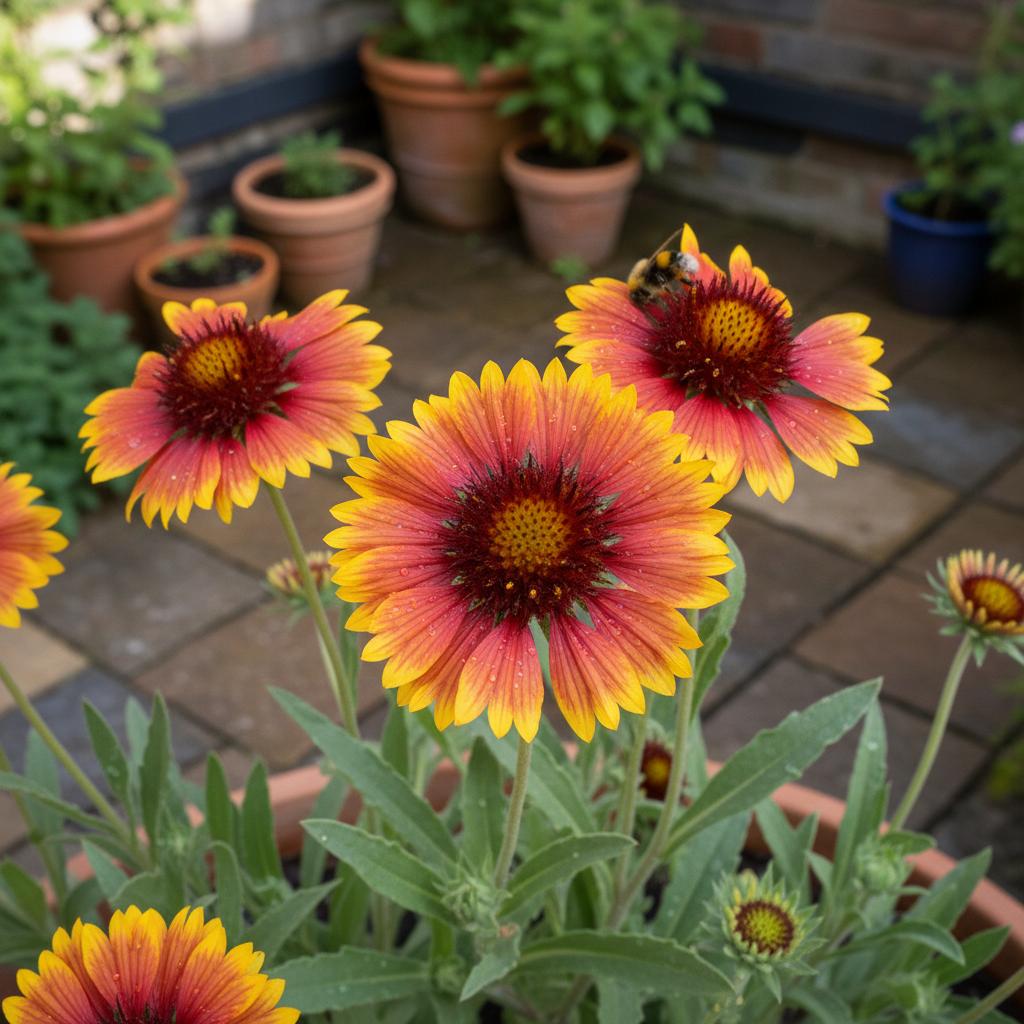
- Leaves: Grayish-green, lanceolate to spatulate, covered in fine hairs (pubescent), margins entire or slightly lobed;
- Flowers: Large daisy-like flower heads (up to 8 cm across) with a dark burgundy-red center disk and tubular ray florets that are deep red banded with bright yellow at the tips;
- Stems: Sturdy, compact, branching, and covered with fine hairs;
- Roots: Deep taproot system adapting well to dry conditions.
Care Guide
Water deeply but infrequently, allowing soil to dry out completely between waterings
Apply a light, low-nitrogen organic compost if soil is extremely poor. Avoid heavy fertilization, as Blanket Flowers perform best in poor soils.
Banana Peel Tea:Steep chopped banana peels in water for 24-48 hours. Dilute 1:1 with water and apply to the base of the plant to encourage blooming. Discard peels in compost to avoid attracting pests. Avoid high-nitrogen materials.- Deadheading: Regularly remove spent flowers to encourage continuous blooming throughout the summer;
- Late Summer Cutback: If the plant becomes straggly in late summer, shear it back by half to promote fresh foliage and a final flush of autumn blooms;
- Winter Prep: Leave some seed heads in late autumn to feed birds, then cut back to the basal rosette in late winter or early spring.
Toxicity
Warning: this plant may be toxic.
Pets: Considered non-toxic per ASPCA, though ingestion of rough foliage may cause mild, self-limiting gastrointestinal upset.
Humans: Foliage contains sesquiterpene lactones which may cause contact dermatitis or skin irritation in sensitive individuals.
Garden Uses & Culture
Culture: In North American folklore, the vibrant, banded colors of the flowers are said to resemble the intricate patterns of traditional Native American woven blankets.
Usage: Ideal for borders, rock gardens, containers, pollinator gardens, and as long-lasting cut flowers.