 PlantFun
Plant Needs
Characteristics
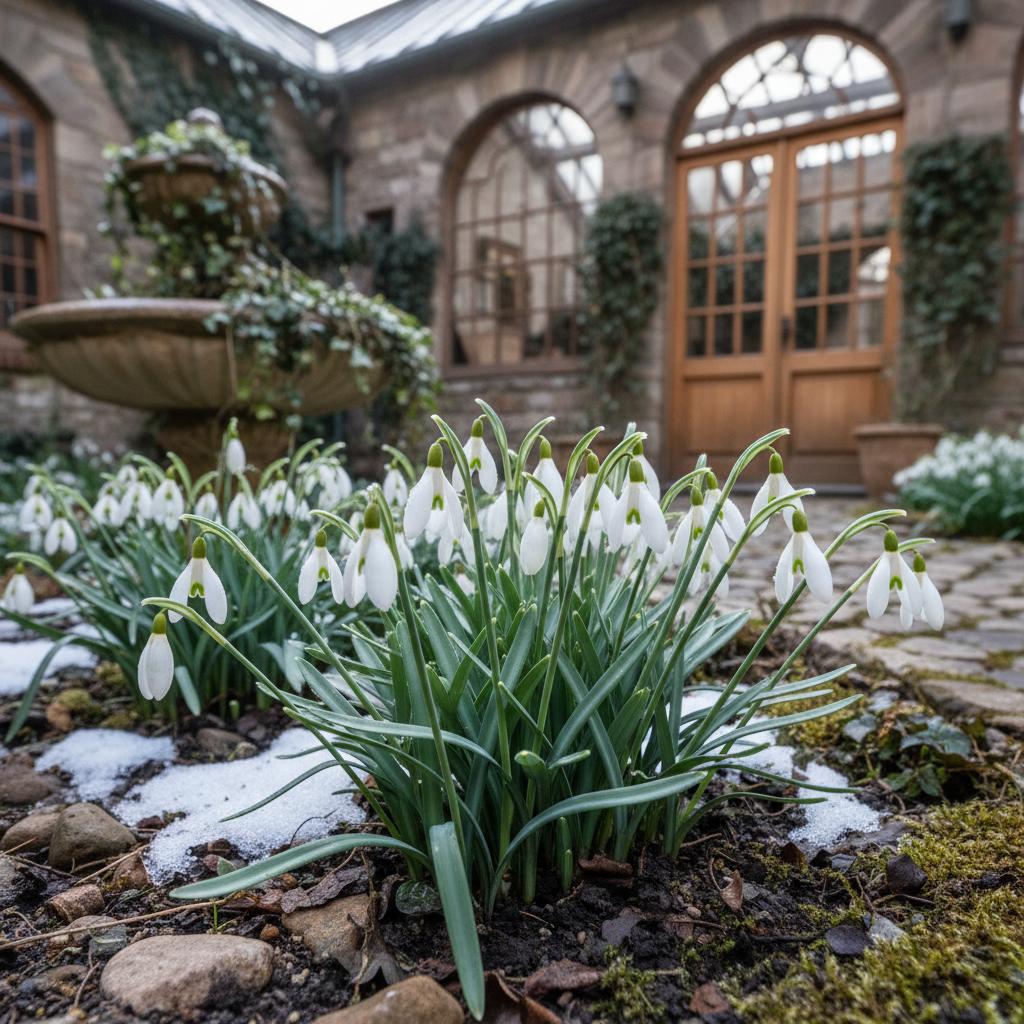
- Leaves: Linear, glaucous green with a distinct silver-gray central stripe, often emerging after or during the flowering period;
- Flowers: Solitary, nodding, with three pure white outer perianth segments and three shorter inner segments bearing a green mark at the apex;
- Stem: Slender, leafless scape supporting a single flower;
- Bulb: Small, globose subterranean bulb covered in a papery tunic.
Care Guide
Reduce watering significantly in late spring; keep relatively dry during summer dormancy.
No fertilization needed as foliage dies back.. Apply a light top-dressing of organic matter or mild fertilizer in early autumn as shoots emerge.
Banana Peel Tea:Steep chopped banana peels in water for 24-48 hours. Dilute 1:1 with water and apply to the soil around the bulbs in early autumn to support root and flower development. Avoid applying directly to the bulb crown.- Allow foliage to die back naturally and completely in spring; do not cut green leaves, as they are essential for replenishing the bulb's energy;
- Remove spent flower heads if seed production is not desired, but leave the stem intact;
- Divide congested clumps every 3-4 years while the plant is "in the green" (after flowering but before leaves die back) to maintain vigor.
Toxicity
Warning: this plant may be toxic.
Pets: Toxic per ASPCA. Ingestion of bulbs or foliage can cause vomiting, diarrhea, hypersalivation, and in severe cases, tremors or drop in blood pressure.
Humans: Bulbs contain lycorine and other alkaloids; ingestion causes nausea, vomiting, and abdominal pain.
Garden Uses & Culture
Culture: Named in honor of Queen Olga of Greece in the late 19th century. In Western culture, snowdrops are widely regarded as symbols of hope, purity, and the promise of changing seasons.
Usage: Excellent for woodland gardens, rockeries, underplanting deciduous trees, and naturalizing in grassy areas.