 PlantFun
Plant Needs
Sunlight
Prefers bright indirect light or partial sun; tolerates lower light conditions better than most succulents.
Watering
Low water needs. Allow the soil to dry out completely between waterings.
Temperature
Thrives in warm temperatures; protect from frost and freezing conditions.
Characteristics
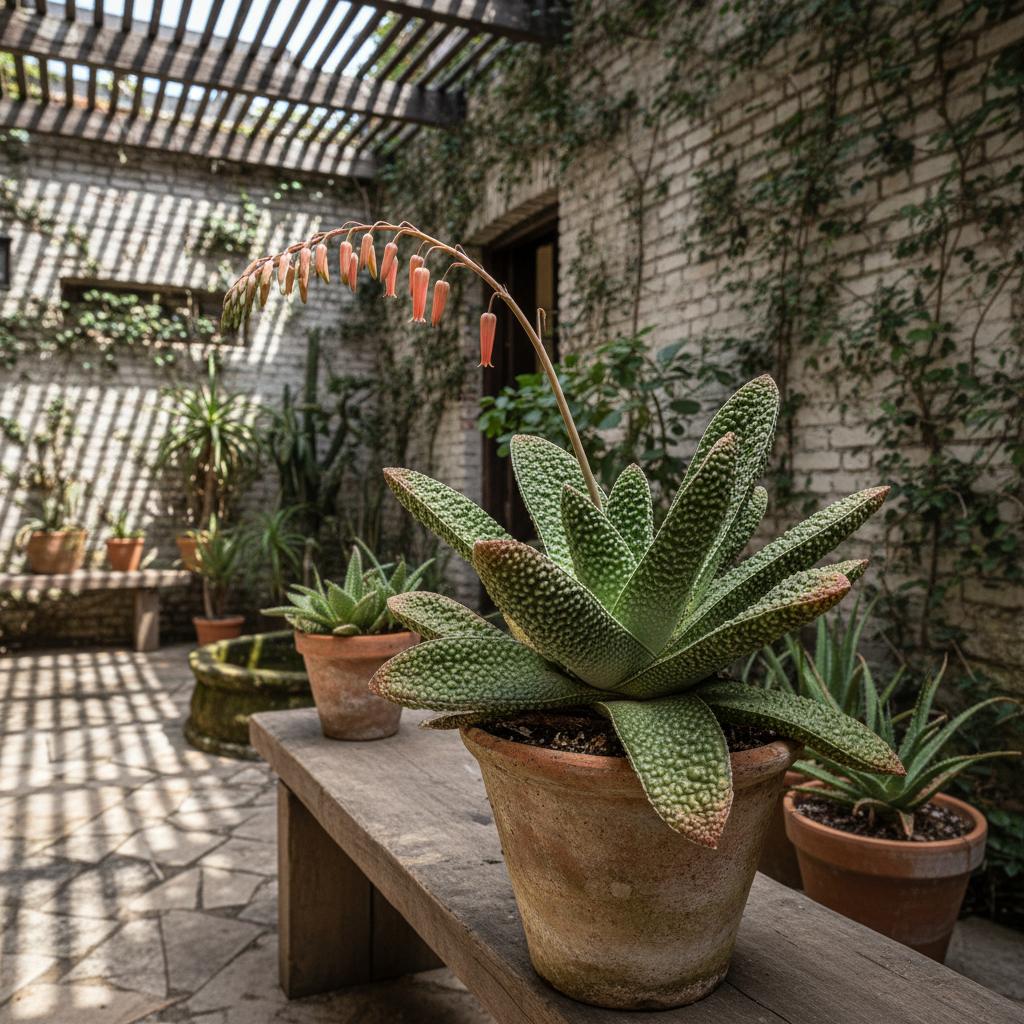
- Leaves: Fleshy, strap-shaped to tongue-shaped, dark green with dense white spots or bands, arranged in two opposite rows (distichous) or spiraling with age;
- Flowers: Pendulous, tubular, swollen at the base (stomach-like), reddish-pink with green tips, borne on a tall, unbranched or sparsely branched raceme;
- Roots: Thick, fleshy, shallow root system adapted to rocky soils and crevices.
Care Guide
Watering
Water thoroughly when the soil is completely dry, allowing excess water to drain.
Fertilization
Apply a diluted, balanced succulent fertilizer once.. Feed only during the active growing season; do not fertilize in winter.
Eggshell Powder:Crush washed and dried eggshells into a fine powder. Sprinkle a small amount onto the topsoil to provide slow-release calcium and improve cell wall strength. Avoid over-application to prevent soil alkalinity.Pruning
- Remove spent flower stalks by cutting them near the base once they have completely dried;
- Gently pull away any dried, dead leaves at the very bottom of the rosette to maintain tidiness and prevent pest hiding spots;
- No structural pruning is required.
Toxicity
Warning: this plant may be toxic.
Pets & Humans
Pets: Non-toxic to cats per ASPCA guidelines.
Humans: Generally considered non-toxic to humans.
Garden Uses & Culture
Culture: Highly valued in Western indoor gardening for its architectural, sculptural form and its ability to tolerate the dry air and lower light levels typical of modern homes.
Usage: Excellent for indoor windowsills, terrariums (with caution regarding moisture), and xeriscaping in frost-free climates.