 PlantFun
Plant Needs
Characteristics
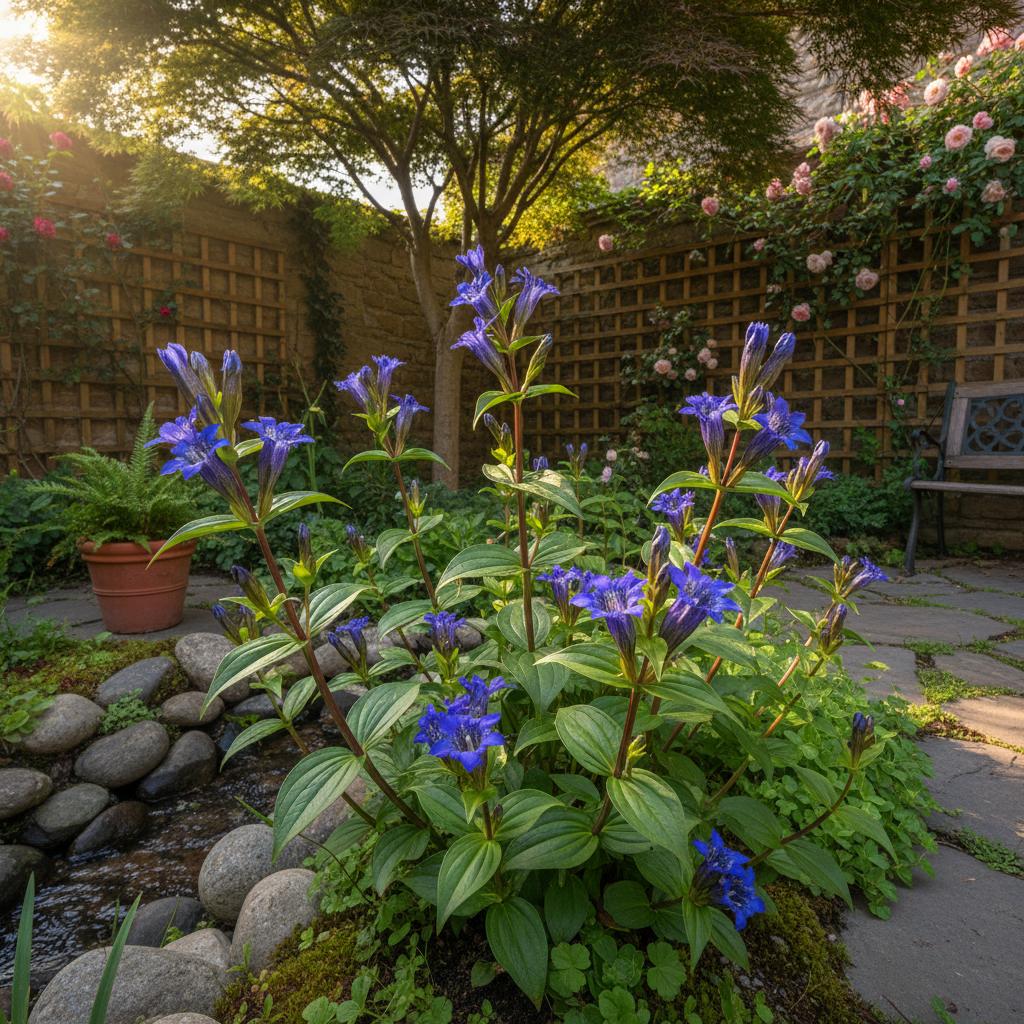
- Leaves: Opposite, lanceolate to ovate, entire margins, sessile or short-petioled, 1 to 4 cm long;
- Flowers: Clustered in upper leaf axils or terminal, tubular to bell-shaped, deep blue to purple, 2 to 3 cm long, with distinct pleated folds (plicae) between the petal lobes;
- Stems: Multiple stems arising from a central taproot, often decumbent at the base then ascending;
- Roots: Thick, fleshy taproot adapted to harsh mountain environments.
Care Guide
Keep soil evenly moist but not waterlogged during active growth and blooming.
Apply a light top-dressing of organic compost as new growth emerges.. Gentians are adapted to nutrient-poor soils and require minimal fertilization.
Banana Peel Tea:Steep chopped banana peels in water for 24-48 hours. Strain and dilute 1:1 with water. Apply to the base of the plant to support blooming without overloading with nitrogen. Discard solids in compost to avoid attracting pests.- Leave foliage intact after blooming to allow the plant to store energy in its taproot;
- Cut back dead stems to the basal rosette in late winter or early spring before new growth begins;
- Do not disturb the taproot when cleaning up debris.
Toxicity
Warning: this plant may be toxic.
Pets: Non-toxic per ASPCA guidelines, though ingestion of large amounts of bitter plant material may cause mild stomach upset.
Humans: Generally considered non-toxic; roots contain bitter principles historically used in herbal medicine.
Garden Uses & Culture
Culture: In Western floriography, the gentian is a symbol of victory, intrinsic value, and overcoming hardship, reflecting its ability to bloom brilliantly in rugged, high-altitude environments.
Usage: - **Ornamental**: Highly valued in rock gardens, alpine troughs, and native wildflower meadows; - **Historical**: Roots of various Gentiana species were traditionally used to make bitter tonics to aid digestion.